
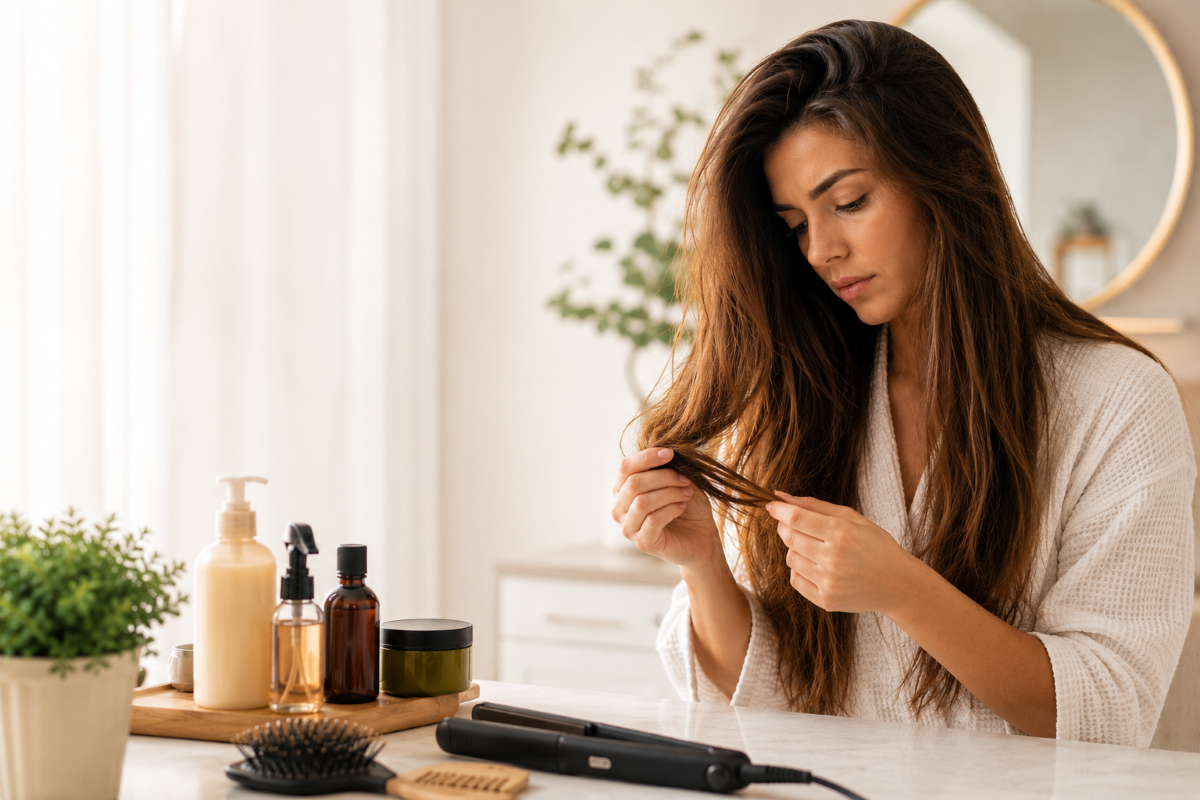
Straighteners, curling irons, blow dryers, and repeated hot styling can leave hair dry, rough, frizzy, and fragile over time. Before getting into fixes, I want to set a realistic expectation. Heat damaged hair cannot be completely healed the way skin heals from an injury, but reducing further damage can genuinely improve how your hair looks, feels, and behaves.
Common signs of heat damaged hair:
- Dryness
- Rough texture
- Excessive frizz
- Split ends
- Short broken strands
- Loss of shine
- Hair that tangles easily
- Hair that feels weaker than it used to
This guide focuses on what is actually within your control, from adjusting your styling habits to building a simple recovery routine you can stick with.
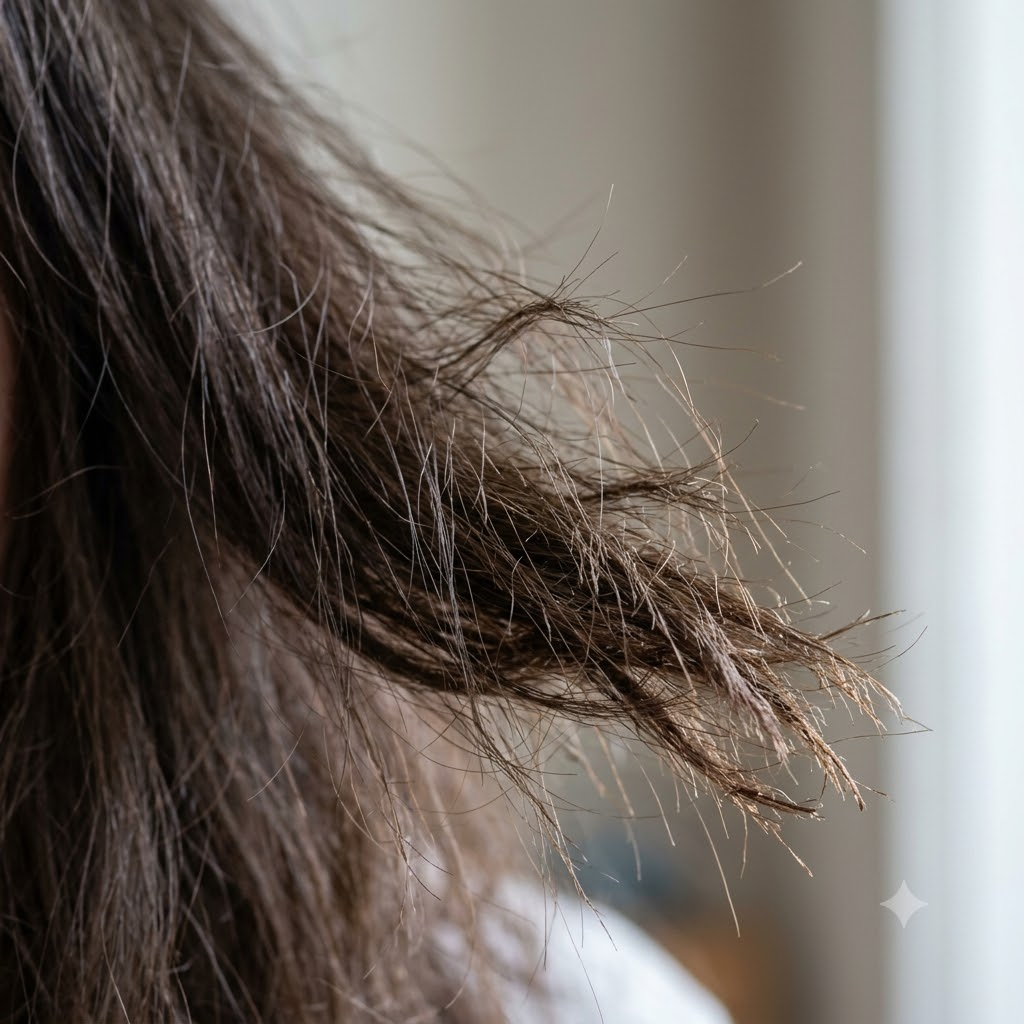
1. First, Understand What Heat Damage Looks Like
Common signs of heat damaged hair:
- Hair feeling unusually dry
- Ends looking rough or frayed
- Reduced natural shine
- Excessive flyaways
- More tangling than usual
- Increased breakage
- A noticeable change in hair texture
- Curly or wavy patterns becoming less defined
It is worth remembering that not every dry hair problem is heat damage. Environmental exposure, chemical treatments, friction, and your overall hair care routine can all play a role, sometimes together with heat.
2. Find Out How Your Hair Got Damaged by Heat
Common heat damage habits:
- Daily straightening
- Frequent curling iron use
- Styling at very high temperatures
- Blow drying at very high heat
- Repeatedly running a heat tool over the same section
- Skipping heat protectant
- Using inappropriate heat on wet or very damp hair
- Using multiple heat tools in one day
- Applying repeated heat to hair that is already damaged
A quick self check:
Ask yourself how many times a week you actually use heat, whether you tend to straighten the same section repeatedly, whether your tool’s temperature is higher than it needs to be, and whether you are using heat protection consistently. Honest answers here make the rest of this guide much more useful.
3. Stop Adding New Heat Damage
This is the most important practical step in the entire guide.
Start with a heat break:
- Temporarily cut back on the straightener and curling iron
- Try heat free hairstyles for a while
- Let your natural texture show more often
- Protect already damaged sections from repeated heat
If you cannot stop heat styling completely:
- Use the lowest practical temperature
- Keep passes over any one section to a minimum
- Use heat protectant every time
- Avoid using multiple hot tools on the same day
Any effort to improve existing damage stays limited as long as new damage keeps getting added on top of it.
4. Use a Heat Protectant Correctly
What it can do:
- Provide additional protection against heat exposure
- Help manage friction and dryness during styling
- Help hair feel smoother overall
What it cannot do:
- Completely repair hair that is already severely damaged
- Make high heat harmless
- Substitute for reducing how often you overheat your hair
How to use it properly:
Follow the product instructions, apply it evenly across the relevant sections, distribute it properly through the hair, and only then style according to the product or tool instructions.
5. Lower Your Styling Temperature
Higher heat does not automatically mean better styling results, and this is worth unlearning if it has become a habit.
A better approach:
- Choose the lowest effective temperature for your hair
- Adjust heat based on your hair type and current condition
- Use extra caution with fine or already damaged hair
- Treat extremely high temperatures as unnecessary for most routine styling
Avoid:
- Using maximum heat for every session
- Multiple passes over the same section
- Repeatedly heating the same strand
6. Be More Careful With Hair Dryers
Blow dryers are an easy source of heat damage to overlook since they feel less intense than a straightener.
Better blow drying habits:
- Gently remove excess water before you start
- Avoid holding the dryer on one spot continuously
- Keep the airflow moving across your hair
- Use a practical lower heat setting
- Avoid drying hair until it feels bone dry or overheated
Holding the dryer at a reasonable distance with controlled movement works better than concentrating intense heat on one small section for too long.
7. Never Stack Too Much Heat in One Session
This is a commonly overlooked cause of cumulative damage.
If you use a blow dryer, then a straightener, then a curling iron all in the same session, the total heat exposure on your hair adds up significantly, even if each individual tool feels manageable on its own.
A better routine:
Choose one primary heat styling method per session, use heat free finishing techniques when possible, and avoid turning multiple hot tools into a daily habit.
8. Improve Your Washing and Conditioning Routine
Heat damaged hair needs gentler handling starting from the moment you wash it.
During washing:
- Cleanse the scalp gently
- Avoid rubbing the lengths aggressively
- Use conditioner regularly, every wash
- Give the mid lengths and ends extra attention
Conditioning can help with:
- A softer feel
- Easier detangling
- Reduced friction
- Improved manageability
- Less roughness
Conditioning can meaningfully improve appearance and manageability, but it does not completely restore hair fiber that is severely damaged. It is support, not a full repair.
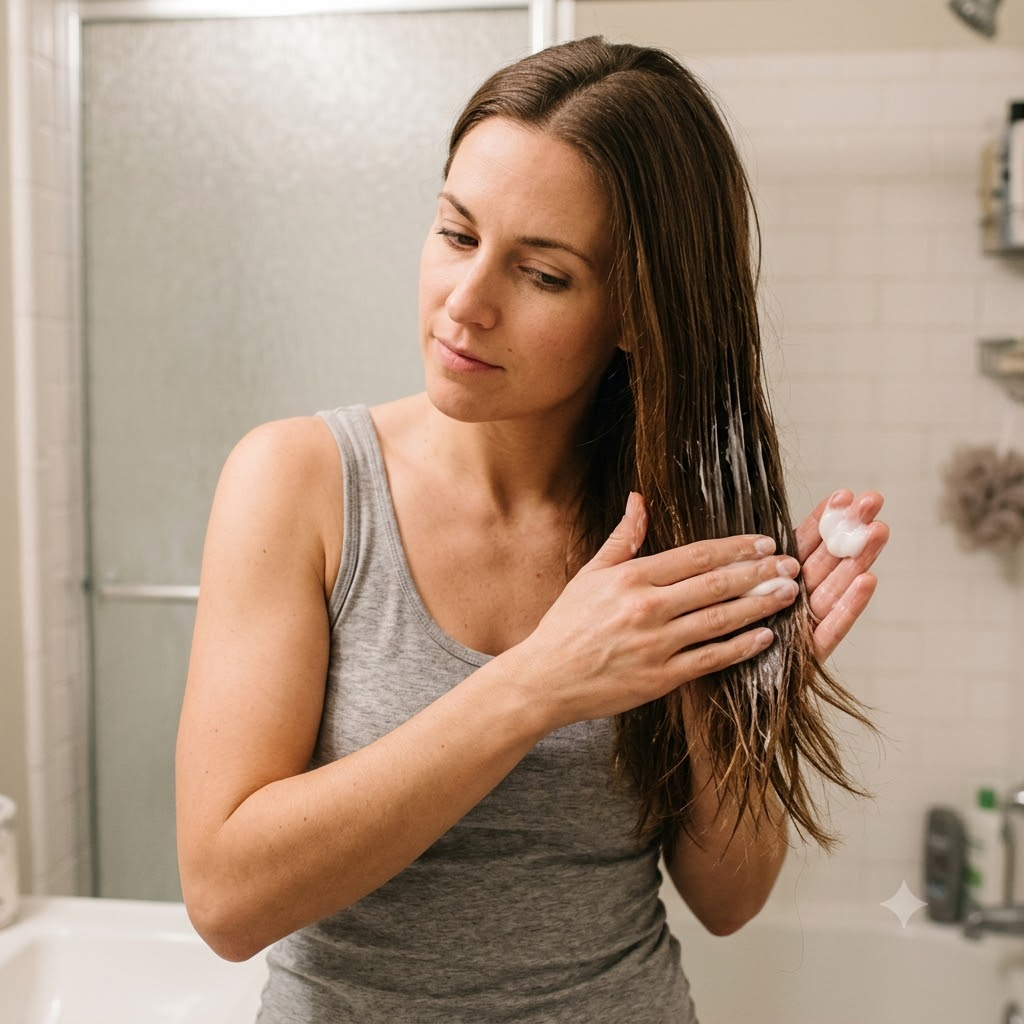
9. Add Deep Conditioning When Hair Feels Very Dry
Who may find this useful:
- Hair that is styled with heat frequently
- Very dry hair
- Rough feeling lengths
- Frizzy hair
- Chemically processed hair that also has heat damage
A simple method:
Apply the treatment to the lengths and ends, follow the product’s instructions, avoid assuming that leaving it on much longer always produces better results, and rinse thoroughly afterward.
10. Detangle Heat-Damaged Hair Gently
Heat damaged hair often becomes more fragile, which means it can snap more easily during a routine brushing session.
A better detangling routine:
- Start from the ends
- Work your way upward gradually
- Use a wide tooth comb or a suitable detangling brush
- Avoid pulling forcefully through knots
- Use enough conditioner or detangling product for slip
Aggressive brushing adds mechanical stress on top of hair that is already weakened by heat, so gentleness here matters more than speed.
11. Avoid Heat on Already-Wet Hair Unless the Tool Is Designed for It
There is an important difference between normal blow drying and high heat tools like straighteners, curling irons, and hot brushes. These tools are generally designed to be used on dry or nearly dry hair, not soaking wet strands.
Follow the manufacturer’s instructions for your specific tool and use it only in the way it is designed to be used. Safe handling matters more here than chasing a specific temperature number.
12. Protect Your Hair From Additional Environmental Stress
Heat damaged hair often benefits from reducing other sources of stress at the same time.
Protect against:
- Excessive sun exposure
- Chlorinated water
- Salt water
- Rough friction
- Tight hairstyles
- Aggressive towel drying
Simple habits that help:
Wear a hat during long stretches in the sun, rinse hair after swimming, handle wet hair gently, and avoid hairstyles that pull tightly on the roots.
13. What About Hair Oils?
What oils may help with:
- A smoother feel
- Reduced friction
- Better manageability
- Softer looking ends
What oils cannot do:
- Reconnect split ends
- Restore hair to its original state after severe damage
- Make continued high heat styling harmless
Think of oils as supportive care that makes hair easier to manage day to day, not a miracle treatment that undoes heat damage on its own.
14. Do Protein or Bond-Building Treatments Help Heat-Damaged Hair?
They may be worth considering for:
- Chemically treated hair
- Bleached hair
- Weakened hair
- Hair prone to breakage after repeated styling
Not every damaged hair type responds the same way to these treatments. Excessive use of strengthening products can leave some hair feeling stiff or less flexible. Judge these products by how your own hair responds rather than assuming more treatment is always better.
15. When Should You Cut Heat-Damaged Hair?
Trimming may be useful when:
- Ends are severely split
- Ends are visibly frayed
- Breakage is concentrated near the bottom
- Damaged ends continue to snag and tangle
A trim removes the already damaged section. It does not repair hair further up the shaft, but it does stop the visible damage from spreading and making the rest of your hair look worse over time.
16. Can Heat-Damaged Hair Actually Be Repaired?
Hair is a non living fiber once it grows out of the scalp, so severe structural damage cannot simply be reversed the way an injury heals.
What can genuinely improve:
- Feeling smoother
- Looking healthier
- Becoming easier to detangle
- Looking less frizzy
- Experiencing less additional breakage
The realistic goal is protecting the hair you still have while growing and retaining healthier new hair over time. That is a real and achievable outcome, even if it is not a complete reversal.
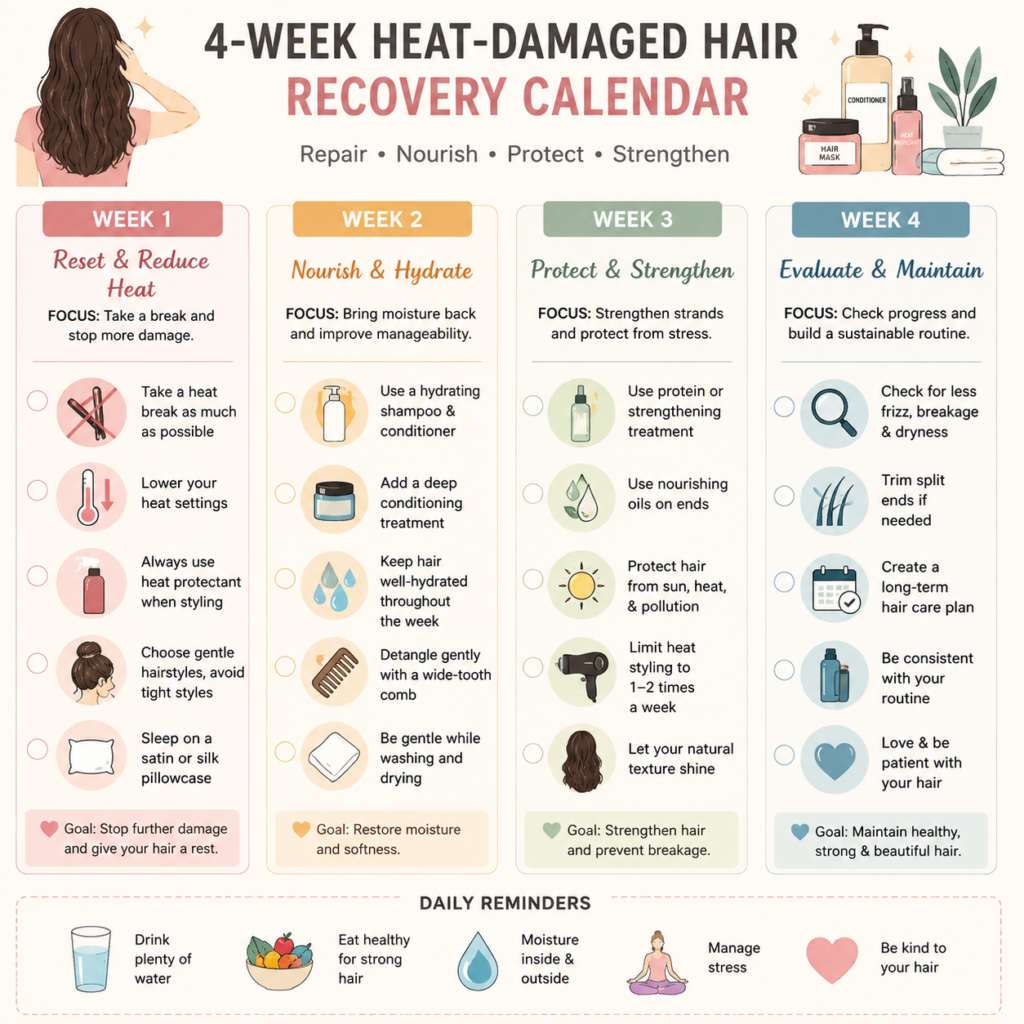
17. A Simple 4 Week Heat Damage Recovery Plan
Week 1, Take a Heat Break
Stop unnecessary straightening and curling, reduce blow dryer heat, start using gentler handling, and add regular conditioning.
Week 2, Improve Moisture and Manageability
Condition consistently, add deep conditioning if it suits your hair, improve your detangling technique, and avoid rough towels.
Week 3, Protect the Hair
Use heat protectant whenever styling is necessary, reduce environmental stress, wear looser hairstyles, and protect hair during sleep.
Week 4, Assess the Condition
Look for less roughness, easier detangling, less frizz, better softness, reduced breakage, and healthier looking ends.
18. A Simple Weekly Routine for Heat-Damaged Hair
Wash day: gentle cleansing, conditioner every time, careful detangling, gentle drying.
Styling day: heat protectant, lowest practical heat, minimal passes, avoid multiple heat tools in one session.
Non styling days: let hair rest, use low tension hairstyles, reduce unnecessary brushing, protect the ends.
Night: loosely secure hair if needed, reduce friction, keep hair comfortable and untangled before bed.
19. Common Mistakes That Keep Heat Damage Going
Mistake 1: Using maximum heat every time. Higher temperature is not automatically better for styling results.
Mistake 2: Thinking heat protectant makes high heat safe. Protection reduces risk, it does not give permission to overheat hair.
Mistake 3: Repeating passes over the same strand. This adds unnecessary heat exposure to already fragile sections.
Mistake 4: Styling every day. Daily heat use can make recovery significantly harder.
Mistake 5: Treating damaged hair more aggressively. Fragile hair generally needs gentler handling, not more brushing or manipulation.
Mistake 6: Expecting one mask to reverse years of damage. Consistency over time matters far more than a single intensive treatment.
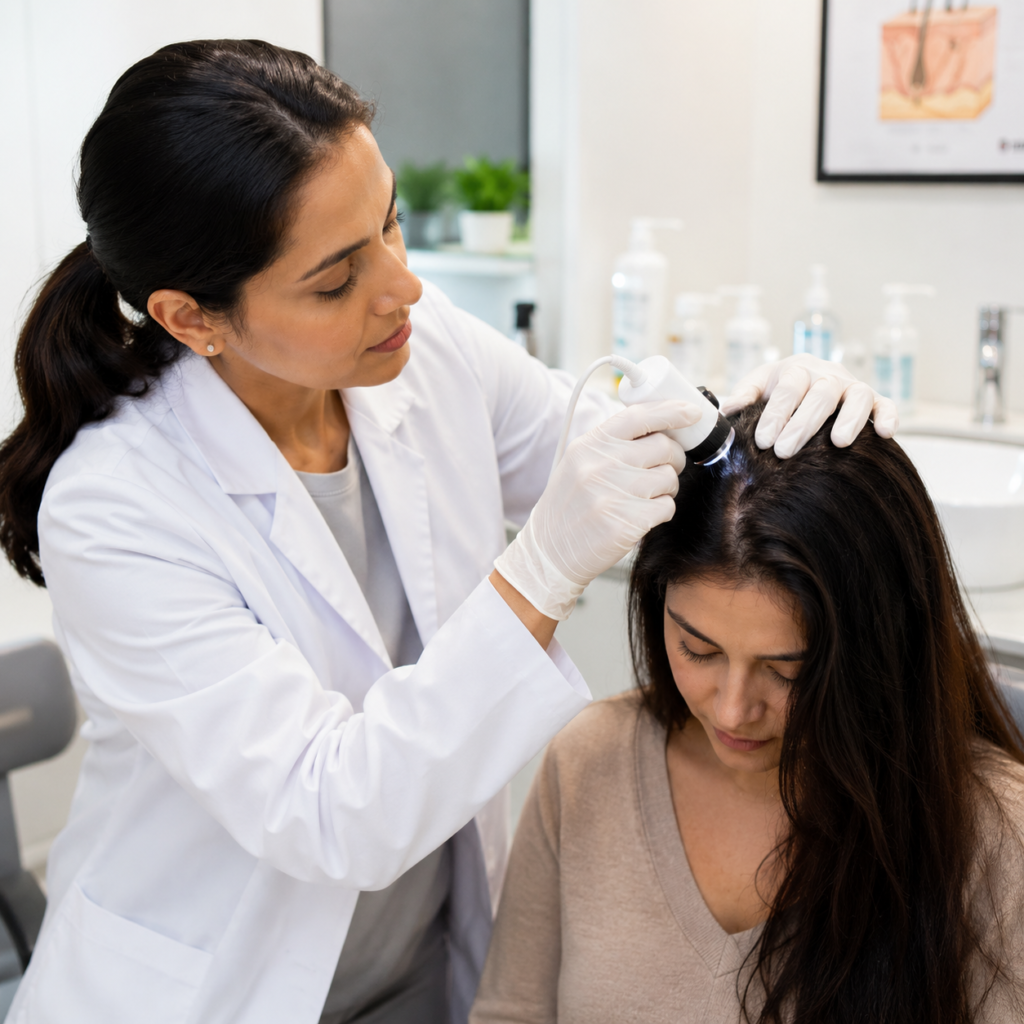
20. When Should You See a Dermatologist?
Professional evaluation is worth pursuing when:
- Hair breakage is severe or suddenly getting worse
- Noticeable thinning is also happening
- There are bald patches
- The scalp is painful, irritated, inflamed, or persistently itchy
- Hair changes continue despite reducing heat and improving your care routine
- You are unsure whether the problem is breakage, shedding, or another scalp or hair condition
21. Quick Heat Damage Prevention Checklist
- Reduce unnecessary heat styling
- Use heat protectant when heat is necessary
- Use the lowest effective temperature
- Limit repeated passes
- Avoid stacking multiple hot tools
- Condition regularly
- Deep condition when appropriate
- Detangle gently
- Dry hair without aggressive rubbing
- Protect hair from sun and swimming stress
- Avoid tight hairstyles
- Trim severely damaged ends when necessary
Final Takeaway
Heat damaged hair does not need a complicated routine to see real improvement. The most practical approach is reducing heat, protecting hair when you do style, improving conditioning, handling hair gently, avoiding additional stress, trimming severely damaged ends when needed, and staying consistent with all of it.
The goal is not magically reversing every damaged strand. It is reducing further damage, improving the feel and appearance of the hair you already have, and giving healthier new growth a real chance to reach longer lengths.
Frequently Asked Questions
Can heat-damaged hair be repaired?
Heat damaged hair can be significantly improved in feel, appearance, and manageability through gentler handling and consistent conditioning, but severe structural damage in the hair fiber itself cannot be fully reversed.
How long does it take to improve heat-damaged hair?
It depends on how severe the damage is, how often you were styling with heat before, and how consistently you reduce those damaging habits going forward. Many people notice softer, more manageable hair within a few weeks.
Does cutting hair remove heat damage?
Trimming removes the ends that are already damaged, which improves appearance and prevents the damage from spreading further up. It does not repair sections of hair that remain, including any less visible damage higher up the shaft.
Can oil fix heat-damaged hair?
Oil can help with softness, lubrication, and reduced friction, making hair easier to manage day to day. It cannot reverse severe structural damage that has already occurred inside the hair fiber.
Is heat protectant enough to prevent damage?
Heat protectant provides real additional protection, but it does not make frequent high temperature styling completely harmless. Reducing heat frequency still matters even when you use protectant consistently.
How often should I straighten damaged hair?
Reducing heat use as much as practical is the safest approach during a recovery period, with heat free styling used whenever possible in the meantime.
Can a hair mask repair heat damage?
A hair mask can meaningfully improve softness, conditioning, and manageability, but it cannot completely restore hair that has been severely damaged by repeated heat exposure.
Why does my hair keep breaking after I stop using heat?
This can point to existing damage that has not fully improved yet, along with other factors like rough handling, chemical processing, friction, or tight hairstyles. If breakage continues despite consistent care, it is worth checking in with a professional about a possible underlying hair or scalp issue.
PINTEREST PIN ELEMENTS
Pin Title Options:
- How to Fix Heat Damaged Hair: A Realistic Recovery Guide
- Straightener Damage? Here Is Your 4 Week Heat Damage Fix
- Heat Damaged Hair: What Can Actually Be Repaired
Pin Description: Straighteners, curling irons, and daily blow drying can leave hair dry, frizzy, and fragile over time. This guide breaks down what causes heat damage, how to style smarter, and a simple 4 week routine to improve softness, reduce breakage, and protect your length.
Hashtags: #heatdamagedhair #hairrepair #haircaretips #healthyhairroutine #heatprotectant #damagedhaircare #haircareroutine #hairbreakage #strengtheninghair #hairtips



4 Comments