
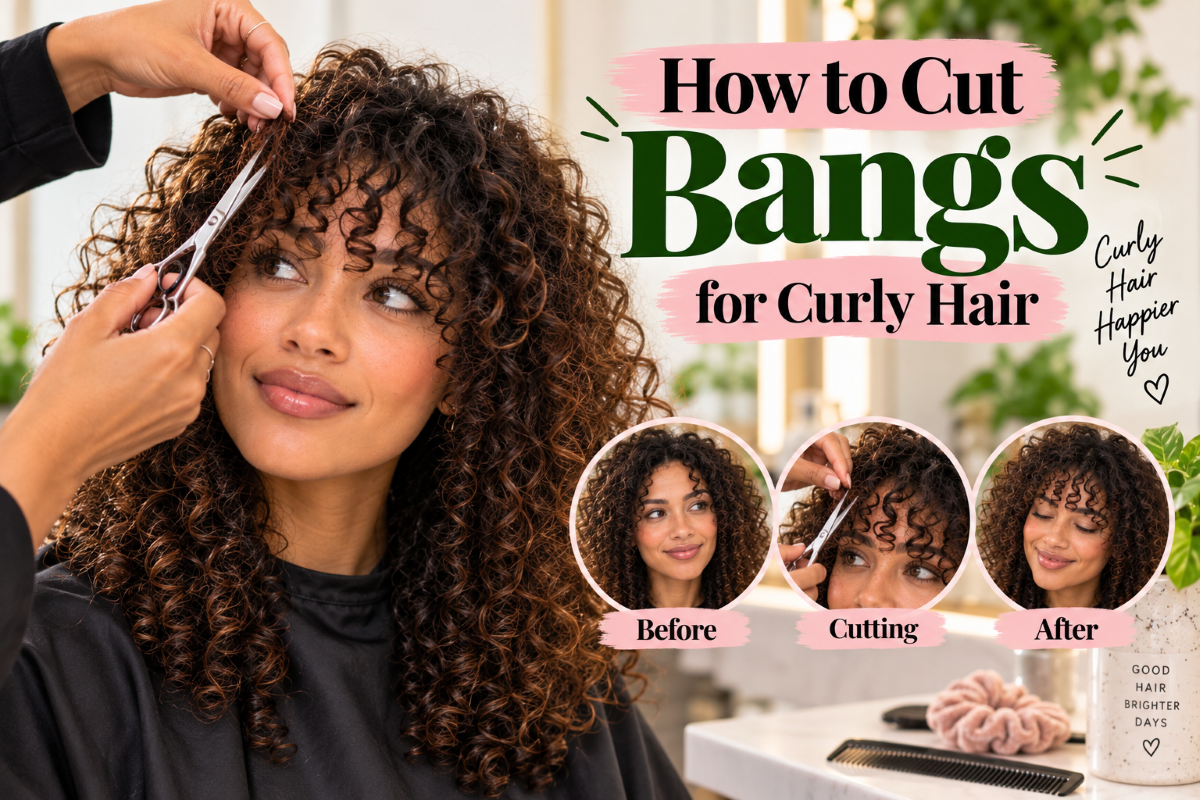
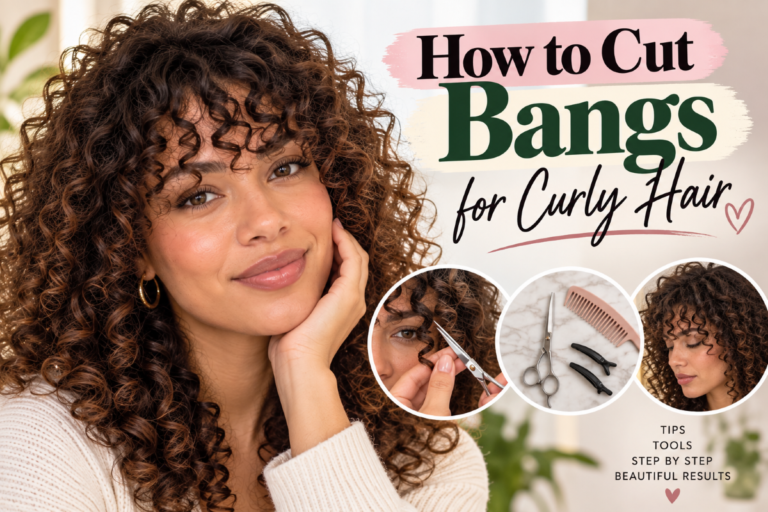
Here’s how to cut bangs for curly hair without wrecking your curls: cut them dry, in your natural curl pattern, and start way longer than you think you should. Curls spring up as they dry, sometimes by an inch or more, so a cut that looks perfect wet can end up halfway up your forehead by lunchtime.
I’ve seen it happen more times than I can count, and honestly, I get the urge to just grab the scissors. This guide walks you through every step, from sectioning to snipping, so your bangs look intentional instead of accidental.
Why Curly Bangs Play by Different Rules
Straight bangs sit exactly where you cut them. Curly bangs don’t. That’s the one thing that catches almost everyone off guard, and it’s why a five-minute trim can turn into a three-month grow-out.
Shrinkage Is the Sneaky Part
When curly hair is wet or stretched, it looks longer than it really is. Once it dries and the curl pattern snaps back, it can shrink by a quarter of its length, or by more than half with tighter coils. Loose waves (type 2) barely budge. Type 3 curls and type 4 coils are where the surprises happen.
So bangs that graze your eyebrows when stretched might sit at your hairline once they spring up.
Your Hairline and Cowlicks Call the Shots
Look at the front of your hairline when your hair is dry and unstyled. Does it swirl, part itself, or push to one side? That’s a cowlick, and it decides how your bangs will fall no matter what you had in mind. Work with it and you’ll get a soft, lived-in shape. Fight it and you’ll be pinning it down every morning.
Density Changes the Whole Look
Thick, dense curls make full bangs look bold and dramatic. Finer curls can look wispy and see-through if you take too much hair from the sides. Pull a small section forward and check how much coverage you really have before you commit.
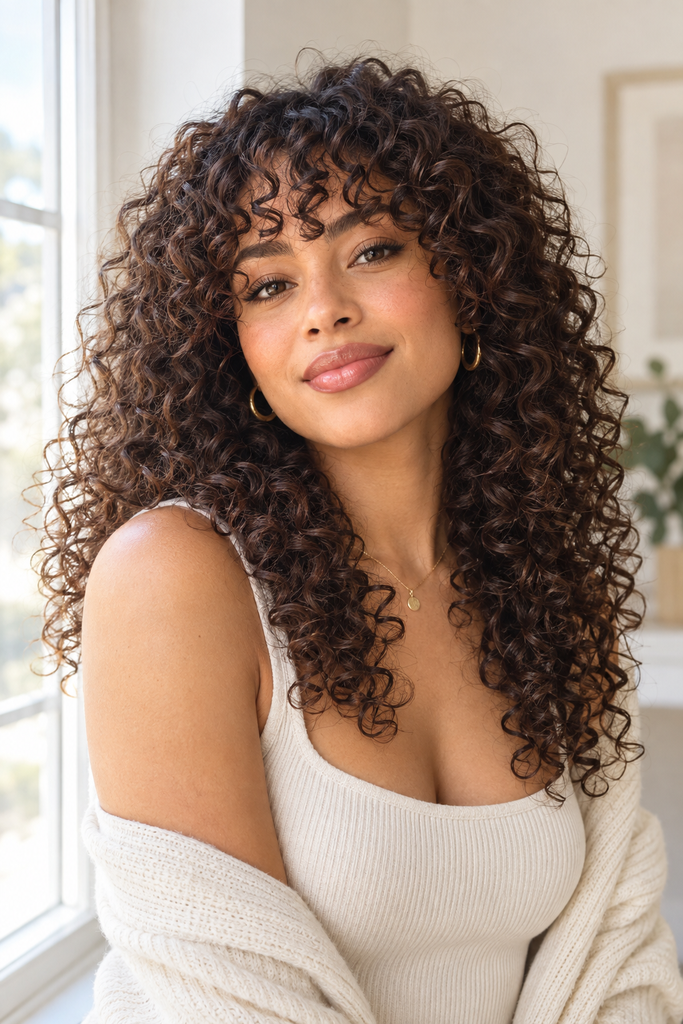
Which Bang Style Works Best for Your Curl Type
Quick note for UK readers: fringe and bangs are the same thing. I’ll say “bangs” here, but every tip works for a curly fringe too.
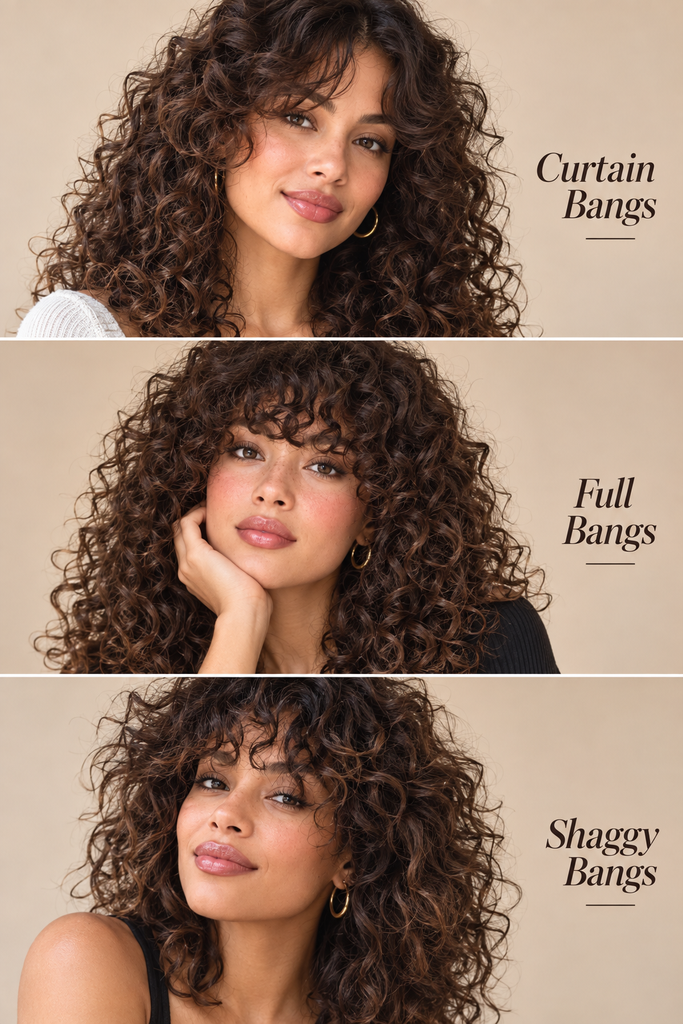
Curtain Bangs: The Forgiving Starter
Curtain bangs part in the middle and sweep out to each side, blending into the rest of your hair. That blend is what makes them so forgiving. They suit waves and loose to medium curls beautifully, and they grow out gracefully. If this is your first time, start here.
Full Bangs: High Impact, Higher Maintenance
Full bangs across the forehead look bold and, on the right head, gorgeous. They need decent density, a cooperative hairline, and more frequent trims. Cut them longer first. You can always go shorter, but you can’t glue hair back on.
Shaggy, Textured Bangs: Great for Tight Curls and Coils
Choppy, layered bangs celebrate volume instead of fighting it. Because a crisp edge isn’t the goal, small imperfections just disappear into the texture. If your hair is 3C to 4C, this is a smart, low-stress way in.
[IMAGE: Side-by-side look at curtain, full, and shaggy curly bang styles]
Image Prompt (2:3 vertical): Vertical triptych collage of three women with different curl patterns, each wearing a different bang style: curtain bangs, full bangs, and shaggy textured bangs. Clean studio backdrop in warm beige, soft diffused lighting, head-and-shoulders framing. Modern editorial beauty photography.
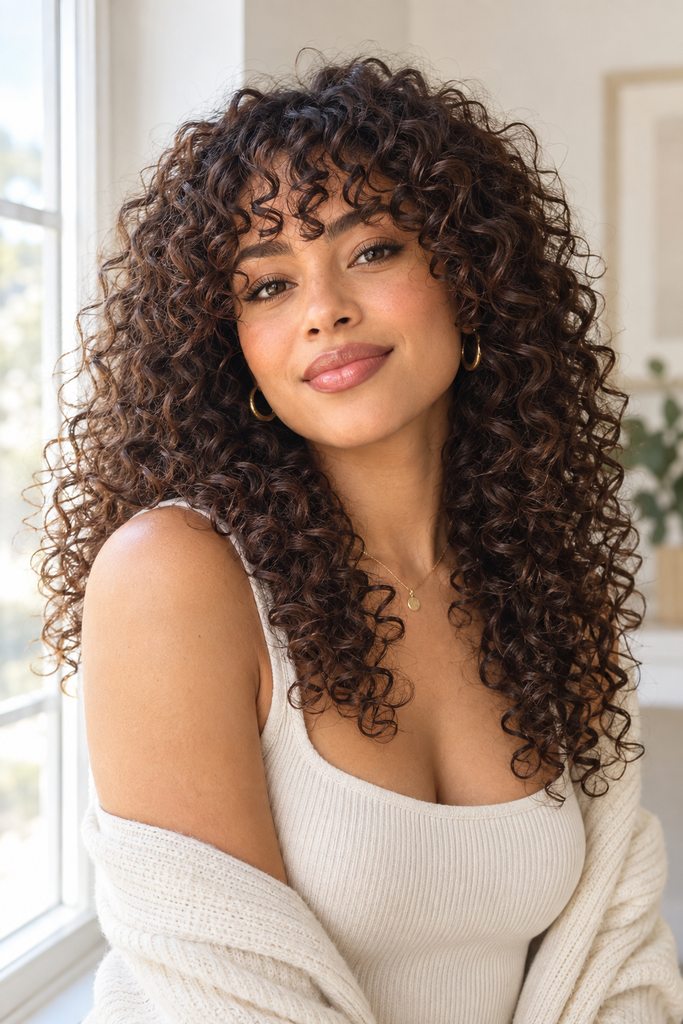
How to Cut Bangs for Curly Hair, Step by Step
Set aside about twenty minutes, find good light, and put your phone on the counter. Rushing is how bangs go wrong.
Gather Your Tools
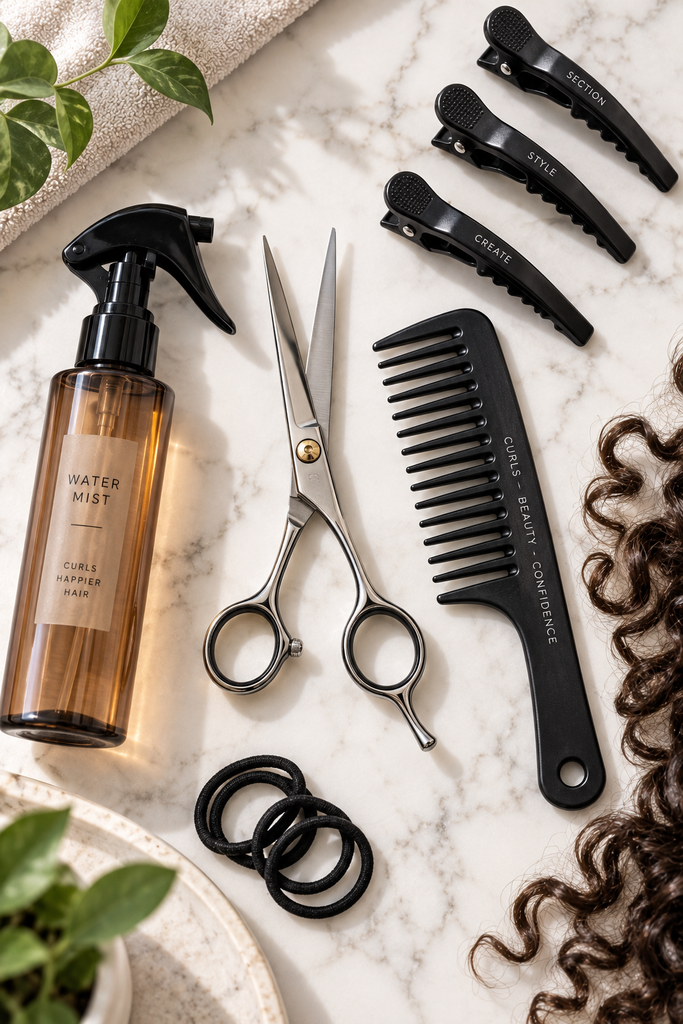
- Sharp hair-cutting shears. Kitchen scissors chew curls and leave ragged ends.
- A wide-tooth comb or just your fingers.
- Two or three clips to hold the rest of your hair back.
- A handheld mirror and a big one, so you can check the sides.
- A spray bottle of water for refreshing curls between snips, not for cutting wet.
Section and Prep
- Start with dry hair styled how you normally wear it. This is the single biggest rule. You’re cutting the hair you’ll actually see, not the hair you have in the shower.
- Separate your curls gently with your fingers. Skip the brush, because it turns curls into a frizzy cloud.
- Make a triangle section at the front. The base runs along your hairline from about the outer edge of one eyebrow to the other. For light, curtain-style bangs, keep the triangle shallow, around an inch and a half back. Go a little deeper for fuller bangs.
- Clip everything else out of the way.
- Let the section fall forward naturally. Don’t flatten it with a comb.
Cut and Refine
- Pick your target length, like eyebrow level, then plan to cut one to two inches longer for the first pass.
- Work with one curl or a small group of curls at a time. Hold each near the root without pulling. Stretching is what causes surprise shrinkage.
- Point cut instead of chopping straight across. Turn the shears vertically and snip small bits into the ends. It softens the edge and keeps curls from stacking into one heavy shelf.
- Start in the center and work outward, blending the sides into your face-framing pieces.
- Shake your head, let the curls reset, and step back. Check the mirror from a few angles.
- Trim a touch more only if you need to. Then leave it alone until tomorrow. Bangs look different after a full wash and style, and patience really does pay off here.
Cutting Methods Compared (Pick What Fits Your Skill Level)
There’s more than one way to trim curls, and the right one depends on your comfort with scissors and your curl pattern. Here’s how the popular options stack up.
| Method | Best For | Skill Level | Regret Risk |
|---|---|---|---|
| Dry curl-by-curl cut | Almost every curl type, first-timers | Beginner | Low |
| Vertical point cutting | Soft, blended edges | Beginner to intermediate | Low |
| Twist-and-snip | Textured, shaggy looks on medium to tight curls | Intermediate | Medium |
| Razor cutting | Feathery, wispy texture | Advanced (pro only) | High |
| Wet cutting | Straighter hair, not ideal for curls | Intermediate | High |
The Method I’d Pick for Beginners
Dry, curl-by-curl point cutting. It’s slow, and that’s exactly why it works. You see the real result after every snip, so there’s no guessing about shrinkage.
Why I’d Skip the Razor at Home
Razors can create beautiful, airy texture, but on curls they can also rough up the cuticle and cause frizz if the angle is off. That’s a job for a stylist, ideally one trained in curl-specific cutting like the DevaCut.
Common Mistakes That Lead to Bang Regret
I’ve fixed my share of DIY bangs, and the same few slip-ups keep showing up.
Cutting Them Wet
It’s tempting because wet hair is easy to control. But wet curls stretch, and dry curls don’t. You’ll cut too short, every time.
Chopping Straight Across in One Go
One big horizontal snip leaves a blunt, heavy line that curls will push around unpredictably. Small vertical snips give you softer edges and total control.
Using Dull or Household Scissors
Dull blades fold and crush curl strands instead of slicing them. That means split ends and an uneven line. Real hair shears aren’t cheap, but they cost far less than a bad cut and a year of growing it out.
Taking a Section That’s Too Wide
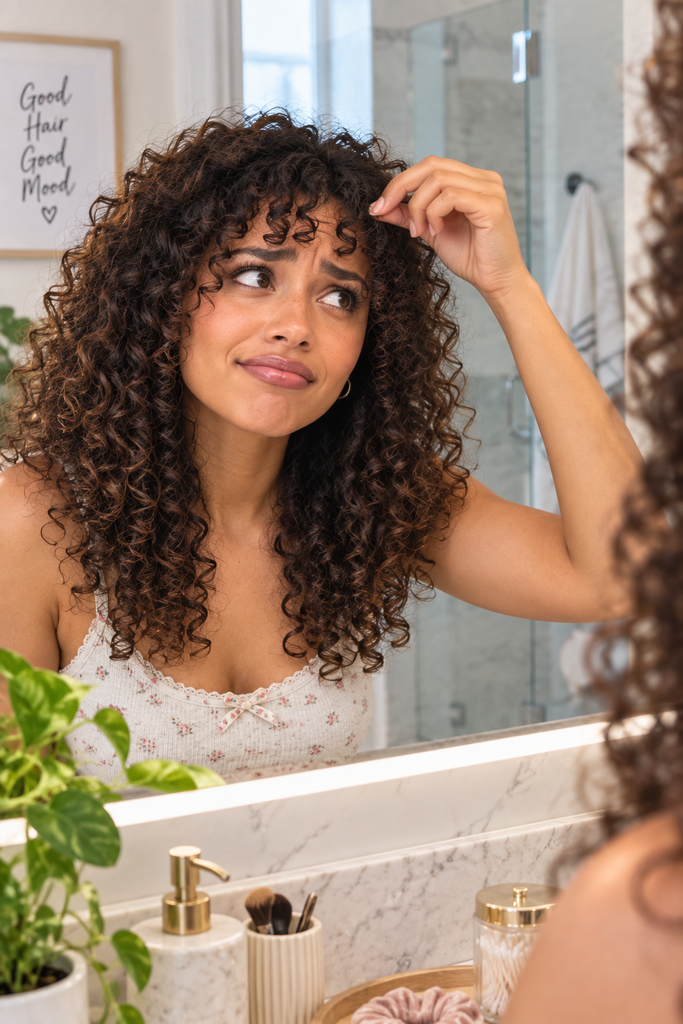
A section that stretches too far back or too far to the sides eats into the rest of your hair. Start narrow. You can widen it later, and narrowing it means waiting for regrowth.
How to Style and Maintain Curly Bangs
A great cut only looks great if you style it well. Bangs are also the part of your hair that shows up in every photo and every mirror, so they deserve a little extra attention.
Wash Day Routine for Bangs
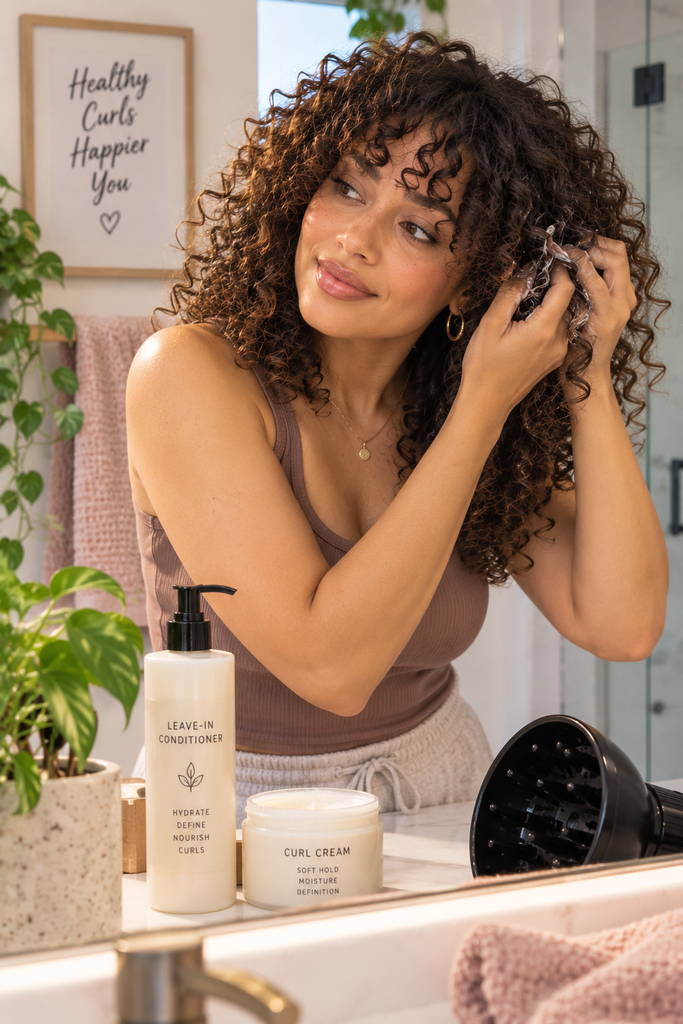
Wash and condition as usual, then treat your bangs like their own mini section. Apply a leave-in conditioner and a light curl cream or gel, scrunch upward, and then leave them alone. Air dry or diffuse on low heat. Touching curls while they dry is the fastest route to frizz.
Between Wash Days
Bangs pick up oil from your forehead faster than the rest of your hair. You can rinse just the front in the sink, then restyle with a little water and product. Dry shampoo at the roots buys you an extra day. At night, a loose silk scrunchie or a silk bonnet keeps them from flattening.
How Often to Trim
Every four to six weeks is a good rhythm. Many salons will do quick bang trims for little or nothing, so ask.
Pro Tips From the Salon Chair
Test-Drive Your Bangs First
Before you cut a single strand, clip a small section of hair forward and let it fall where your bangs would sit. Wear it for a day. It’s a free preview, and plenty of people decide they’d rather go for curtain bangs after trying it.
Take a Photo First
Snap a picture of your hair dry and natural. It’s a great reference to keep you honest, and it’s the best thing to show a stylist if you ever need a repair.
Know When to Book a Stylist
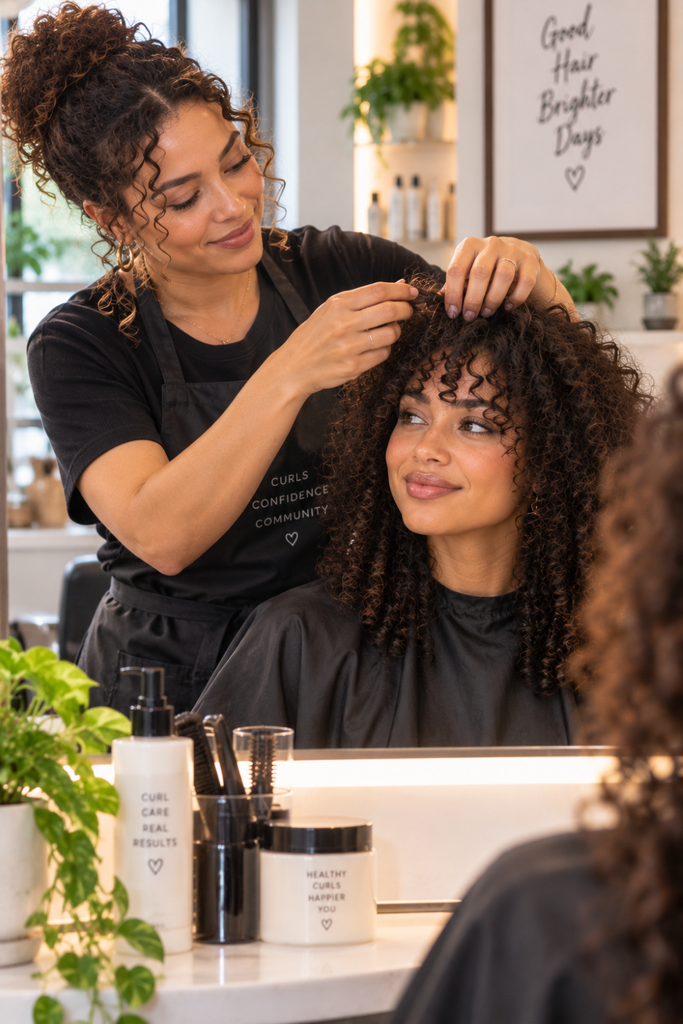
If you have tight coils, a strong cowlick, chemically treated hair, or you’re making a big change, a professional consult is worth it. And if you’re still unsure how to cut bangs for curly hair that has a mind of its own, a curl specialist can shape them to your exact texture in one visit.
Frequently Asked Questions
Can you cut your own curly bangs at home?
Yes, and plenty of people do it successfully. Cut them dry, start longer than you want, and work in tiny vertical snips. If your hair is very tight-coiled or you have a strong cowlick, a stylist visit is safer.
Should you cut curly bangs wet or dry?
Dry. Curly hair shrinks as it dries, so cutting wet almost always leaves your bangs shorter than you planned. Cutting dry lets you see the final length as you go.
How long should curly bangs be?
Aim for about one to two inches longer than your goal on the first pass. Eyebrow-length is a popular target, but tighter curls will spring up higher, so start at cheekbone length if you want them to end up near your brows.
What kind of bangs look best on curly hair?
Curtain bangs and shaggy, textured bangs are the most forgiving because they blend into the rest of your hair. Full bangs can look stunning too, but they need denser hair and more frequent trims.
How often should you trim curly bangs?
Every four to six weeks keeps them out of your eyes and holding their shape. Curly bangs can look shorter than they are, so check them when they start to touch your lashes.
Your Curls, Your Pace
Bangs are just hair, and hair grows back. Go slow, cut small, and let your curls show you where they want to land. If you want to save this for later, pin it to your hair board, and tell me in the comments which style you’re trying first.



One Comment