
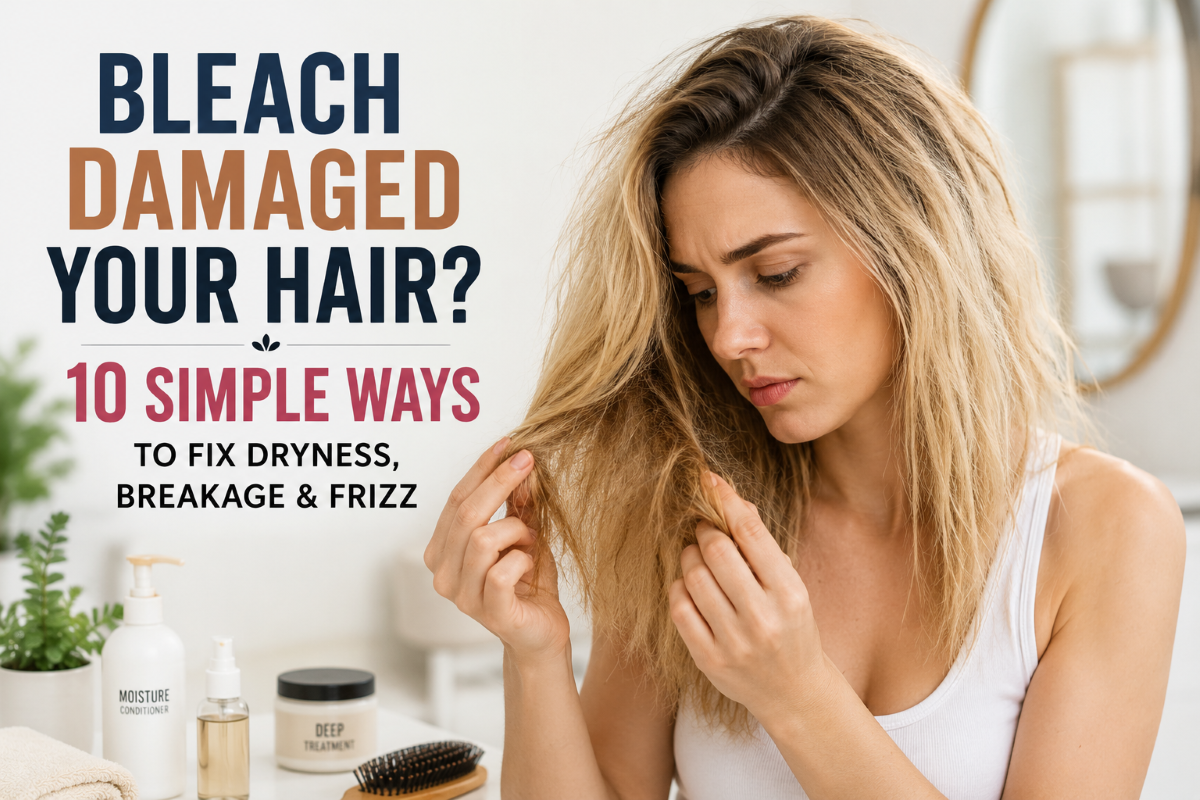
Bleach lightens hair through a chemical process, and depending on how often it is used, it can leave hair dry, porous, weak, and prone to breakage. I want to be upfront from the start. Bleach damage cannot be reversed overnight, and no product is going to undo chemical processing completely.
What is actually achievable is stopping further damage, making hair softer and more manageable, reducing breakage, protecting the length you already have, and identifying which sections are too damaged to save. Repair, in this context, means improving the condition and appearance of your hair, not completely undoing what bleach has already done.

1. What Bleach Does to Your Hair
Bleach works by removing the natural pigment from your hair, and that process can weaken the hair fiber along the way, especially with repeated use.
Bleach damaged hair may feel:
- Dry
- Rough
- Coarse
- Tangled
- Weak
- Less flexible
- Frizzy
- Difficult to style
Common signs of bleach damage:
- Split ends
- Short broken strands
- Increased frizz
- Hair snapping during brushing
- Uneven ends
- Hair that feels unusually stretchy when wet
- Loss of softness and smoothness
2. Is Bleach Damage Permanent?
This is the misconception I want to clear up early, because it shapes everything else in this guide.
Severely damaged hair does not fully return to its original healthy state. What conditioning and protective treatments can do is make hair smoother, softer, and easier to manage. Protecting your existing hair matters while healthier new growth comes in, and severely damaged sections may eventually need to be trimmed.
Simple explanation: You can improve damaged hair, but you cannot turn severely damaged strands back into completely untreated hair.
3. First Step: Stop Bleaching the Damaged Hair
Before any recovery routine can work, you need to stop adding new damage on top of the old.
For now, try to avoid:
- Repeated full head bleaching
- Bleaching lengths that are already lightened
- Frequent chemical services back to back
- High heat styling right after bleaching
- Unnecessary home chemical experiments
A better approach:
Allow real time between chemical treatments, have a professional assess very fragile hair before another bleach session, and avoid overlapping bleach onto already processed lengths whenever you can.
4. Be Careful With Heat After Bleaching
Bleached hair usually needs more careful handling than hair that has not been chemically processed.
Reduce:
- Straighteners
- Curling irons
- Very hot blow drying
- Repeated heat passes over the same section
If heat styling is necessary:
- Use a suitable heat protectant every time
- Use the lowest practical temperature
- Keep the tool moving instead of holding it in place
- Avoid repeatedly styling the same damaged section
Bleached hair does not need more styling pressure while it is already fragile. Give it room to recover between heat sessions.
5. Make Conditioner a Regular Part of Your Routine
Conditioner should be a non negotiable step for processed hair, not an occasional extra.
It can help with:
- Slip
- Detangling
- Softness
- Smoothness
- Reduced friction
- Better manageability
How to use it:
Concentrate the product on mid lengths and ends, follow the instructions on the packaging, and avoid aggressively rubbing your hair while applying or rinsing it out.
6. Add Deep Conditioning When Hair Feels Very Dry
A deeper treatment becomes useful once regular conditioner stops feeling like enough.
Consider it when hair feels:
- Very dry
- Rough
- Tangled
- Stiff
- Difficult to manage
A practical routine:
Apply mainly to the lengths and ends, leave it on according to the product directions, rinse thoroughly, and do not assume leaving it on much longer automatically gives better results.

7. Understand Moisture vs Strengthening Treatments
This distinction stops a lot of people from overusing one type of product and neglecting the other.
| Hair Feels | Likely Needs |
|---|---|
| Dry, rough, frizzy, stiff | Moisture focused care |
| Weak, fragile, over processed, prone to breakage | Strengthening or protein focused care |
| Stiff or brittle after treatments | Less strengthening, more moisture |
More strengthening products are not automatically better. Some hair can feel stiff or less flexible when these treatments are overused, so the routine should be adjusted based on how your hair actually responds, not on a fixed schedule.
8. Consider Bond Building or Strength Focused Treatments
These treatments are designed to support the condition of chemically processed hair, improve manageability, reduce the feeling of weakness, and help hair look and feel smoother.
It is worth keeping expectations realistic here. These products can genuinely improve how damaged hair feels and behaves, but they do not completely undo severe chemical processing. Think of them as support for the hair you have, not a way to erase the bleaching history.
9. Handle Bleached Hair Gently When Wet
Wet, chemically processed hair is at its most vulnerable, so this stage deserves extra attention.
A better routine:
- Gently squeeze out excess water
- Avoid rough towel rubbing
- Apply conditioner or a suitable detangling product
- Start detangling from the ends
- Move slowly toward the roots
- Stop if a knot does not release easily rather than forcing it
Avoid pulling or repeatedly brushing the same area, since that is often where the most breakage happens.

10. Use a Gentle Drying Method
Avoid:
- Aggressive towel rubbing
- Twisting wet hair tightly
- Pulling on wet strands
- High heat for long periods
A better approach:
Blot or gently squeeze the hair, use a soft microfiber towel, allow some air drying when practical, and use controlled low or moderate heat if a dryer is genuinely needed.
11. Be Careful When Brushing and Styling
Bleach damaged hair can break during brushing even when it looks fine from a distance, so the technique matters.
Try:
- Wide tooth combs
- Detangling brushes designed for wet or fragile hair
- Finger detangling before brushing
- Starting at the ends
- Loose hairstyles
Avoid:
- Pulling from roots to ends in one motion
- Brushing aggressively through knots
- Tight elastics
- Repeatedly touching or pulling at fragile sections
12. Protect Bleached Hair While Sleeping
Nighttime friction can contribute to tangling and breakage, so a few small adjustments go a long way.
Helpful habits:
- Keep hair loosely secured
- Avoid tight overnight hairstyles
- Use a smooth pillowcase
- Keep the ends protected
- Avoid sleeping with severely tangled hair
13. Protect Bleached Hair From Sun, Pool, and Salt Water
Bleached hair tends to struggle more with environmental stress than untreated hair.
At the beach: consider wearing a hat, reduce prolonged direct sun exposure, and use a suitable protective product when appropriate.
At the pool: rinse hair after swimming and avoid leaving chlorinated water sitting in your hair for long periods.
In the sea: rinse away salt water when possible and follow up with conditioning care afterward.
14. Stop Repeated Chemical Processing on Already Damaged Areas
The same lengths should not keep receiving aggressive treatment session after session.
Be cautious with:
- Repeated bleaching
- Frequent permanent color
- Chemical straightening
- Relaxing
- Multiple services within a short period
A better strategy is treating new growth and existing lengths differently when appropriate, rather than automatically processing the whole head the same way every time.
15. Can Hair Oil Help Bleach Damaged Hair?
A balanced answer here is more useful than an oversold one. Oils can improve lubrication and reduce friction, which may make dry hair feel softer and easier to manage. What oil cannot do is reverse severe chemical damage. Use the amount that works for your hair without leaving it feeling overly heavy, and do not treat any particular oil as a permanent repair solution.
16. When Should You Cut Bleach Damaged Hair?
A trim may be helpful when:
- Ends are severely split
- Hair keeps snapping at the ends
- The bottom looks very thin or transparent
- Ends remain rough despite conditioning
- Damage is concentrated near the tips
A larger cut may be worth considering when:
- Damage extends far up the lengths
- Hair stretches dramatically when wet
- Large sections repeatedly snap
- The ends feel extremely weak
Cutting removes damaged material. It does not repair the hair that remains, but it does stop the damage from continuing to spread upward.
17. What to Do if Bleached Hair Feels Stretchy When Wet
This is worth its own section because it is a warning sign a lot of people miss.
Warning signs to watch for:
- Hair stretches excessively when wet
- It feels weak or gummy
- It breaks easily during gentle handling
- Hair seems unable to hold its usual shape
What to do:
Stop additional chemical processing, minimize heat, handle wet hair very carefully, focus on conditioning and appropriate strengthening care, and consider a professional assessment if the damage feels severe.
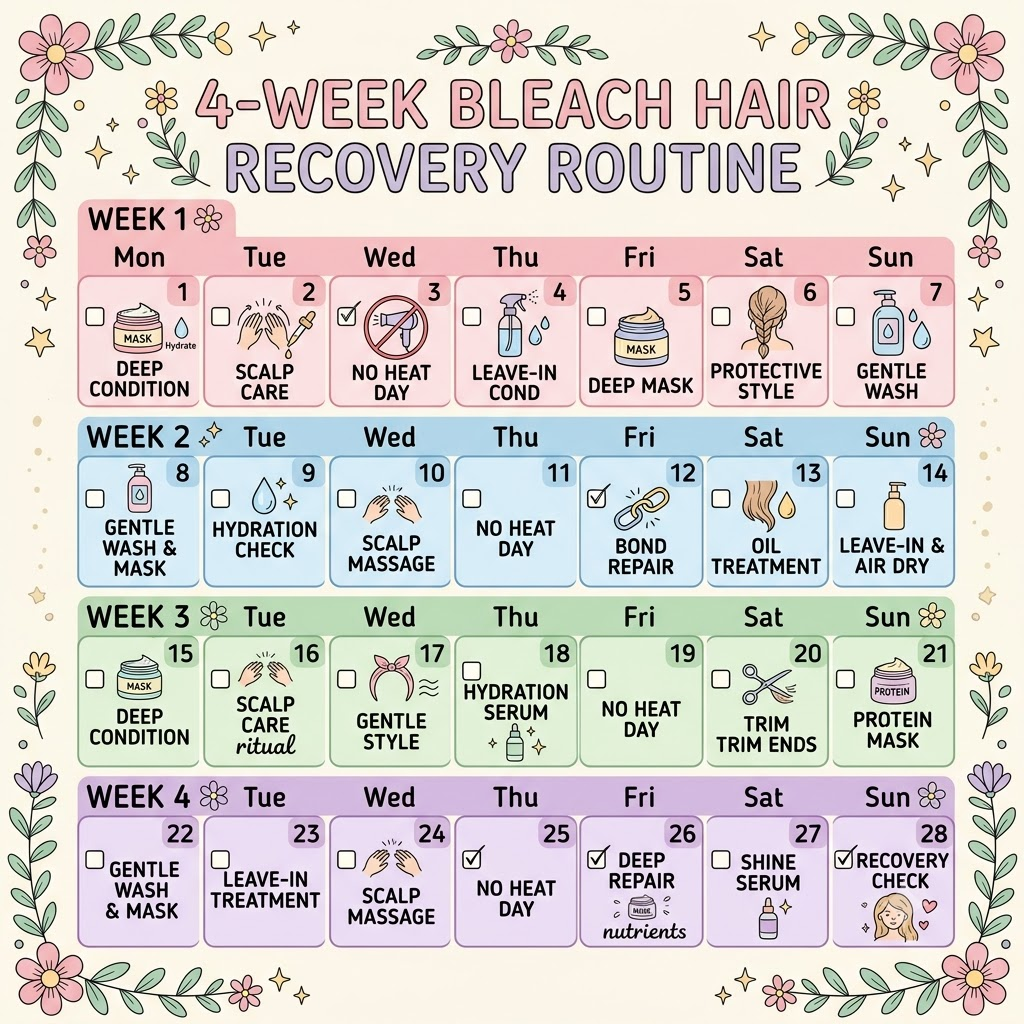
18. A Simple 4 Week Bleach Damage Recovery Routine
Week 1, Stop Further Damage
Pause unnecessary bleaching, reduce heat, stop rough brushing, and improve how you handle wet hair.
Week 2, Improve Conditioning
Condition consistently, add deep conditioning if it suits your hair, and reduce friction while drying and detangling.
Week 3, Focus on Protection
Protect hair while sleeping, avoid tight hairstyles, reduce environmental stress, and use heat protection whenever heat is genuinely necessary.
Week 4, Evaluate
Look for softer texture, easier detangling, less frizz, less snapping, and improved manageability overall.
Improvement mainly means less ongoing damage and better manageability, not that previously bleached strands become completely untreated again.
19. Simple Wash Day Routine for Bleached Hair
Before washing: gently detangle obvious knots and avoid aggressive brushing.
During washing: clean the scalp gently, avoid rough rubbing of the lengths, and condition the lengths thoroughly.
After washing: blot excess water, apply suitable leave-in care if needed, detangle gently, and minimize heat.
20. Common Mistakes People Make After Bleaching
Mistake 1: Bleaching again too soon. This adds more stress to hair that is already processed.
Mistake 2: Straightening every day. Repeated heat can worsen weakness and dryness.
Mistake 3: Brushing wet hair aggressively. Fragile strands can snap easily at this stage.
Mistake 4: Using too many treatments at once. A complicated routine makes it hard to tell what is actually helping.
Mistake 5: Ignoring severe split ends. Some damaged sections are better off removed than treated repeatedly.
Mistake 6: Expecting one product to reverse everything. Recovery is usually about consistent care and preventing new damage, not a single fix.
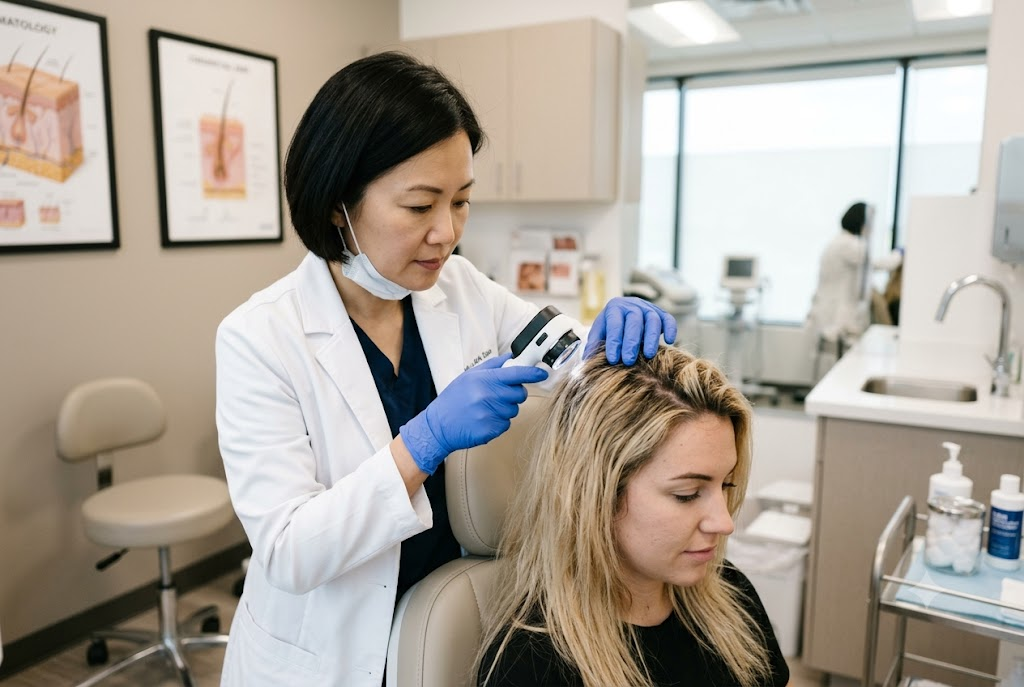
21. When to See a Dermatologist or Hair Professional
Professional evaluation is worth pursuing when:
- Hair breakage becomes severe or sudden
- You notice significant thinning
- Bald patches appear
- The scalp becomes painful, red, itchy, or irritated
- Hair continues breaking despite reducing chemical and heat damage
- You are unsure whether the problem is breakage, shedding, or a scalp condition
22. Quick Bleach Damaged Hair Checklist
- Pause unnecessary bleaching
- Reduce heat styling
- Use conditioner consistently
- Add deep conditioning when appropriate
- Detangle gently
- Handle wet hair carefully
- Avoid tight hairstyles
- Protect hair while sleeping
- Limit repeated chemical processing
- Protect hair from sun and swimming
- Trim severely damaged ends when needed
- Seek professional help for severe damage
Final Takeaway
Bleach damaged hair usually improves most when you stop adding new stress and build a simple protective routine around what you have left. The practical approach is to pause further damage, condition consistently, handle everything gently, reduce heat, protect the hair, trim severely damaged ends when necessary, and stay consistent with all of it.
The goal is not making severely damaged strands completely new again. It is reducing breakage, improving how the hair feels and looks day to day, and protecting healthier new growth as it comes in.
Frequently Asked Questions
Can bleach damaged hair be repaired?
Conditioning and protective care can meaningfully improve how bleach damaged hair looks and feels, including softness, smoothness, and manageability. Severe damage cannot be completely reversed, since the hair fiber itself does not regenerate.
How long does it take to fix bleach damaged hair?
There is no single timeline that applies to everyone. Results depend on how severe the damage is, how much further processing you avoid, and how consistently you follow a gentle care routine.
Should I stop bleaching my hair if it is breaking?
Pausing or changing your processing approach is usually a sensible move when hair is visibly fragile, since continuing to bleach already weakened hair tends to make breakage worse.
Does Olaplex or a bond treatment repair bleach damage?
Bond focused treatments are designed to support the condition of chemically processed hair and can noticeably improve manageability and feel, but they do not guarantee a complete repair of severely bleached hair.
Is oil good for bleached hair?
Oil can improve lubrication and manageability, making dry hair feel smoother and easier to handle, but it does not rebuild hair fibers that have already been chemically damaged.
Should I cut off bleach damaged ends?
Trimming can improve the appearance of bleached hair and remove sections that are too compromised to recover with conditioning alone, especially when ends are severely split or repeatedly snapping.
Why is my bleached hair stretchy when wet?
Excessive stretchiness when wet can be a sign of weakened, over processed hair, and it should be handled very carefully. If it is severe, a professional assessment is worth considering.
Can I straighten bleached hair?
You can, but it is worth reducing how often you do it and always using heat protection along with the lowest practical temperature, since bleached hair is generally more vulnerable to heat damage than untreated hair.
PINTEREST PIN ELEMENTS
Pin Title Options:
- How to Fix Bleach Damaged Hair: A Realistic Recovery Guide
- Bleached Hair Breaking? Here Is Your 4 Week Recovery Routine
- Is Bleach Damage Permanent? What You Can Actually Fix
Pin Description: Bleached hair feeling dry, weak, or stretchy when wet? This guide walks through exactly what bleach does to hair, what can realistically be repaired, and a simple 4 week routine to reduce breakage and protect your length.
Hashtags: #bleacheddamagedhair #hairrepair #bleachedhair #haircaretips #healthyhairroutine #bondbuildingtreatment #damagedhaircare #haircareroutine #hairbreakage #hairtips


One Comment