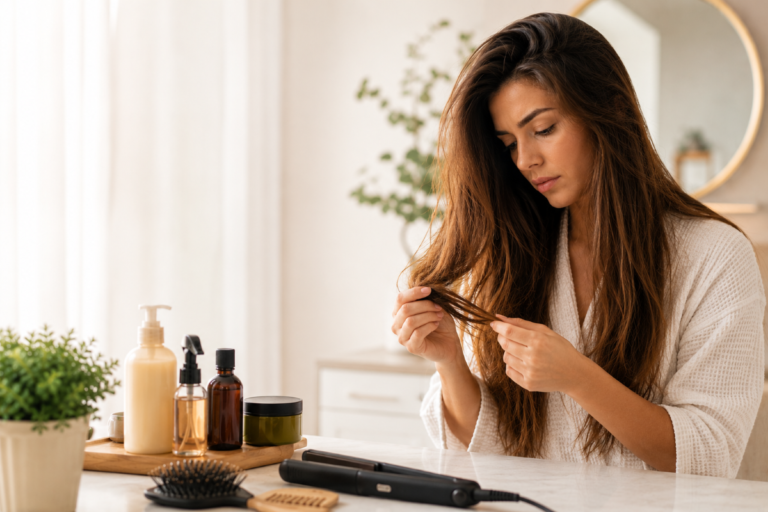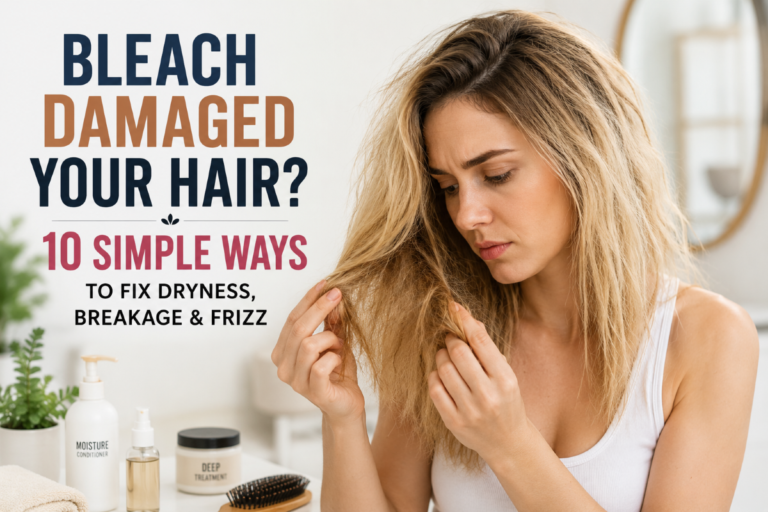
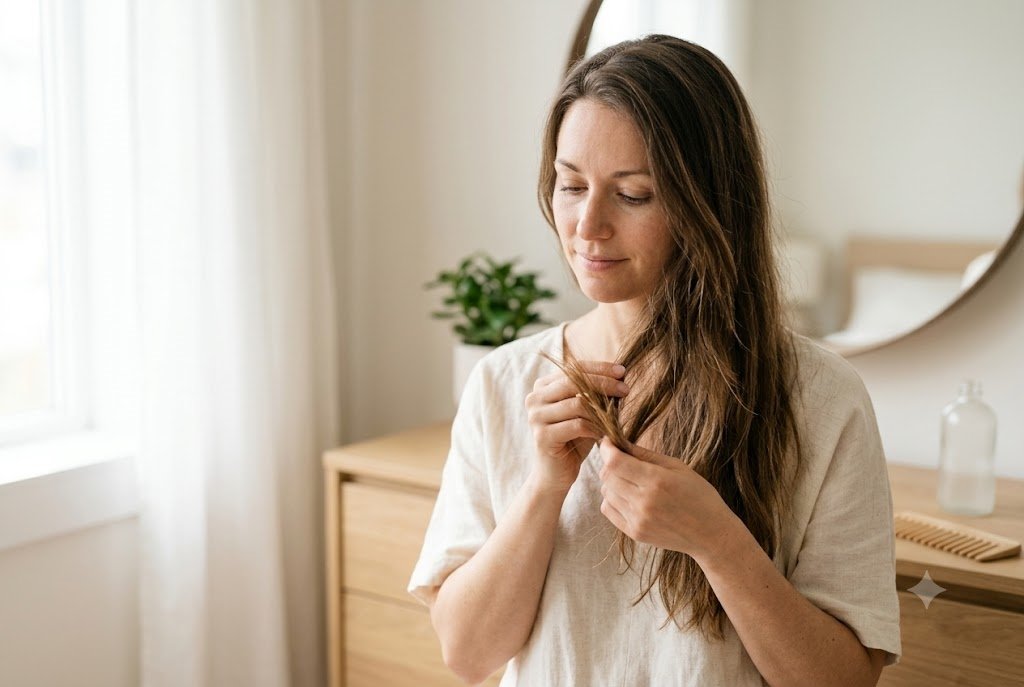
Hair breakage is not the same thing as hair fall, even though people often mix the two up. Breakage happens when the hair fiber snaps somewhere along its length, not when a full strand comes out from the root. Once you understand that difference, fixing the problem becomes a lot more straightforward.
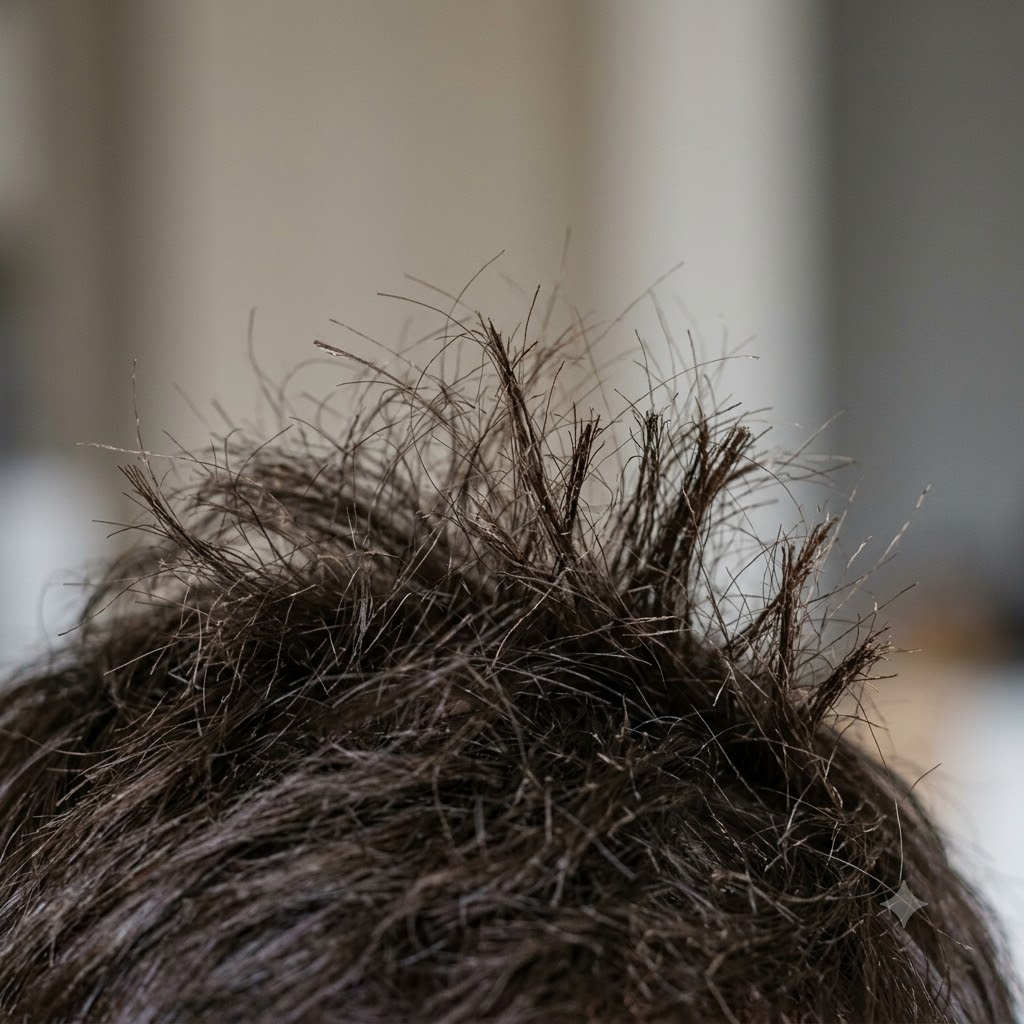
Common signs of hair breakage:
- Short broken strands scattered through your hair
- Uneven hair lengths
- Split or frayed ends
- Hair snapping while you comb it
- Excessive frizz
- Short broken pieces around the hairline
The most important step in controlling breakage is reducing the repeated stress your hair goes through every day, whether that is heat, tension, or rough handling. This guide keeps things practical so you can actually build a routine around it.
1. First, Understand Why Your Hair Is Breaking
Breakage usually comes down to a few overlapping categories rather than one single cause.
Common causes of hair breakage:
- Frequent heat styling
- Bleaching and repeated coloring
- Chemical straightening or relaxing
- Rough brushing and detangling
- Tight ponytails, buns, braids, or extensions
- Dryness and lack of conditioning
- Rough towel drying
- Excessive friction from clothing or pillows
- Over processing the same sections of hair repeatedly
- Frequent swimming without proper aftercare
At its core, breakage happens because the hair fiber gets weaker over time, and eventually it snaps under everyday tension or friction that healthy hair would normally handle fine.
2. Hair Breakage vs Hair Shedding: Know the Difference
These two get confused constantly, so here is a simple way to tell them apart.
| Hair Breakage | Hair Shedding | |
|---|---|---|
| Where it happens | Along the length of the strand | From the scalp, at the root |
| What you notice | Short pieces of different lengths | Whole strands coming out |
| End of the strand | Rough, split, or frayed | Often has a small club shaped end |
| Cause | Mechanical, heat, or chemical stress | Part of the natural hair growth cycle |
Knowing which one you are dealing with matters, because the fix is different. Breakage responds to gentler handling and reduced stress, while shedding is more connected to what is happening at the scalp and follicle.
3. Stop the Habits That Are Causing Breakage
This is the first real action step, and skipping it means everything else works less effectively.
Reduce mechanical stress:
- Do not yank through tangles
- Avoid aggressively brushing wet hair
- Do not repeatedly pull the same section
- Avoid very tight hairstyles
Reduce chemical stress:
- Space out chemical treatments
- Avoid reprocessing lengths that are already damaged
- Be especially careful with heavily bleached hair
Reduce heat stress:
- Avoid unnecessary daily heat
- Use lower practical temperatures
- Use heat protection whenever you do style with heat
You cannot improve breakage while you are still continuously creating new damage. This is the one step that has to come first.
4. Be Gentler When Your Hair Is Wet
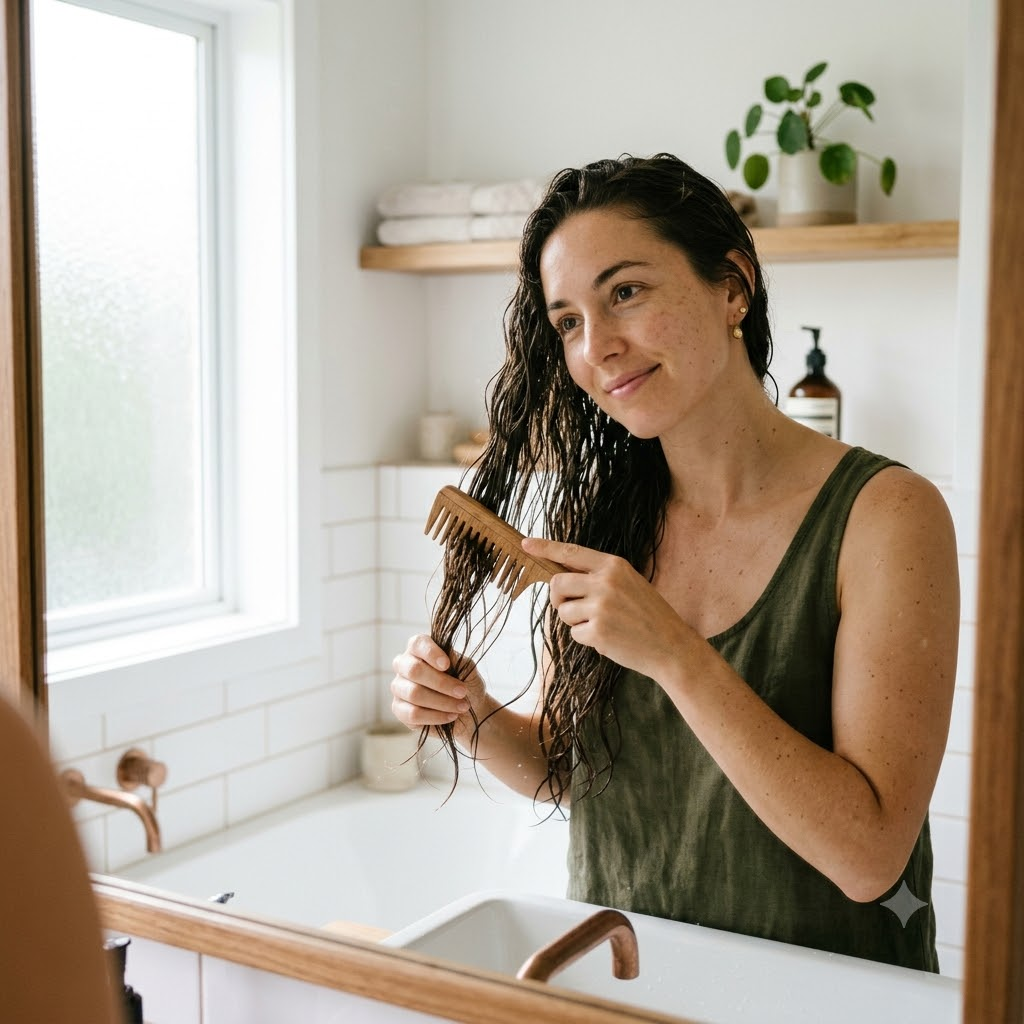
Wet hair stretches more easily and is more vulnerable to mechanical damage, so this stage deserves extra care.
A better wet hair routine:
- Gently remove excess water
- Avoid vigorous towel rubbing
- Use conditioner before detangling when it makes sense for your hair
- Use a wide tooth comb or a suitable detangling brush
- Start from the ends and move upward
- Never force through large knots
5. Improve Your Conditioning Routine
Conditioning is one of the easiest changes you can make, and it has a direct effect on how much stress your hair goes through during everyday handling.
Regular conditioner helps with:
- Reducing friction between strands
- Improving slip
- Making detangling easier
- Reducing roughness
- Improving softness and manageability
Deep conditioning, for hair that feels particularly dry or over processed, adds another layer of support. Use a suitable treatment periodically, focus it on the mid lengths and ends, and follow the instructions on the product rather than guessing.
It is worth being upfront here. Conditioning makes hair easier to handle and less prone to further breakage, but it cannot permanently repair strands that are already broken.
6. Detangle Without Breaking Your Hair
A safer detangling method:
- Start at the ends
- Work upward gradually
- Separate large knots with your fingers first
- Use controlled, gentle strokes
- Avoid rapidly brushing from roots to ends
If your hair is very tangled, use a conditioner or detangling product to improve slip before you pick up a comb. Never treat brushing as a race. The goal is removing tangles while creating as little pulling as possible.
7. Reduce Heat Damage
Repeated heat exposure is one of the more direct contributors to fragile, breakage prone hair.
If you use a straightener or curling iron:
- Use a heat protectant every time
- Use the lowest effective temperature
- Avoid repeatedly passing over the same strand
- Limit how often you style with heat
- Give your hair regular heat free days
With a hair dryer:
- Avoid holding it extremely close to the hair for long periods
- Keep the airflow moving instead of holding it in one spot
- Use a lower heat setting when practical
8. Be Careful With Tight Hairstyles
Repeated tension in the same spots is a common and often overlooked cause of breakage, especially around the hairline.
Avoid constantly wearing:
- Very tight ponytails
- Tight buns
- Very tight braids
- Heavy extensions
- Hairstyles that cause noticeable scalp pulling
Rotating your hairstyles and choosing looser options when you can makes a real difference over time. Pay particular attention if you are noticing short broken hairs specifically around the temples and hairline, since that is a classic sign of tension related breakage.
9. Protect Your Hair While Sleeping
Nighttime friction adds up more than most people realize, especially over weeks and months.
Helpful nighttime habits:
- Use a loose hairstyle instead of a tight one
- Avoid tight elastics overnight
- Consider a smooth pillowcase
- Avoid sleeping with heavily tangled hair
- Keep fragile ends protected rather than left loose to rub against fabric

10. Handle Towels and Drying More Carefully
A common mistake is rubbing hair aggressively with a rough towel right after washing, which increases friction exactly when hair is most vulnerable.
A better approach:
- Gently squeeze out excess water
- Wrap or blot instead of rubbing
- Use a soft microfiber or smooth towel
- Let hair air dry naturally when you have the time
The goal at this stage is simply reducing unnecessary mechanical stress right after washing.
11. Look at Your Hair Color and Chemical Treatments
Repeated chemical processing weakens the hair fiber and raises the risk of breakage over time.
Be especially cautious with:
- Bleaching
- Frequent permanent coloring
- Relaxers
- Chemical straightening
- Reprocessing hair that has already been treated
Give your hair time between treatments, avoid processing new growth and already damaged lengths the same way when it is not necessary, and ask a professional for advice if your hair starts feeling extremely weak or stretchy when wet.
12. Choose Products Based on Your Hair’s Needs
Rather than turning this into a shopping list, it is more useful to know what to actually look for.
| Hair Condition | Prioritize |
|---|---|
| Dry, rough hair | Conditioning, smoothness, moisture, frizz control |
| Chemically treated hair | Strengthening, bond focused, intensive conditioning |
| Fine hair | Lightweight formulas that do not weigh hair down |
The right routine should make your hair easier to handle day to day, not just add more products to your shelf.
13. Does Oil Help Hair Breakage?
Being realistic here matters more than being persuasive. Some oils can improve lubrication and reduce friction, which may make hair feel smoother and easier to comb. What oil cannot do is rebuild a strand that has already snapped. Use an amount that suits your hair type and washing routine, and do not expect any single oil to act as a guaranteed cure.
14. Do Protein Treatments Help Broken Hair?
Strengthening focused products can be worth considering for chemically processed hair, bleached hair, hair that feels weak, or hair that is prone to breakage.
That said, more is not always better. Some hair starts to feel stiff or less flexible with excessive use of strengthening treatments. The best approach depends on how your hair actually feels and behaves, not on following a fixed schedule.
15. When Should You Trim Your Hair?
Trimming can help when:
- Ends are heavily split
- Ends are visibly frayed
- Breakage is concentrated near the bottom of the hair
- Hair looks uneven because of damaged ends
It is worth being clear about the limits here too. A trim does not stop breakage that is being caused by ongoing heat, tension, chemicals, or friction happening elsewhere on the hair. It only removes what is already too damaged to save.
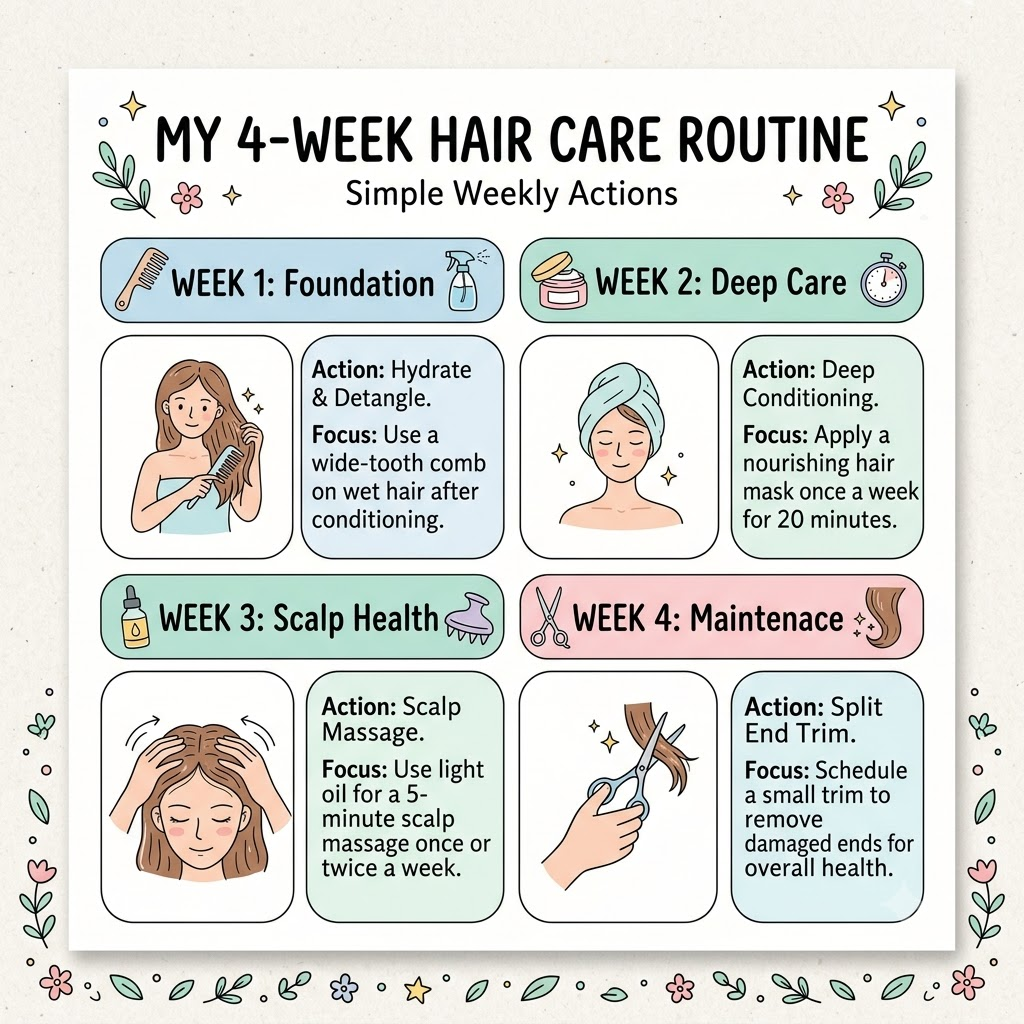
16. A Simple 4 Week Hair Breakage Recovery Routine
Week 1, Remove the Biggest Causes
Reduce heat styling, avoid tight hairstyles, stop rough towel drying, and start a gentler detangling method.
Week 2, Improve Conditioning
Use conditioner consistently, add deep conditioning if it suits your hair, and focus on reducing friction throughout your routine.
Week 3, Protect Fragile Hair
Use heat protection when necessary, protect hair while sleeping, and be more careful during brushing and styling.
Week 4, Check Your Progress
Look for fewer broken pieces, easier detangling, less frizz, softer ends, and fewer short broken strands around the hairline.
Keep in mind that previously broken hair does not grow back together. Progress mainly comes from preventing more breakage and retaining the new length that grows in.
17. A Simple Daily Routine for Breakage-Prone Hair
Morning: avoid unnecessary brushing, use gentle styling, avoid very tight hairstyles.
Wash day: clean the scalp gently, condition the lengths, detangle carefully, dry without aggressive rubbing.
During the day: reduce unnecessary friction, avoid repeatedly touching or pulling at your hair, protect it from excessive environmental stress.
Before bed: loosen any tight hairstyles, gently manage tangles, reduce friction against the pillow.
18. Common Hair Breakage Mistakes
Mistake 1: Brushing too aggressively. Pulling through knots can snap fragile strands.
Mistake 2: Using high heat every day. Repeated exposure weakens hair over time.
Mistake 3: Wearing the same tight hairstyle constantly. Repeated tension concentrates stress in the same spots.
Mistake 4: Overusing chemical treatments. Already weakened hair may not tolerate repeated processing well.
Mistake 5: Buying too many products. A complicated routine becomes harder to actually maintain.
Mistake 6: Expecting damaged strands to heal completely. Good care improves feel and appearance, but broken strands cannot be rejoined.
19. When Hair Breakage May Need Professional Evaluation
It is worth seeing a dermatologist or a qualified hair professional if you notice any of the following, since not every hair problem is caused by styling habits alone.
- Breakage that is sudden or severe
- Noticeable thinning
- Bald patches
- An itchy, painful, red, or irritated scalp
- Hair changes that continue despite improving your routine
- Uncertainty about whether you are dealing with breakage, shedding, or another issue entirely
20. Quick Hair Breakage Prevention Checklist
- Detangle gently
- Start brushing from the ends
- Reduce excessive heat
- Use heat protection when styling
- Avoid very tight hairstyles
- Condition regularly
- Handle wet hair gently
- Avoid rough towel rubbing
- Space out chemical treatments
- Protect hair while sleeping
- Trim severely damaged ends when needed
- Keep the routine simple and consistent
Final Takeaway
Hair breakage is usually less about finding one miracle product and more about changing the habits that repeatedly stress the hair. The simplest approach is to find the cause, reduce friction and tension, improve conditioning, handle wet hair gently, cut back on heat and chemical stress, protect the ends, and stay consistent.
The main goal is not making already broken strands whole again. It is preventing additional breakage so healthier new hair can grow in and more length can actually be retained.
Frequently Asked Questions
What is the main cause of hair breakage?
Breakage can come from several overlapping causes at once, including heat styling, chemical processing, friction, tight hairstyles, dryness, and rough handling. Most people are dealing with a combination rather than a single cause.
How can I stop my hair from breaking?
Focus on gentle handling, consistent conditioning, reduced heat exposure, less tension from hairstyles, and protection from everyday friction like towels and pillowcases.
Does trimming stop hair breakage?
Trimming removes ends that are already too damaged to save, which helps hair look and feel better. It does not address whatever is causing breakage further up the hair shaft, so it works best alongside other changes, not on its own.
Can broken hair grow back?
A strand that has already broken cannot reattach itself. What can happen is that hair continues growing from the follicle, and by reducing further breakage you retain more of that new length over time.
Is hair breakage the same as hair loss?
No. Breakage happens when a strand snaps somewhere along its length, while hair loss or shedding involves a full strand coming out from the root at the scalp. They can look similar at first glance but usually need different approaches.
Does oil prevent hair breakage?
Some oils can reduce friction and improve how manageable hair feels, which may lower the chances of mechanical damage during handling. They are not a cure for hair that has already broken.
Can conditioner reduce hair breakage?
Yes, in an indirect way. Better slip and reduced friction during washing and detangling means less mechanical stress on the hair, which can help prevent additional breakage over time.
Why does my hair keep breaking even after changing products?
This usually points to something outside of products entirely, like continued heat exposure, ongoing chemical processing, rough handling, or tight hairstyles. If breakage continues despite a solid routine, it is also worth checking in with a professional about a possible underlying scalp or health issue.
EEAT TRUST SECTION
This guide reflects widely recognized principles around mechanical, chemical, and heat related hair damage, and is intended for general educational purposes. It does not replace a personalized evaluation. If you notice sudden or severe breakage, scalp irritation, or hair changes that do not improve with gentler care, please consult a licensed dermatologist or trichologist.
PINTEREST PIN ELEMENTS
Pin Title Options:
- How to Fix Hair Breakage: A Realistic Step by Step Guide
- Hair Breakage vs Hair Loss: What Your Hair Is Really Telling You
- Stop Hair Breakage in 4 Weeks With This Simple Routine
Pin Description: Struggling with short broken strands, uneven lengths, or hair that snaps when you comb it? This guide breaks down the real causes of hair breakage, how it is different from hair shedding, and a simple 4 week routine to protect fragile hair and retain length.
Hashtags: #hairbreakage #hairrepair #haircaretips #healthyhairroutine #fragilehair #hairgrowthtips #splitends #haircareroutine #stophairbreakage #hairtips