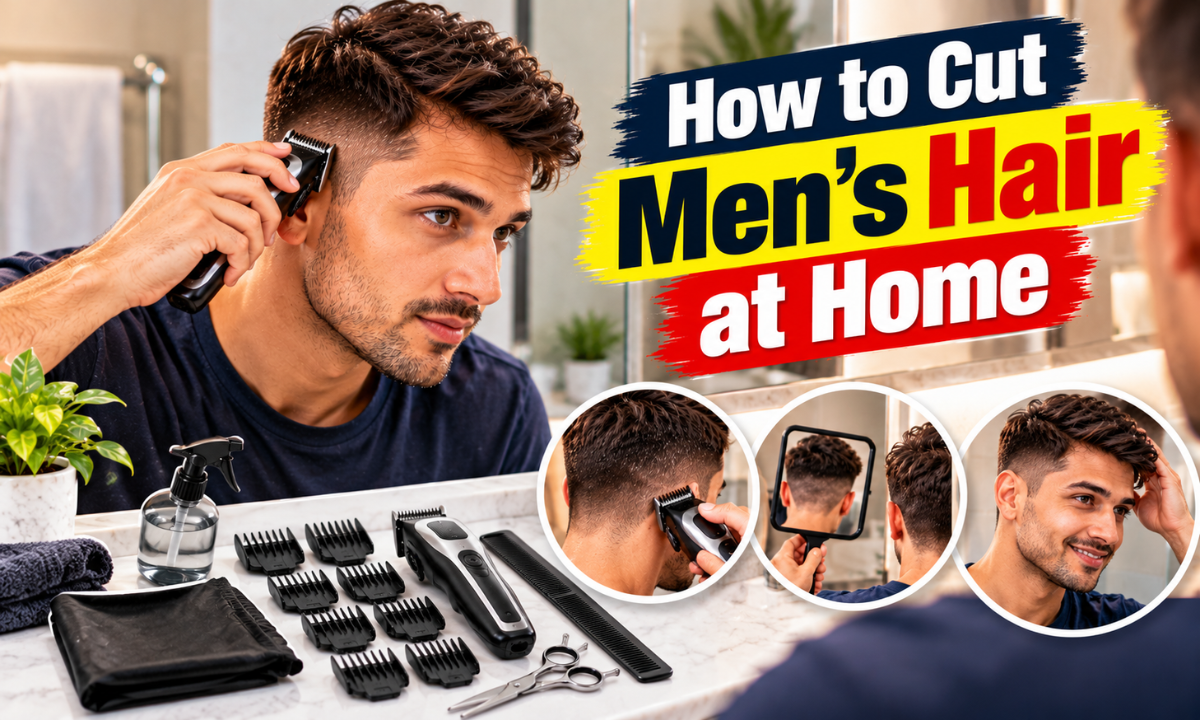
You’ve got a shaggy mess on top, the barbershop is booked solid, and you’re wondering if you could just do it yourself. Good news: you can. Learning how to cut men’s hair at home comes down to three things: the right tools, a slow start with longer guards, and cutting in small sections so you can always take more off. Nail those and a decent, clean cut is totally doable, even on your first try. I’ll walk you through every step, plus the mistakes that trip most people up.12 Low Taper Fade Black Male Short Hair Ideas
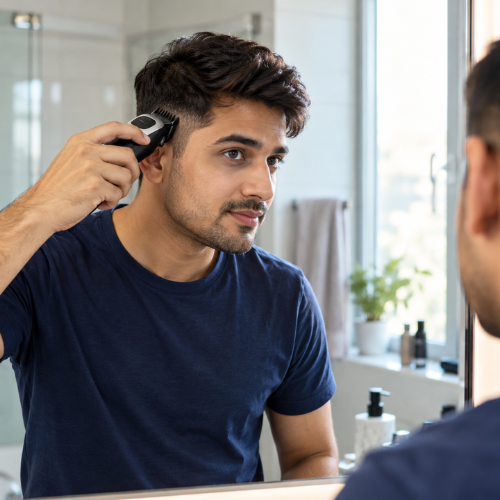
Why Cutting Your Own Hair Is Worth Learning
Honestly, the money is the first thing people notice. A barber visit in the US, UK, or Canada can run $25 to $50 (£15 to £35) a pop, and if you go every three to four weeks, that adds up fast. A decent set of clippers pays for itself in a couple of months.
There’s also the convenience. No appointments, no waiting, no awkward small talk when you’re not in the mood.
It’s a Skill That Gets Easier
Your first cut won’t be perfect. That’s fine. Hair grows back, and every attempt teaches your hands something. Most guys find their second and third cuts are dramatically better.
What Home Cutting Does Best
Home cutting works brilliantly for buzz cuts, short back and sides, crew cuts, and simple tapers. Complex styles like sharp skin fades or long layered cuts are trickier, so save those for a pro until you’re confident.
The Tools You Actually Need
You don’t need a barber’s entire kit. A few quality basics beat a drawer full of cheap gadgets.
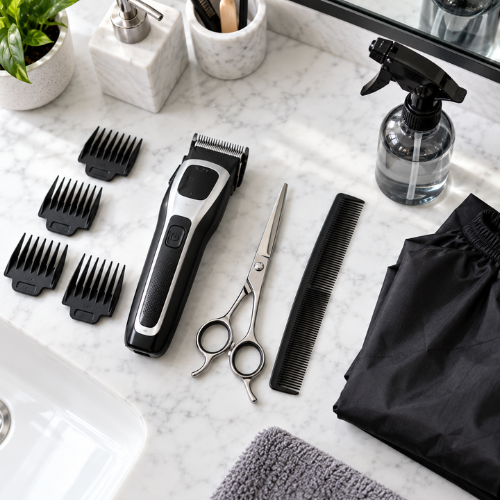
The Essential Kit
- Hair clippers with guards: Cordless models are easiest to move around your head.
- Hair-cutting scissors: Not kitchen scissors. They’re too thick and leave choppy ends.
- A fine-tooth comb: For lifting and measuring sections.
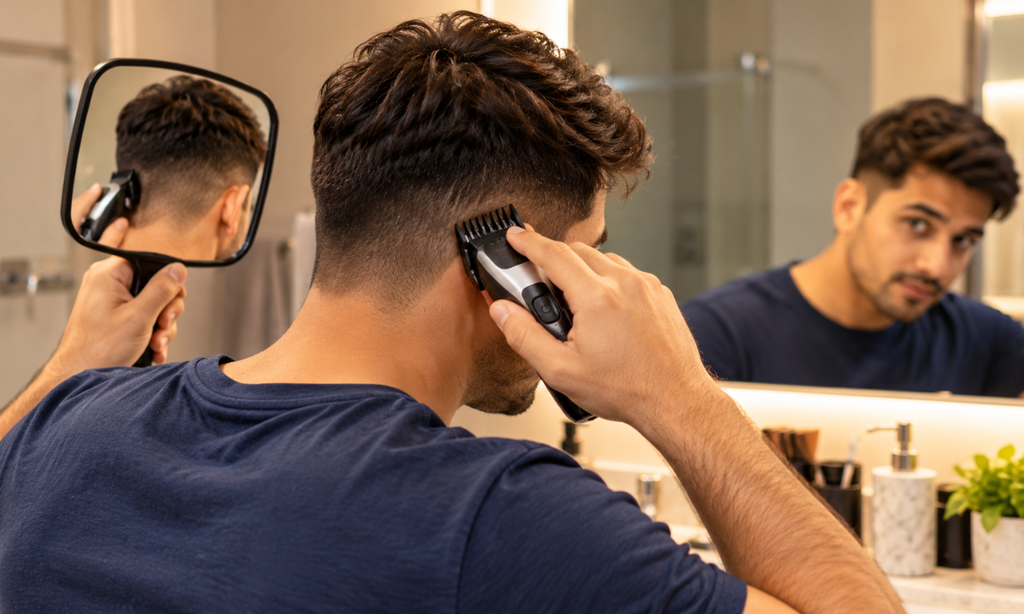
- Two mirrors: A big one in front and a handheld one for the back.
- Spray bottle: Slightly damp hair is easier to control.
- Cape or old towel: Saves you cleaning hair off the floor, the sink, and your shoulders.
Nice-to-Have Extras
A trimmer for edging around the ears and neckline makes a noticeable difference. A neck duster or soft brush is also handy for clearing loose hair.
Prep Before You Cut
Skipping prep is where most home haircuts go sideways. Take five minutes and your results improve a lot.
Start With Clean, Slightly Damp Hair
Wash and towel-dry your hair so it’s damp, not dripping. Clippers can snag on greasy hair, and soaking-wet hair stretches, so it looks longer than it really is. That’s how you end up cutting too much.
Pick Your Guard Length
Here’s the thing: always start longer than you think you need. You can go shorter, but you can’t glue it back on. A common starting point looks like this:
| Guard Number | Length (approx.) | Best For |
|---|---|---|
| #1 | 1/8 inch (3 mm) | Very short buzz, fade bottoms |
| #2 | 1/4 inch (6 mm) | Short buzz cut, tapered sides |
| #3 | 3/8 inch (10 mm) | Classic short sides |
| #4 | 1/2 inch (13 mm) | Medium-short crew cut |
| #6 | 3/4 inch (19 mm) | Longer, softer look |
| #8 | 1 inch (25 mm) | Leaving more length on top |
How to Cut Men’s Hair at Home: Step by Step
Take your time with this part. Rushing is the number one enemy of a good haircut.
Step 1: Do the Sides and Back First
Attach a longer guard (a #4 is a safe bet). Start at the sideburn and move the clippers upward against the direction of hair growth, using smooth, steady strokes. Don’t press hard. Let the clippers glide.
Step 2: Blend the Transition Line
Where the short sides meet the longer top, you’ll see a harsh line. Switch to a guard one size up, or flick the clippers outward at the end of each stroke. This softens the edge so it doesn’t look like a helmet.
Step 3: Trim the Top With Scissors
Comb a section of hair straight up between two fingers, then snip off the ends above your fingers. Work from front to back in small sections. Cut less than you think you need. Seriously, a quarter inch at a time.
Step 4: Clean Up the Neckline and Ears
Use a trimmer to tidy around the ears and the back of the neck. Keep the neckline natural rather than squared off, since it grows out far more gracefully.
Step 5: Check Your Work
Grab the handheld mirror and look from every angle. Wet and comb your hair, then fix any uneven spots with light touch-ups.
Best Methods by Hair Type and Style
Not all hair behaves the same way, so adjust your approach.
Straight or Fine Hair
Fine hair shows every mistake, so go slower and use scissors for more control. Avoid very short guards on the top, which can look thin.
Thick or Curly Hair
Curly hair shrinks when it dries, so cut it a bit longer than your target. Use clippers on dry hair, since curls are tricky to judge when wet.
Choosing a Beginner-Friendly Style
| Style | Difficulty | Tools Needed |
|---|---|---|
| Buzz cut | Easy | Clippers, one guard |
| Crew cut | Easy to medium | Clippers, scissors |
| Short back and sides | Medium | Clippers, scissors, trimmer |
| Taper fade | Hard | Clippers, multiple guards, trimmer |
| Longer textured top | Medium | Scissors, comb |
Common Mistakes to Avoid
I’ve seen all of these, and honestly, I’ve made a few myself.
- Starting with the shortest guard. It’s the fastest way to a patchy cut.
- Cutting soaking-wet hair. It springs up shorter once it dries.
- Using dull blades. Dull clippers pull and snag. Oil and clean them regularly.
- Ignoring the back. Use that second mirror, or ask a friend to check it.
- Cutting too much at once. Small, repeated passes always win.
- Skipping the neckline. A messy neckline ruins an otherwise good cut.
Pro Tips for a Cleaner Finish
Work in Good Light
Bright, even lighting shows uneven patches you’d otherwise miss. Natural daylight near a window is ideal.
Keep a Routine
Most short cuts look best when refreshed every three to four weeks. Set a reminder so you’re not cutting overgrown hair in a panic.
Know When to Call a Barber
If you want a skin fade or a full restyle, book a professional. Even a good barber’s visit once in a while gives you a clean base to maintain at home.

Frequently Asked Questions
What do I need to cut my own hair at home?
At minimum, you need clippers with guards, a fine-tooth comb, a mirror, and a towel or cape. Add hair scissors and a trimmer if you want more control over the top and the edges.
What guard number should I start with?
Start with a #4 or #5 on the sides and leave the top longer. You can always go shorter on a second pass, but you can’t undo a cut that’s too short.
Should I cut my hair wet or dry?
Slightly damp works best for straight and wavy hair, because it’s easier to comb and control. Curly hair is usually better cut dry so you can see how it naturally sits.
How do I cut the back of my own hair?
Use a handheld mirror alongside a larger one, and work slowly with clippers moving upward. If you can, ask a friend to check the back and neckline, since it’s the hardest area to see.
How often should I cut my hair at home?
Every three to four weeks keeps most short styles looking sharp. Longer styles can stretch to six weeks or more between trims.
Ready to Give It a Go?
You don’t need to be a barber to get a good result. Start with a longer guard, take it slow, and treat the first cut as practice. By your third or fourth time, you’ll wonder why you ever waited in line at the barbershop. Got a favourite tip or a haircut disaster story? Drop it in the comments below.