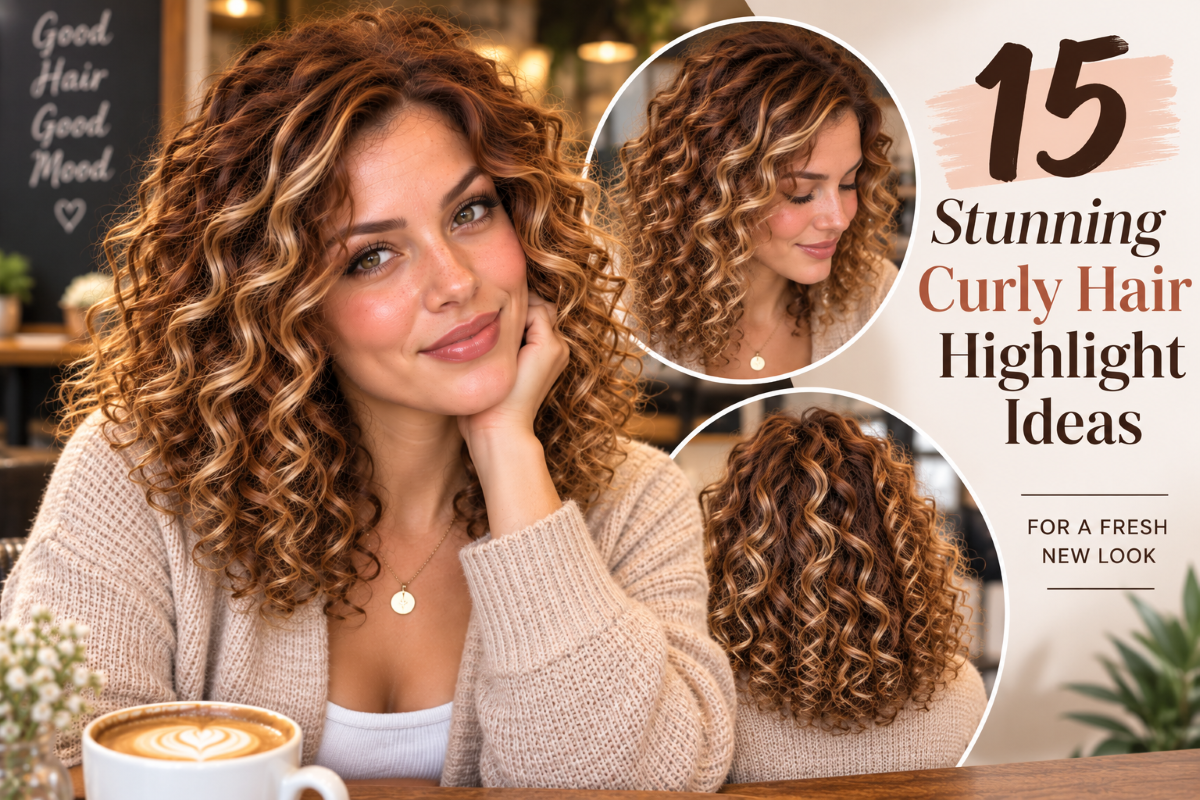
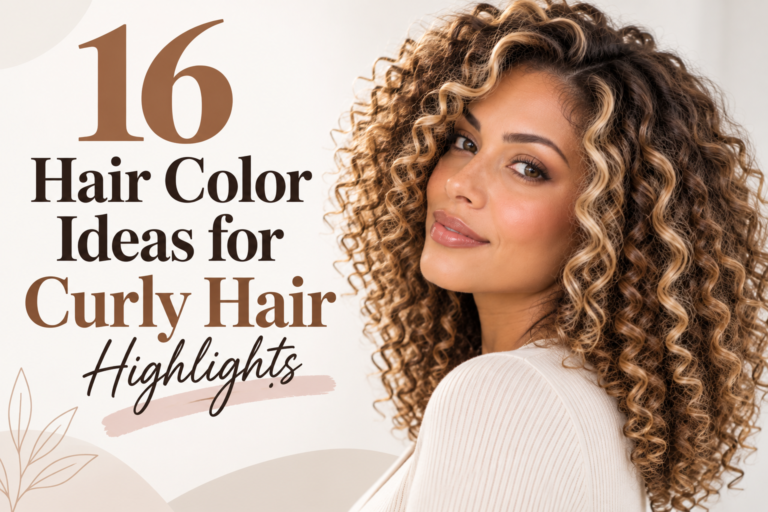
Highlights behave differently on curly hair than on straight hair, since the curl pattern itself changes how light and color travel through each strand. A placement that looks subtle on straight hair can read as much bolder once the curl clumps and catches light from multiple angles, which is part of why curly highlights need their own approach rather than a straight-hair technique applied without adjustment.
This list breaks down sixteen highlight styles, from barely-there babylights to chunky, high-contrast pieces, with notes on which curl patterns and lengths tend to show each technique best. Some options are close to a single salon visit, while others need a longer-term color relationship to maintain.
Quick Takeaway
- Best for low maintenance: Root Smudge with Highlights, Subtle Face-Framing Balayage
- Best for natural curls with minimal lift: Babylights Throughout, Sunkissed Ribbon Highlights
- Best for a bold transformation: Chunky Blonde Highlights, Platinum Highlights on Deep Brunette
- Best for adding dimension: Classic Balayage Highlights, Bronde Dimensional Highlights
- Best for a subtle change: Face-Framing Money Piece, Warm Blonde Highlights on Auburn Base
- Best for coily textures: Money Piece on Coily Hair, Caramel Woven Highlights
Main Hair Ideas
1. Face-Framing Money Piece
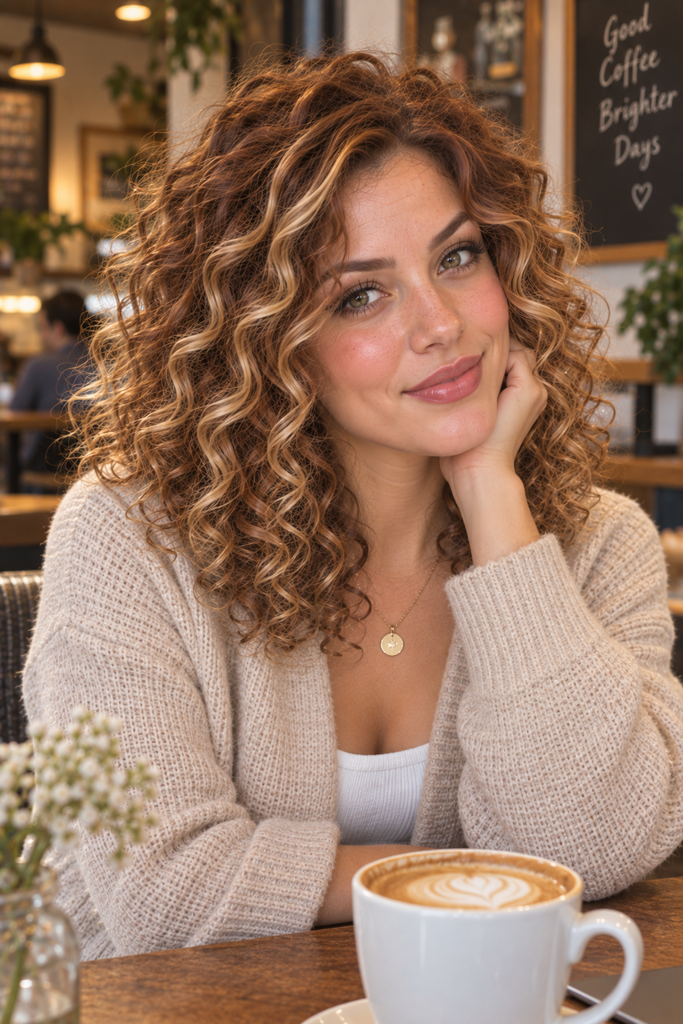
A money piece places a bright section of color only around the face, usually two to three strands on each side, leaving the rest of the hair untouched. On curls, this framing tends to catch attention every time the curls bounce or shift. It works on nearly any curl pattern and length, and because the lightened section is small, it grows out with minimal visible line and needs infrequent touch-ups.
Image Prompt: Photorealistic front-facing portrait of a woman with medium-length 3A curls and a warm blonde money piece framing her face, fair skin, wearing a cream knit sweater, standing in a modern salon with soft window light, realistic individual hair strands and natural flyaways, editorial beauty photography, no text, no watermark.
Alt Text: Woman with medium-length curly hair and a blonde money piece framing her face
Image File Name: face-framing-money-piece-curls
Recommended Ratio: 3:2
2. Classic Balayage Highlights
Balayage is a hand-painted technique that places lighter tones mainly through the mid-lengths and ends, leaving the roots closer to the natural color. This gradual approach tends to suit curly hair well, since the softer transition hides regrowth longer than foiled highlights. It works especially well on 2B to 3B curls, where the graduated color follows the wave pattern smoothly from root to tip.
3. Babylights Throughout
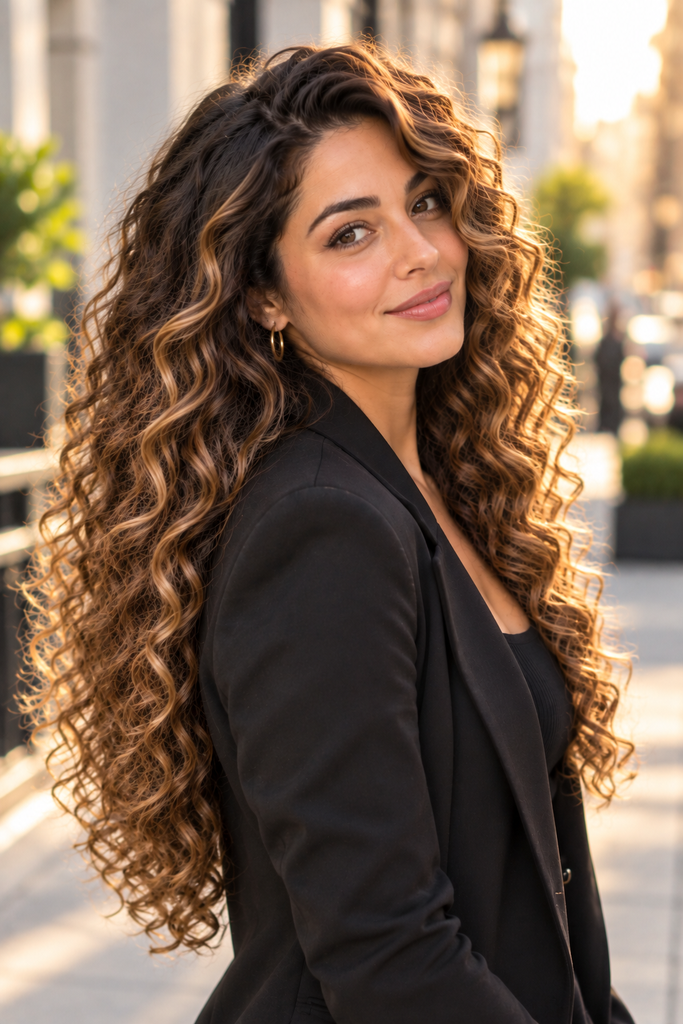
Babylights use very fine, closely placed highlights across the entire head, mimicking the way a child’s hair naturally lightens in the sun. The effect on curly hair is subtle but multidimensional, since the tiny highlighted strands scatter throughout each curl cluster rather than concentrating in one spot. This technique suits fine to medium density curls in the 2C to 3B range and typically requires a longer application time.
4. Chunky Blonde Highlights
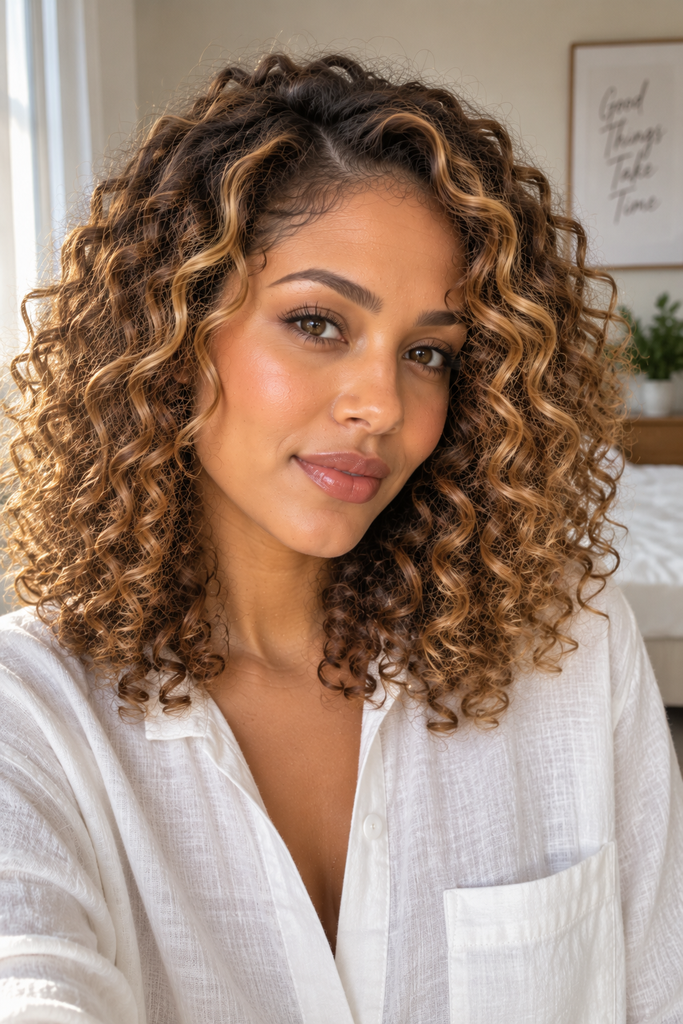
Chunky highlights use noticeably wider sections of lightened hair for a high-contrast, statement look rather than a soft blend. On curly hair, the width of each highlighted section shows clearly once the curl coils, creating bold ribbons of color throughout. This works best on 3B to 4A curls with medium to thick density, and it typically requires more upfront lightening and more frequent root maintenance than finer techniques.
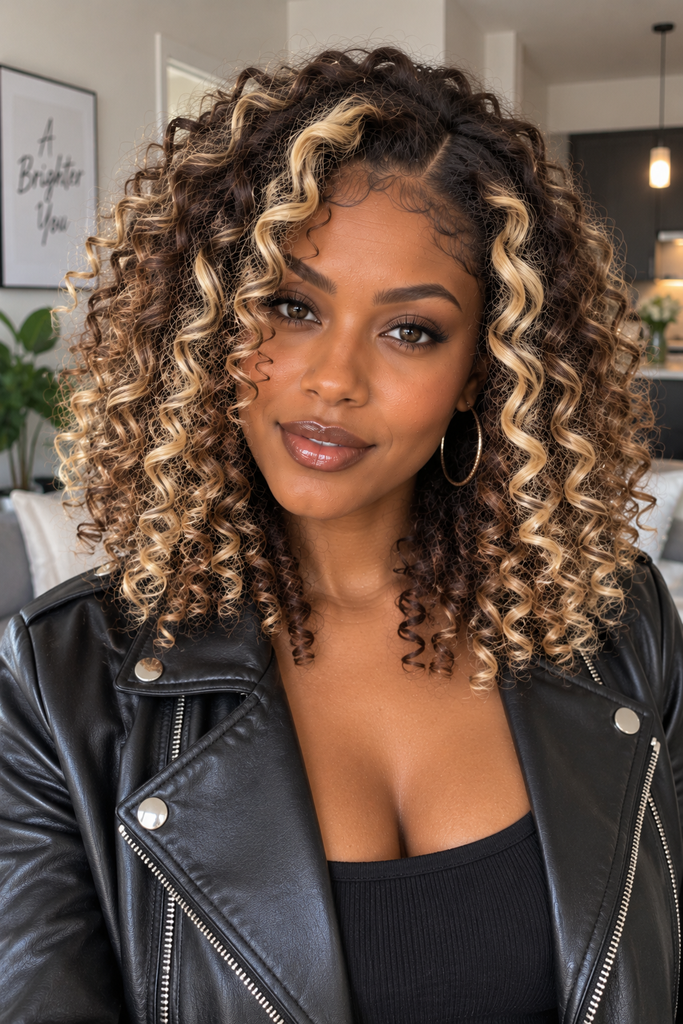
5. Reverse Balayage
Reverse balayage adds darker lowlights into an already-light base rather than lightening a dark base further. This is a useful option for anyone with previously highlighted or naturally blonde curls who wants more depth and dimension without additional bleach. It suits most curl patterns and lengths, and it tends to be gentler on hair health since it typically uses demi-permanent color rather than lightener.
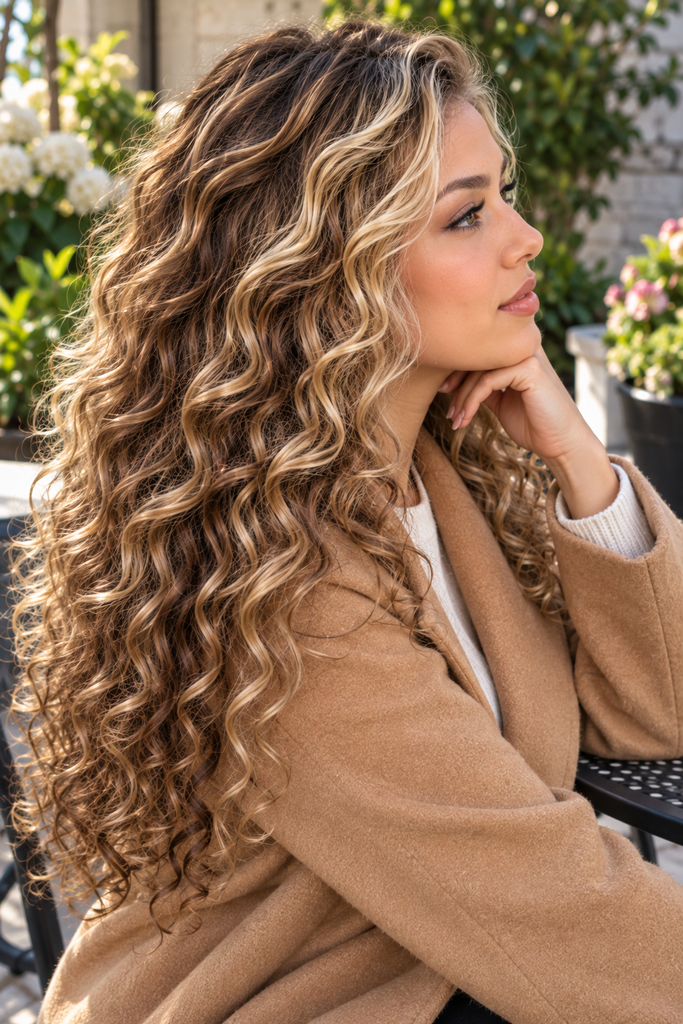
6. Root Smudge with Highlights
A root smudge softens the line between natural roots and lightened highlights by blending a shadow tone at the part before the highlighted sections begin. On curls, this softens the transition even further since the curl pattern naturally disguises sharp lines. This pairing works well on 3A to 3C curls and is one of the lower-maintenance options here, since the smudge is designed to grow out gracefully.
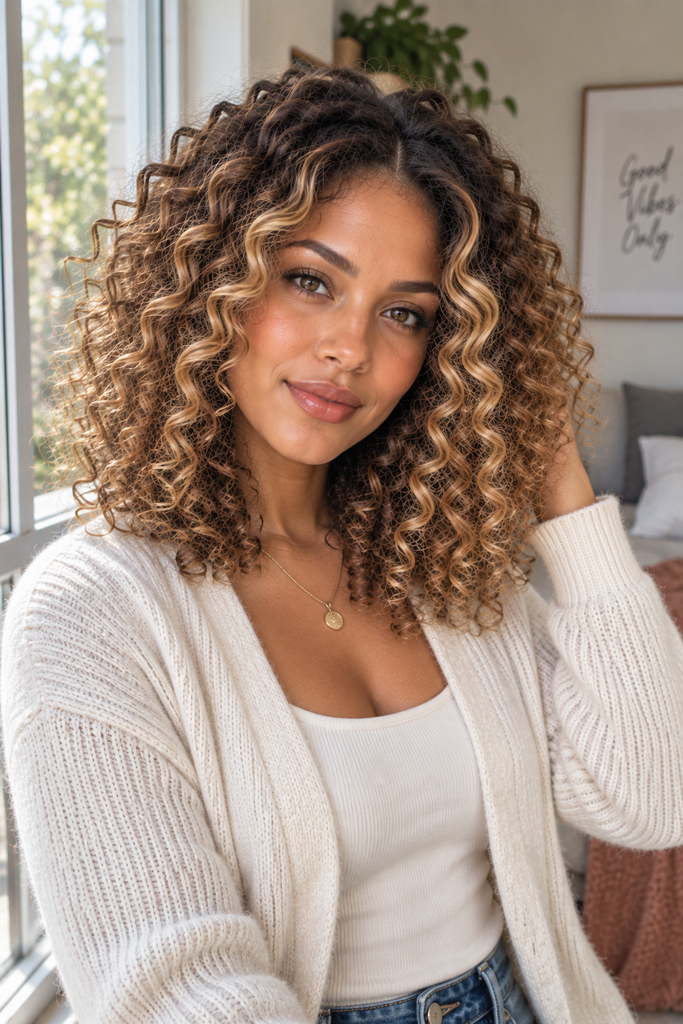
7. Peekaboo Copper Highlights
Peekaboo highlights are placed underneath the top layer of hair rather than throughout, so the color is hidden at rest and reveals itself when the curls move or are pushed back. Copper peekaboo highlights add a warm surprise pop of color, particularly striking on 3C to 4A curls where the coils naturally shift and reveal the underlayer throughout the day.
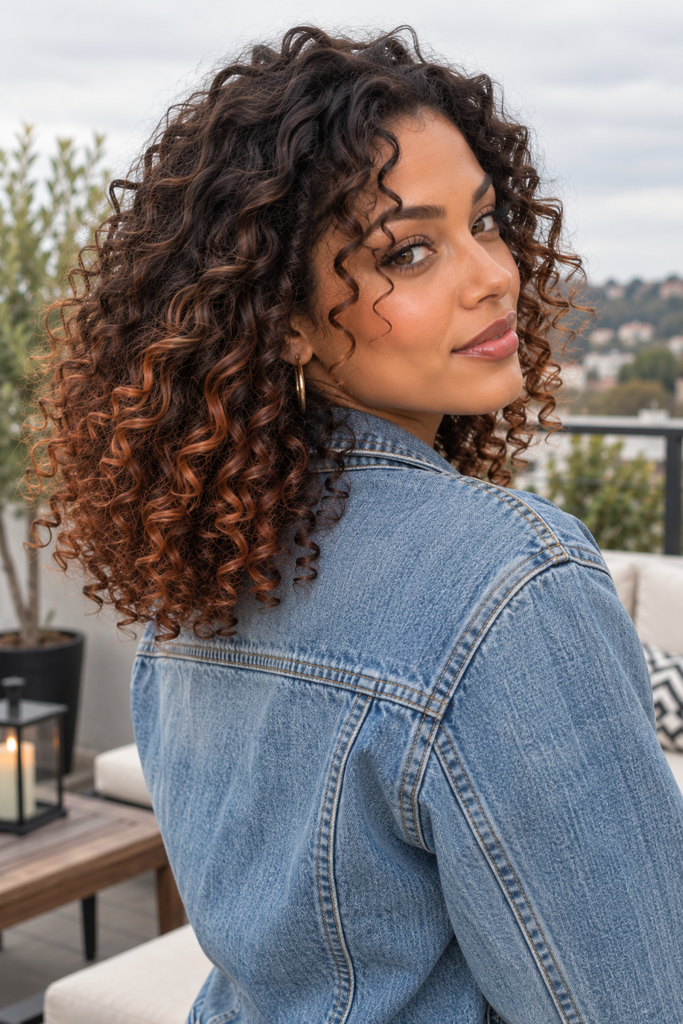
8. Sunkissed Ribbon Highlights
This technique places soft, ribbon-like highlights that mimic natural sun-lightened strands rather than an even, blended look. The ribbons tend to appear more organic on curly hair, since the coils naturally separate the highlighted pieces into distinct bands of light and dark. It works especially well on 2B to 3B curls and offers a fairly low-maintenance, natural-looking result.
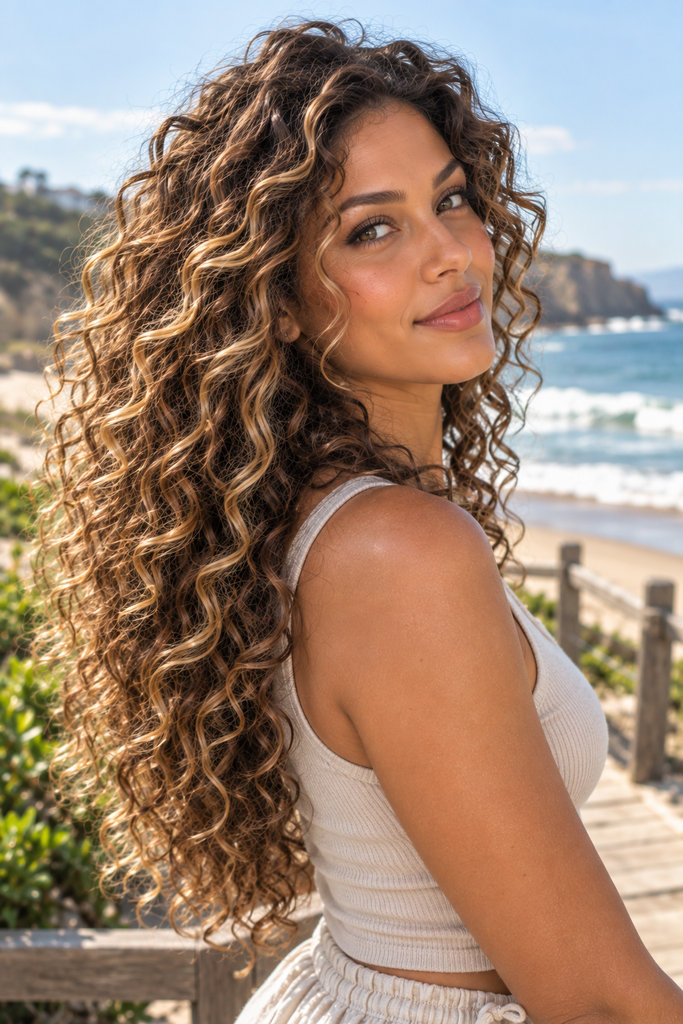
9. Ash Blonde Highlights on Dark Curls
Ash blonde highlights carry a cooler, muted undertone rather than the warmth of gold or caramel, creating a striking contrast against a dark brunette or black curl base. This combination tends to suit 3B to 4A curls and requires consistent toning to prevent the ash tone from warming up between salon visits, since ash shades are more prone to brassiness over time.
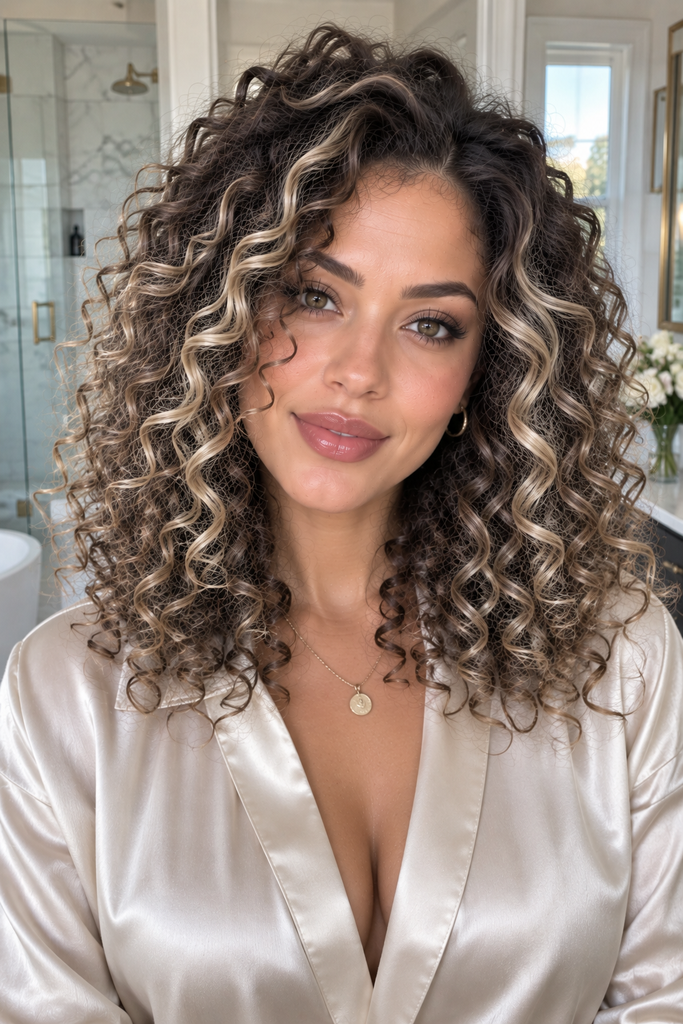
10. Caramel Woven Highlights
Fine caramel highlights are woven throughout the mid-lengths and ends, adding warmth and movement without a dramatic shift from the natural base. This technique reads as dimensional rather than heavily highlighted, making it a versatile option across most curl patterns and lengths. It tends to require moderate maintenance, with touch-ups typically needed every few months as the natural root grows in.
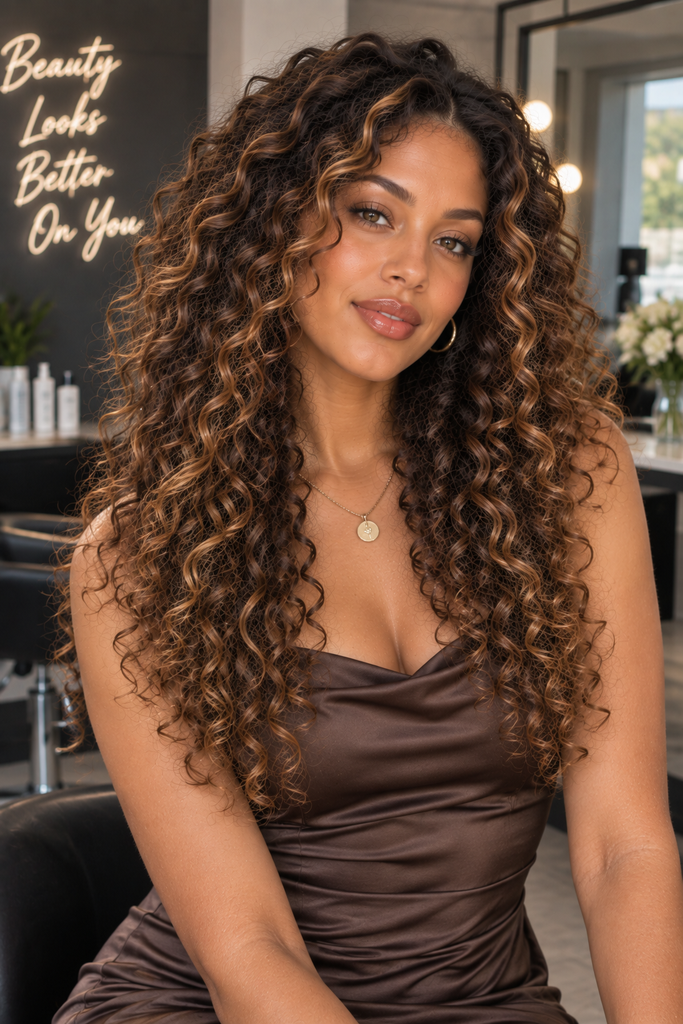
11. Money Piece on Coily Hair
A money piece on coily 4B to 4C hair typically involves slightly wider or more concentrated placement than on looser curls, since tighter coils shrink and can hide finer sections. Positioned near the crown and hairline, the lightened pieces stay visible even with significant shrinkage. This is a good low-commitment way to add brightness to coily hair without altering the rest of the natural color.
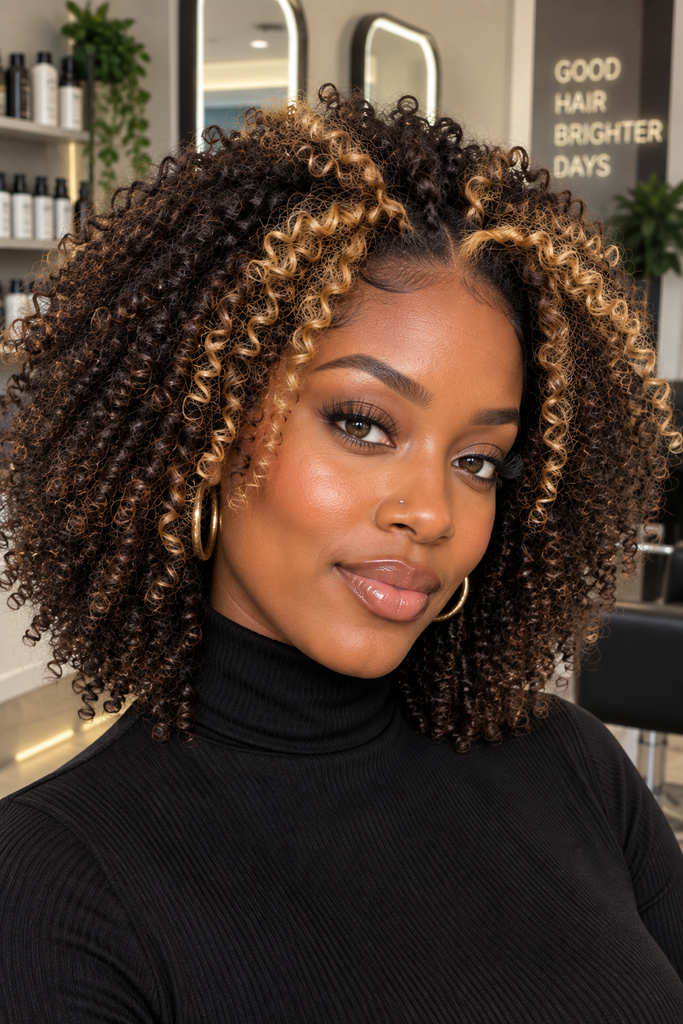
12. Bronde Dimensional Highlights
Bronde blends brown and blonde tones together rather than treating them as separate highlight and base colors, creating a soft, multidimensional effect throughout. On curly hair, this blend tends to look especially natural, since the coils already create their own light and shadow variation that bronde tones complement. It suits 2C to 3C curls and offers a fairly forgiving grow-out.
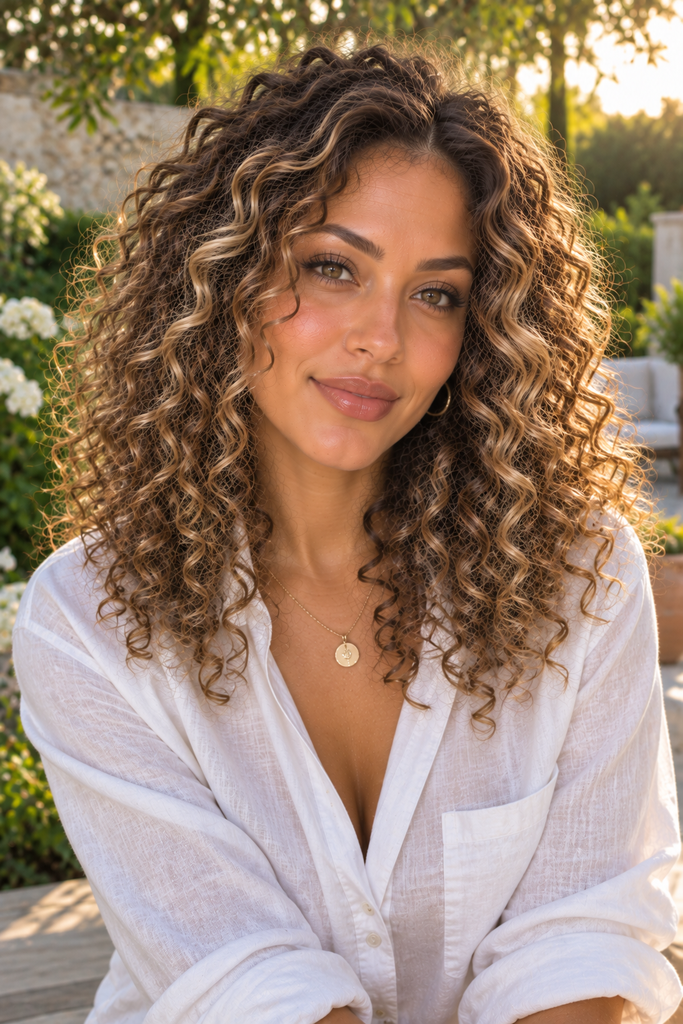
13. Red Peekaboo Highlights
Similar to the copper peekaboo placement, red peekaboo highlights sit underneath the top layer for a hidden pop of color, but lean toward a truer, more vivid red rather than copper’s warmer undertone. This works well on 3C to 4A curls with lower layers that naturally reveal themselves as the coils shift. Red pigments fade faster than most, so expect more frequent refreshing than with brown-based highlights.
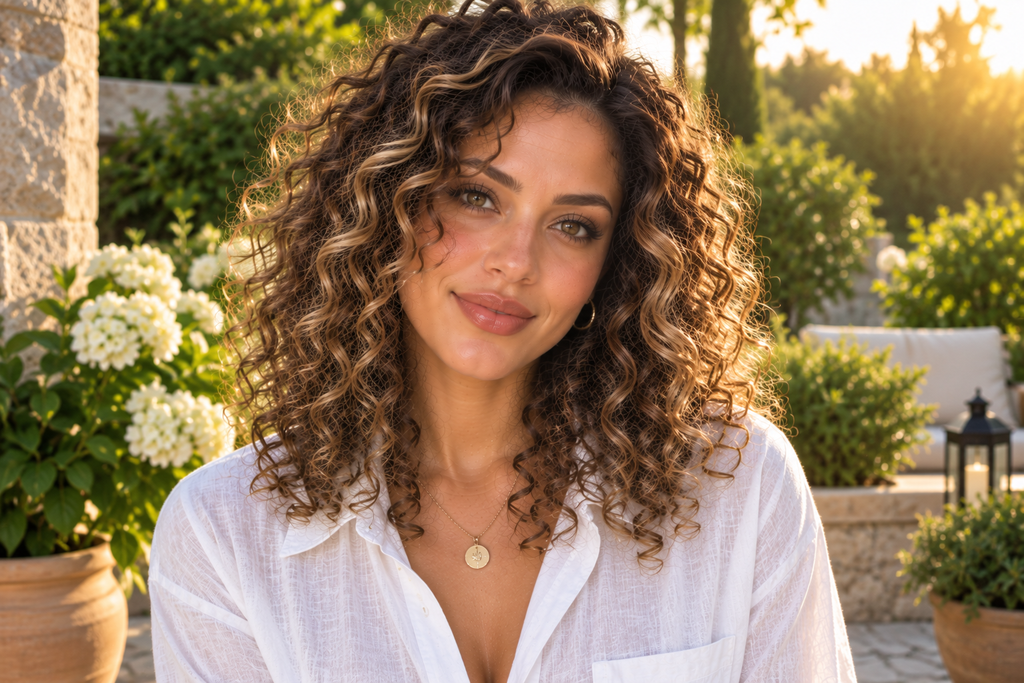
14. Subtle Face-Framing Balayage
This option keeps highlighting limited to soft, hand-painted pieces around the face rather than throughout the whole head, brightening the features while leaving the rest of the hair close to natural. It is one of the more approachable options for a first highlight appointment, since the commitment and maintenance stay low. This works across most curl patterns and lengths with minimal visible grow-out line.
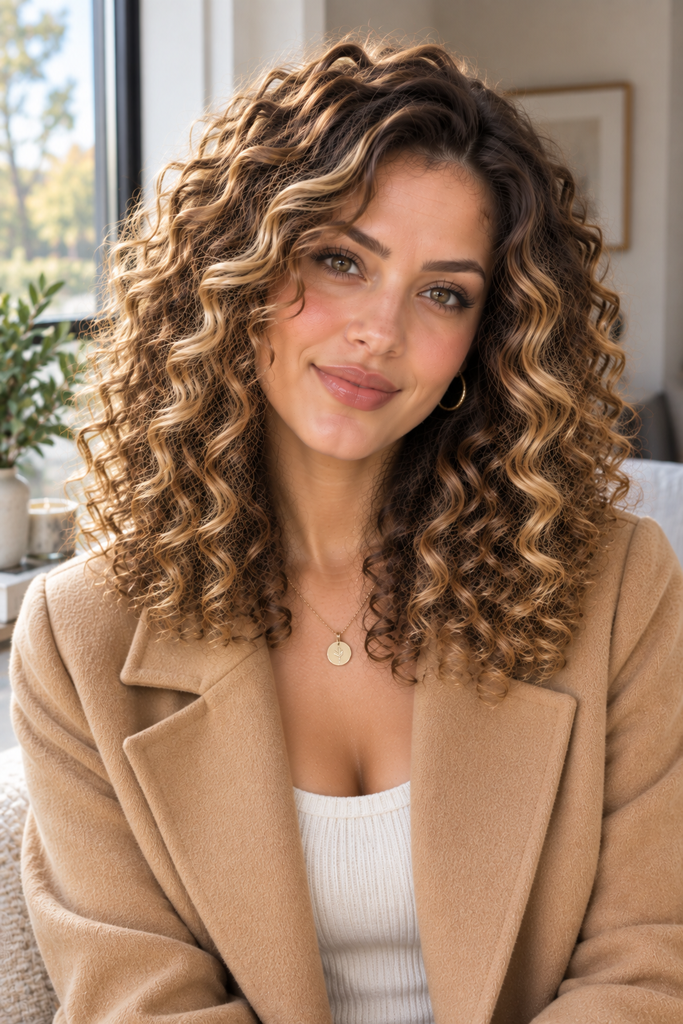
15. Platinum Highlights on Deep Brunette
Platinum highlights against a deep brunette base create one of the highest-contrast combinations on this list, with the near-white sections standing out sharply against the dark base. This bold pairing tends to suit 3B to 4A curls with medium to thick density, where the coils give the contrast extra texture. It requires significant lightening and consistent toning, making it one of the higher-maintenance choices here.
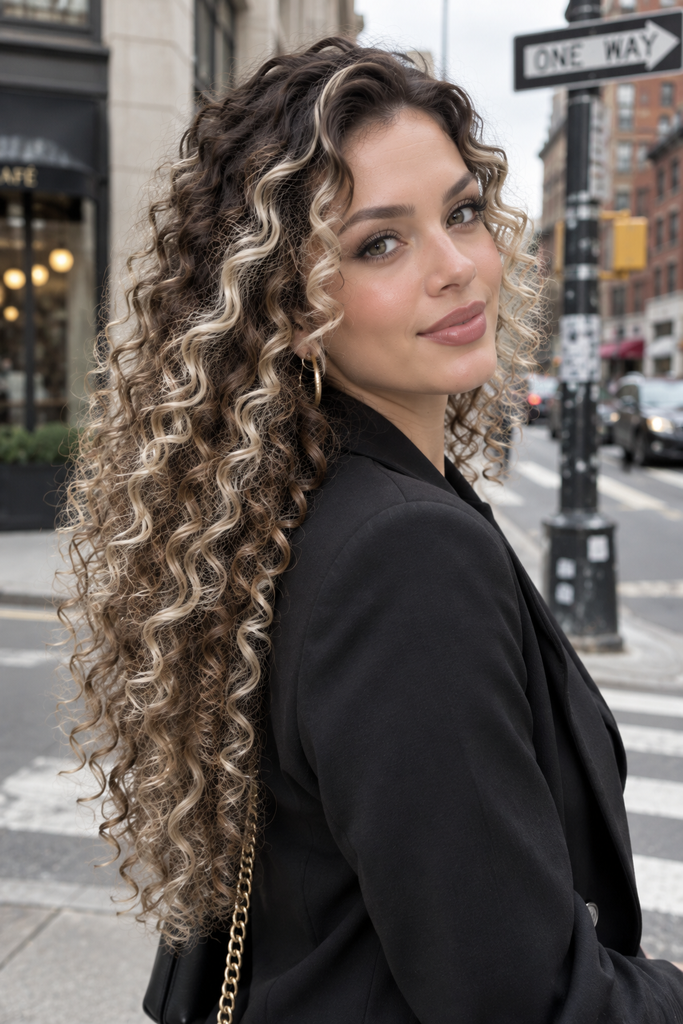
16. Warm Blonde Highlights on Auburn Base
Warm blonde highlights layered over a natural or color-enhanced auburn base add brightness while keeping the overall look rooted in red-brown warmth. This pairing tends to look cohesive rather than contrasting, since both tones share warm undertones. It suits 2B to 3B curls particularly well and offers a moderate maintenance level, with touch-ups typically needed as both the auburn base and blonde pieces shift over time.
15 Hair Color Ideas for Curly Hair on Brown Skin (2026)
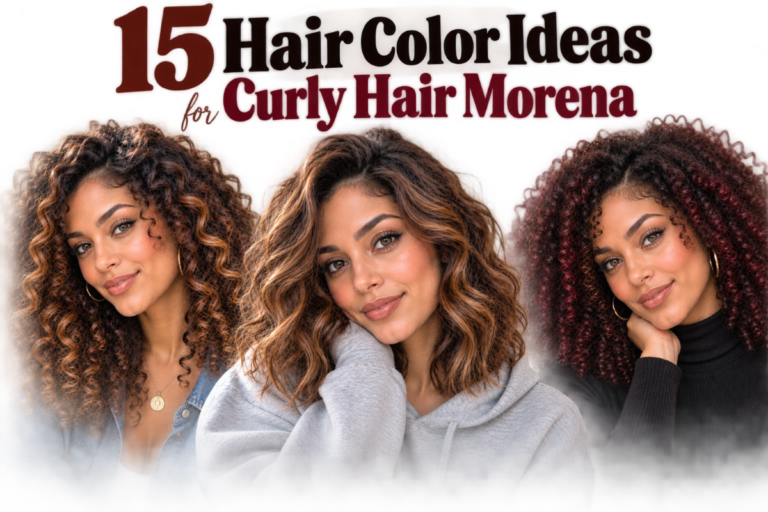
15 Hair Color Ideas for Curly Hair Morena: Stunning Looks to Try
Comparison Table
| Hair Color Idea | Best For | Color Effect | Maintenance | Overall Look |
|---|---|---|---|---|
| Face-Framing Money Piece | Most curl types | Bright accent near face | Low | Subtle, brightening |
| Classic Balayage Highlights | 2B-3B curls | Hand-painted gradual lift | Medium | Natural, dimensional |
| Babylights Throughout | 2C-3B curls | Fine all-over highlights | Medium | Soft, multidimensional |
| Chunky Blonde Highlights | 3B-4A curls | Wide, high-contrast pieces | High | Bold, statement look |
| Reverse Balayage | Most curl types | Lowlights on light base | Low-Medium | Deeper, more dimensional |
| Root Smudge with Highlights | 3A-3C curls | Softened root transition | Low | Effortless, blended |
| Peekaboo Copper Highlights | 3C-4A curls | Hidden underlayer color | Medium | Warm surprise pop |
| Sunkissed Ribbon Highlights | 2B-3B curls | Organic sun-lightened bands | Low | Natural, sun-kissed |
| Ash Blonde Highlights on Dark Curls | 3B-4A curls | Cool-toned contrast | Medium-High | Striking, cool-toned |
| Caramel Woven Highlights | Most curl types | Fine warm dimension | Medium | Versatile, warm glow |
| Money Piece on Coily Hair | 4B-4C hair | Concentrated crown accent | Low | Bright, low commitment |
| Bronde Dimensional Highlights | 2C-3C curls | Blended brown-blonde tones | Medium | Soft, natural multidimension |
| Red Peekaboo Highlights | 3C-4A curls | Hidden vivid underlayer | High | Bold, hidden surprise |
| Subtle Face-Framing Balayage | Most curl types | Soft painted face pieces | Low | Approachable, natural |
| Platinum Highlights on Deep Brunette | 3B-4A curls | High-contrast lightening | High | Dramatic, bold |
| Warm Blonde Highlights on Auburn Base | 2B-3B curls | Cohesive warm brightening | Medium | Warm, unified |
How to Choose the Right Option
Start with your natural base color, since it determines how much lightening a highlight technique will require. Ash and platinum tones typically need more lift from dark brown or black hair, while caramel or bronde highlights blend more easily from a medium brown base.
Consider your curl pattern next. Looser curls (2B to 3B) tend to show gradual techniques like balayage and babylights clearly throughout the length, while coily and tightly coiled textures (4A to 4C) often show highlights best when concentrated near the crown, hairline, or face, since shrinkage can hide finer placement elsewhere.
Factor in how much maintenance you’re willing to commit to. Root smudges, money pieces, and face-framing balayage grow out gracefully with minimal upkeep, while chunky highlights, platinum sections, and vivid peekaboo colors need more frequent salon visits to stay looking fresh.
Finally, decide between a subtle or bold placement. A smaller highlight section is easier to build on later than committing to an all-over technique right away.
Hair Maintenance
Highlighted curls generally need more moisture than untreated hair, since the lightening process can leave the cuticle slightly more porous. A sulfate-free, color-safe shampoo paired with a rich, moisture-focused conditioner helps maintain both the highlight tone and curl definition.
Heat protectant is worth using any time you diffuse or blow-dry highlighted curls, since lightened sections tend to be more vulnerable to heat damage than the surrounding natural hair.
Cool-toned highlights like ash or platinum typically need a purple or blue toning treatment between salon visits to prevent brassiness, while warm tones like caramel or copper tend to hold their color longer with standard color-safe care.
Sun and chlorine exposure can both shift highlighted sections over time, so a UV-protectant leave-in and a clarifying rinse after swimming are reasonable precautions, especially for lighter placements.
What to Ask Your Hairstylist
- What will this highlight placement look like against my current base color and grow-out pattern?
- Will I need bleach for this look, or can it be achieved with a lower-lift technique?
- How much maintenance should I expect, and how often will I need a touch-up or toner refresh?
- Can the highlight placement be adjusted for my specific curl pattern and shrinkage?
- How will this process affect the health and elasticity of my curls?
- Would balayage or a root smudge give me a softer, lower-maintenance grow-out than foiled highlights?
- Will I need a toner between visits to keep the tone from shifting?
Frequently Asked Questions
Do highlights look different on curly hair than straight hair?
Yes. Because curls coil and clump, highlight placement that looks subtle on straight hair can appear bolder once the curl pattern catches the light from multiple angles, so a stylist experienced with curly hair will often adjust placement accordingly.
Which highlight technique requires the least maintenance?
Techniques that keep the highlighted color away from the root, such as balayage, root smudges, and money pieces, tend to need the least frequent touch-ups since the grow-out line stays soft.
Can highlights damage my curl pattern?
Any lightening process carries some risk to curl elasticity, particularly with high-contrast or bleach-heavy techniques. Lower-lift options like babylights or balayage tend to be gentler, and consistent moisture and protein care afterward helps maintain curl definition.
How often do I need to refresh my highlights?
This depends on the technique and tone. Face-framing pieces and root smudges can go several months between visits, while all-over babylights, chunky highlights, or cool-toned shades typically need touch-ups every six to ten weeks.
Are highlights a good option before committing to full color?
Highlights are often a lower-commitment way to test a new tone or technique before deciding on a more significant color change, since they involve less overall processing and are easier to adjust or grow out.
Final Verdict
There’s no single best highlight technique for curly hair, since the right choice depends on your natural base, curl pattern, and how much upkeep you’re ready to take on. Softer techniques like balayage, babylights, and root smudges tend to be the most forgiving starting points, offering dimension without demanding constant salon visits. If you want more drama, chunky highlights, platinum contrast, or a peekaboo color can deliver a bolder statement, but they come with more maintenance and typically more chemical processing.
Whatever direction you choose, a consultation with a stylist experienced in curly and textured hair is worth the time before committing, especially if significant lightening is involved. Starting with a smaller placement, like a money piece or face-framing section, is a reasonable way to test the effect before going bolder later.

One Comment