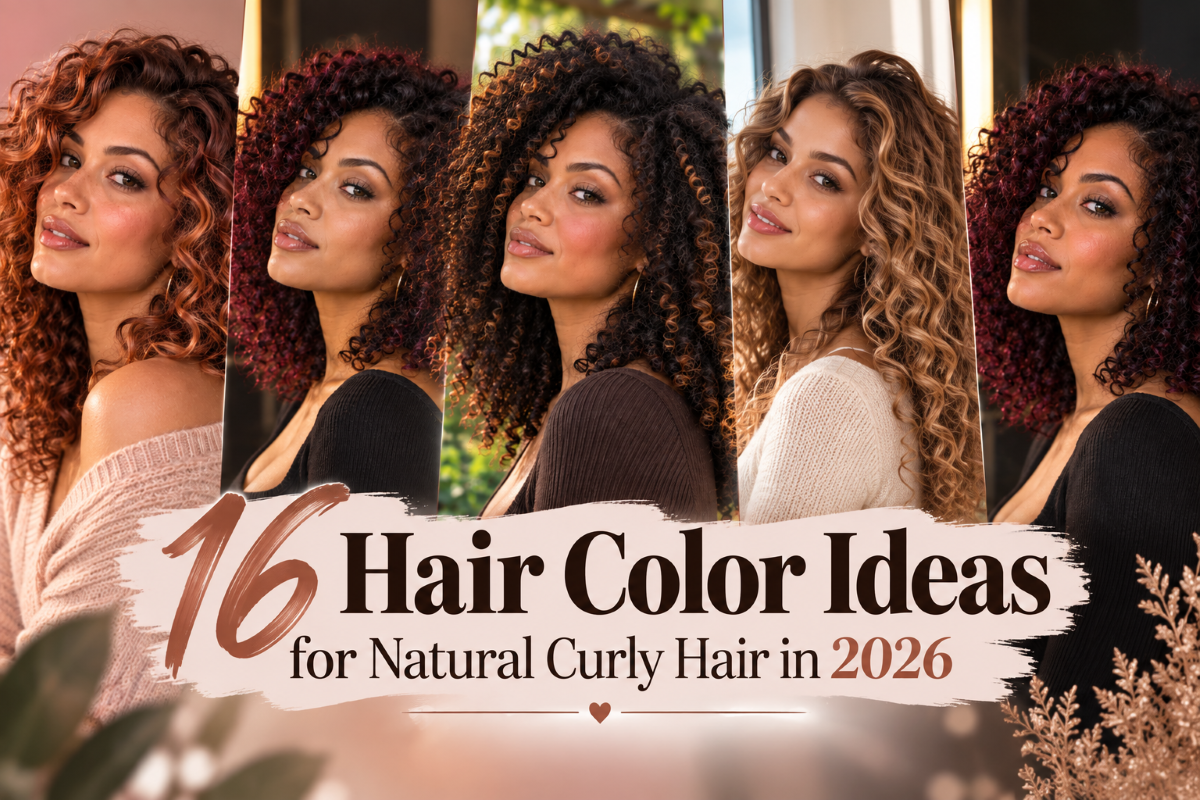
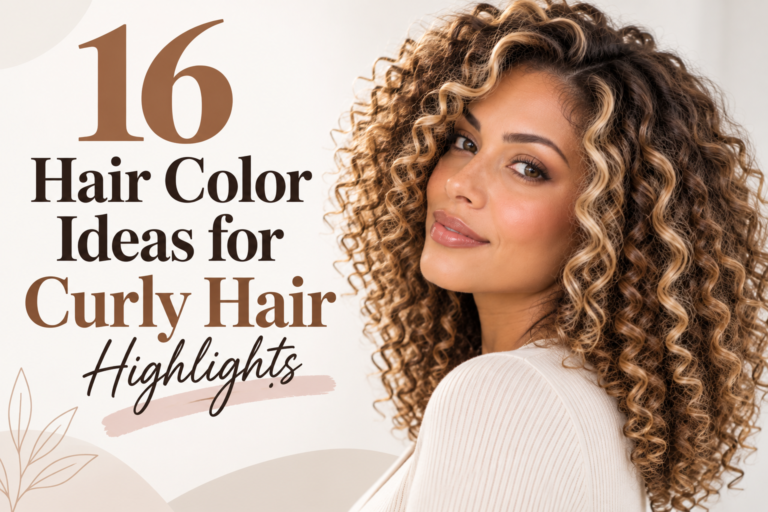
Hair color can look completely different on curls because the bends and coils naturally scatter light across the hair instead of reflecting it from one smooth surface. That makes color placement just as important as the shade itself. For natural curls, dimensional techniques such as balayage, face-framing pieces, warm ribbons, and strategically placed highlights can help emphasize the curl pattern without making the entire head look heavily processed.
In 2026, softer brunettes, warm copper-brown tones, caramel accents, and lived-in color remain particularly useful inspiration for people who want visual dimension without constant maintenance. If your curls are dry, fragile, or previously lightened, the safest approach is to discuss the condition of your hair with a professional before pursuing major lightening. The ideas below cover subtle, dimensional, and bolder directions for different curl patterns and base colors.
Quick Answer
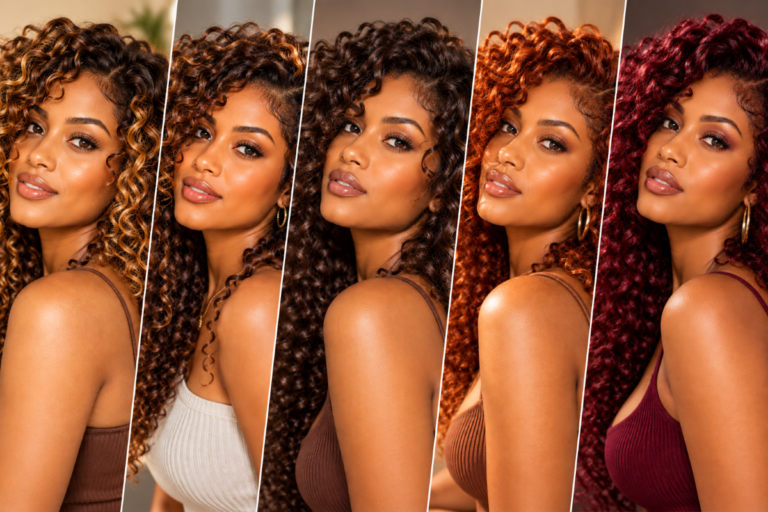
- Best overall: Chocolate brown with subtle caramel dimension works beautifully when you want richness without an extreme change.
- Best low-maintenance option: Rooted caramel balayage allows natural roots to remain part of the look.
- Best for dark curls: Espresso brown, auburn, copper-brown, or selective caramel pieces.
- Best for warm dimension: Burnt sienna or honey-gold highlights.
- Best for lighter curls: Honey blonde, strawberry blonde, or beige-bronde accents.
- Best bold choice: Deep burgundy or plum ribbons concentrated through selected curls.
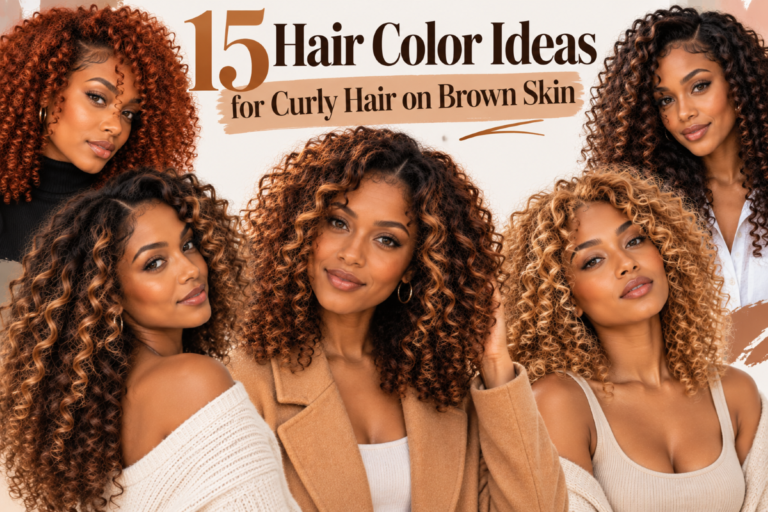
also read- 25 Best Hair Color Ideas for Brown Skin in 2026
Idea 1. Rich Chocolate Brown Curls
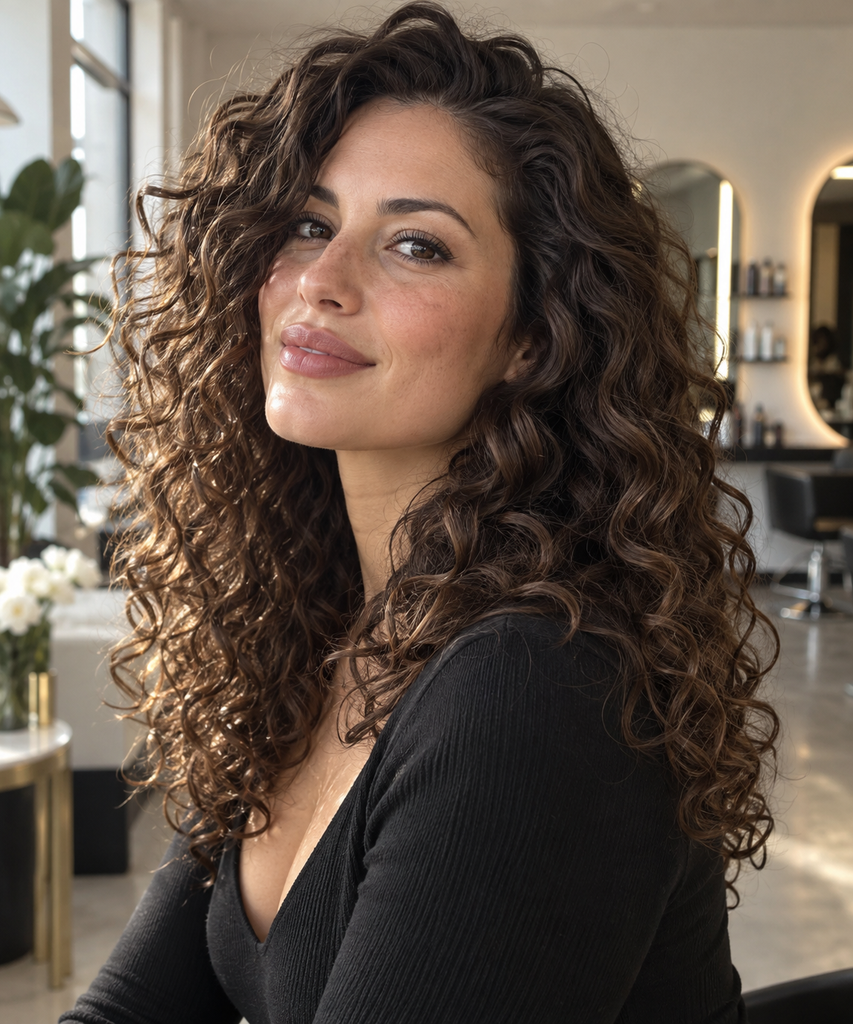
Chocolate brown is a strong starting point if you want your curls to look richer without moving dramatically away from a brunette base. Instead of creating a flat one-dimensional brown, ask for subtle variation through the mids and ends so individual curls catch the light differently. The shade works especially well on medium to dark natural curls because the deeper base can remain intact while warmer brown tones create visual depth. On shoulder-length or longer curls, the color can be distributed through the outer layers to make the pattern easier to see. For a softer result, keep the roots close to your natural shade.
Best For: Medium to dark brown natural curls and medium-to-long lengths.
Maintenance: Low to medium, especially when the natural root remains close to the finished color.
Styling/Salon Tip: Ask for a rich chocolate brunette with subtle tonal variation rather than uniform black-brown color.
Idea 2. Caramel Balayage on Natural Curls
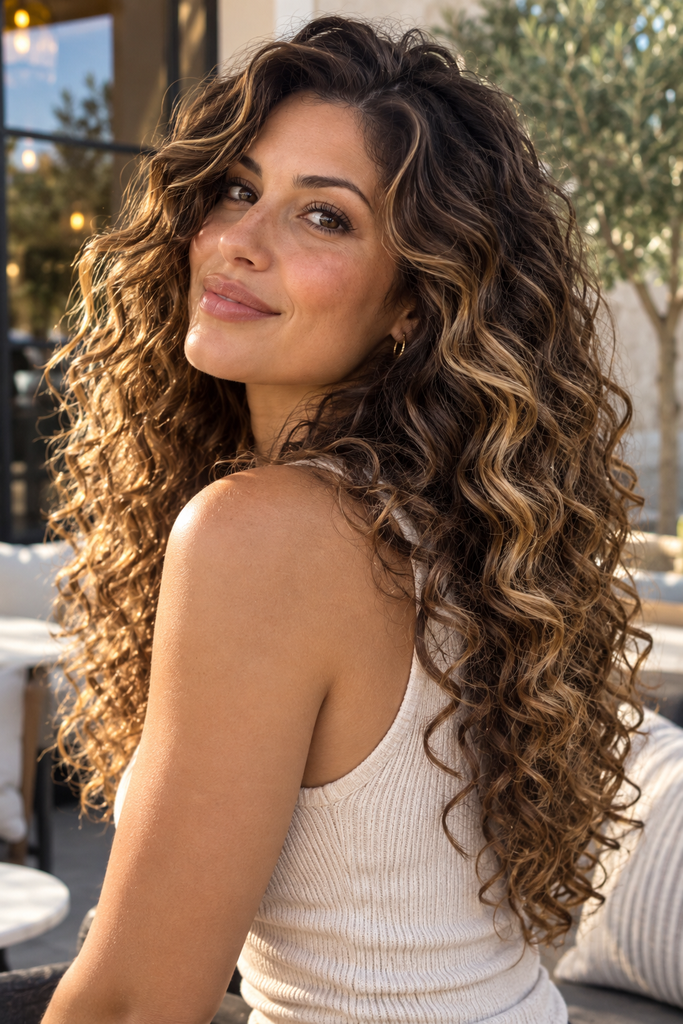
Caramel balayage gives naturally curly hair a sun-warmed appearance while preserving a darker base. The most effective version does not place identical highlights everywhere. Instead, caramel ribbons can be concentrated where the curls naturally catch light, particularly around the face and through the mid-lengths. This approach creates dimension without turning the whole head blonde. It is especially useful for brunettes who want a noticeable change but still want their natural root to remain visible. Because balayage grows out more softly than a strong root-to-tip color contrast, it can be a practical option for people who prefer less frequent salon maintenance.
Best For: Brunette curls from shoulder length to long hair.
Maintenance: Medium, depending on how light the caramel pieces are.
Styling/Salon Tip: Bring photos showing exactly how much caramel you want and ask for varied placement that follows your curl pattern.
Idea 3. Warm Copper Curls
Copper brings warmth and personality to curly hair, and it can be customized from subtle copper-brown to a more noticeable orange-red. For natural curls, a dimensional copper often looks more believable than a completely uniform bright shade because different curl surfaces naturally reflect different amounts of light. A copper-brown version can be especially wearable if you have naturally dark hair and want warmth without going extremely bright. If you are starting with a very dark base and want a significantly lighter copper, discuss the lightening process with your stylist first. The goal should be a shade that complements your natural curl texture rather than overpowering it.
Best For: Medium brown, dark blonde, or previously lightened curls.
Maintenance: Medium to high depending on how vivid the copper is.
Styling/Salon Tip: Ask whether a copper gloss or copper-brown formula can achieve your desired warmth without unnecessary lightening.
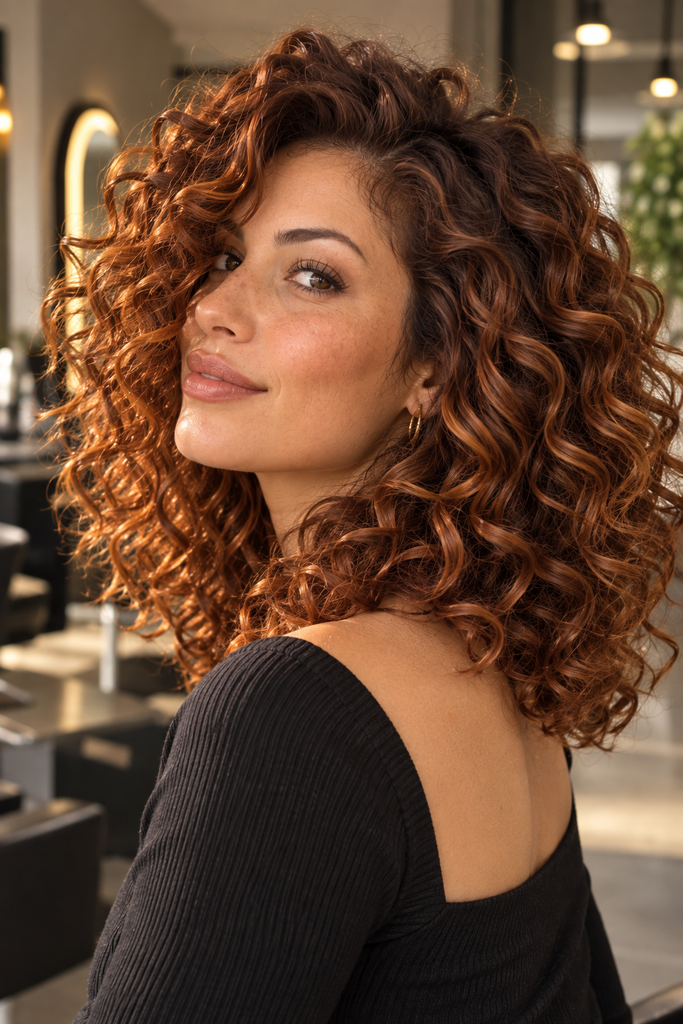
Idea 4. Deep Auburn Natural Curls
Deep auburn combines brunette depth with restrained red warmth, making it a good choice when you want a noticeable color shift without committing to bright copper. The shade can look particularly dimensional on curls because the red undertones appear stronger in some areas and deeper brown in shadowed sections. A darker auburn root can also make the transition easier to grow out. Consider this color if you naturally have medium or dark brown curls and want warmth that remains sophisticated rather than neon. For a customized result, ask your stylist whether a brown-based auburn or red-based auburn will work better with your existing hair color.
Best For: Medium to dark natural curls, especially brunette bases.
Maintenance: Medium.
Styling/Salon Tip: Ask for a deep auburn with controlled red warmth instead of an overly bright orange-red result.
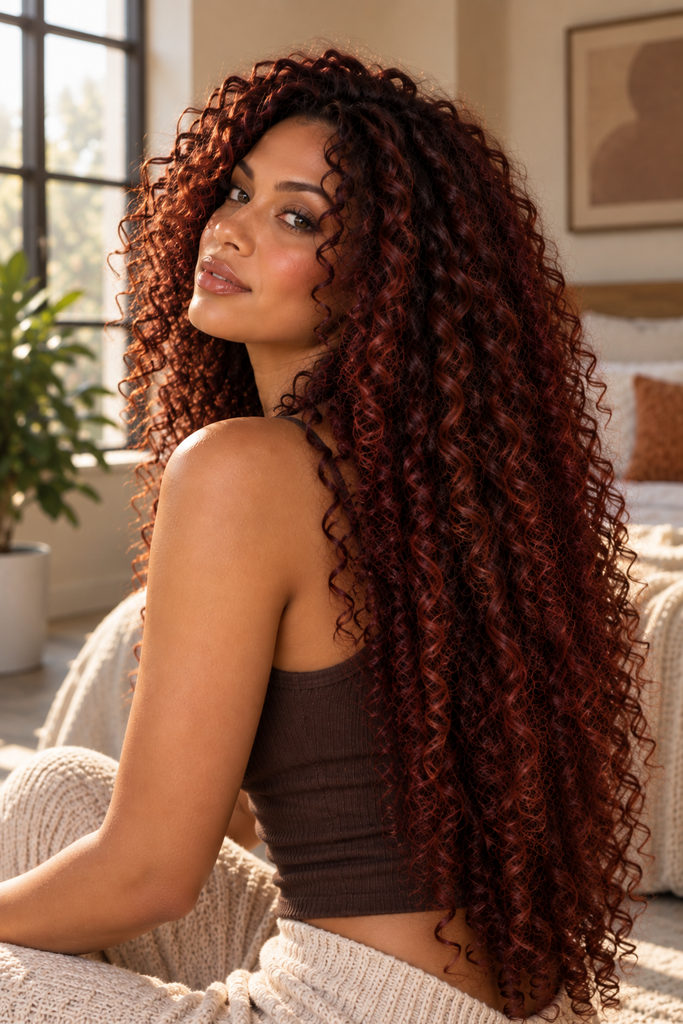
Idea 5. Honey Blonde Curly Highlights
Honey blonde highlights add brightness without requiring every curl to become blonde. The warmer tone can work particularly well when placed selectively through the top layer, around the face, and across curls that naturally receive more light. Keeping some of the original base between the highlights prevents the result from appearing flat. On longer curls, honey pieces can visually emphasize movement from the roots to the ends. If your hair is naturally very dark, reaching a light honey shade may require significant lightening, so a stylist should evaluate the condition of your hair first. A darker honey or caramel-blonde alternative can provide a gentler transition.
Best For: Brown, dark blonde, and medium brunette curls.
Maintenance: Medium to high if extensive lightening is required.
Styling/Salon Tip: Ask for honey ribbons rather than uniform blonde highlights if you want to preserve natural depth.
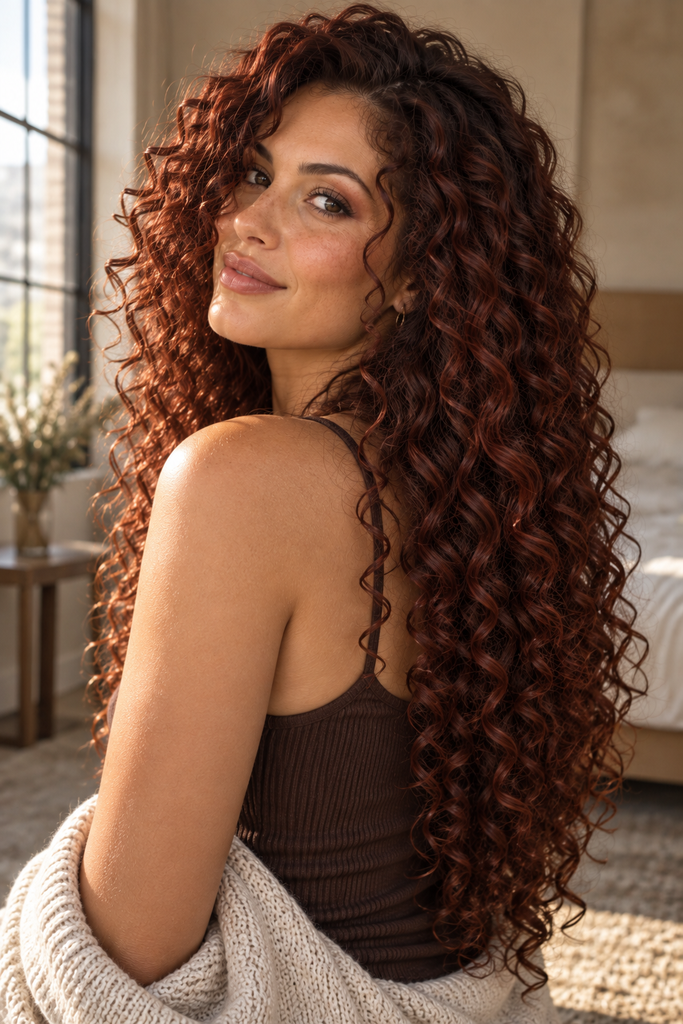
Idea 6. Espresso Brown Color-Drenched Curls
Espresso brown is ideal when you want a deep, polished brunette statement. Instead of adding obvious highlights, this approach relies on a concentrated brown tone with subtle reflective variation. On naturally curly hair, the result can look especially rich because light catches the rounded surfaces of individual curls. It can also be a useful direction for someone who wants to move darker rather than lighter. Keeping the tone slightly softer than a flat black can preserve dimension. If your hair is already very dark, a professional gloss or color service may be enough to create the desired richness without extensive processing.
Best For: Dark brunette curls and anyone wanting a deeper overall color.
Maintenance: Low to medium.
Styling/Salon Tip: Ask whether an espresso gloss can create the depth you want before considering permanent color.
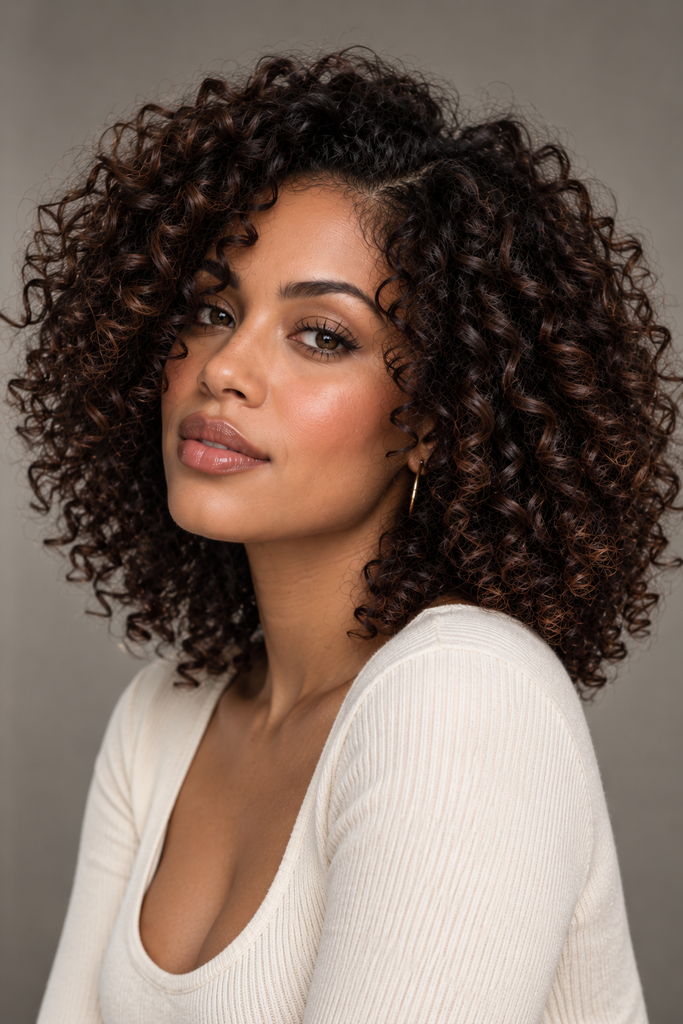
Idea 7. Chestnut Brown Dimension
Chestnut brown sits between rich brunette and warm reddish brown, making it an easy direction for someone who wants warmth without a dramatic red transformation. On curly hair, small tonal shifts can make the overall color appear more dimensional as curls move. You can keep the roots naturally dark and introduce chestnut through the mids and ends, or use a more uniform chestnut shade for a stronger change. This color is particularly versatile on medium-length curls because it can look polished when defined and softer when worn naturally. Consider adding a subtle gloss to enhance the reflective quality of the finished color.
Best For: Medium brown curls, shoulder-length cuts, and longer hair.
Maintenance: Low to medium.
Styling/Salon Tip: Ask for chestnut brown with subtle warmth rather than a strongly red formula.
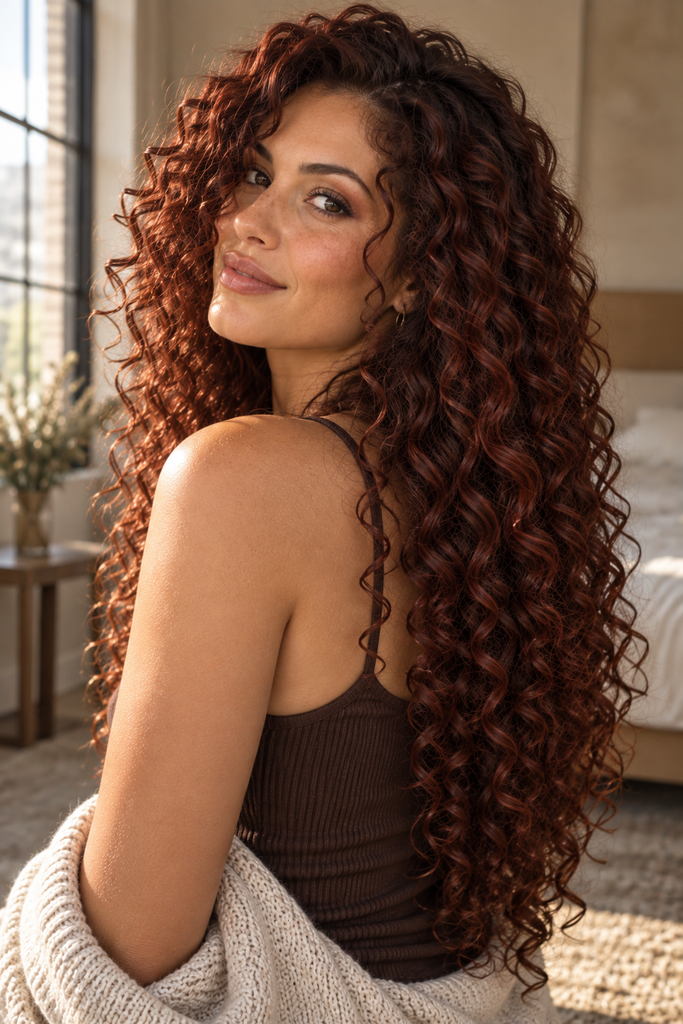
Idea 8. Face-Framing Caramel Curls
Face-framing caramel pieces focus brightness around the front of the hair rather than distributing highlights evenly across the entire head. This can create a noticeable change while using fewer colored sections. On curls, placement matters because the same highlight can appear very different depending on where the curl bends. Your stylist can adjust the width and position of the front pieces to complement your haircut and face-framing layers. A darker root and brunette interior can keep the look grounded. This is a useful option if you want your curls to appear brighter around the face without committing to a full head of highlights.
Best For: Medium-to-long curls with face-framing layers.
Maintenance: Medium.
Styling/Salon Tip: Ask your stylist to map the light pieces to your actual curl pattern instead of applying them as straight-hair highlights.
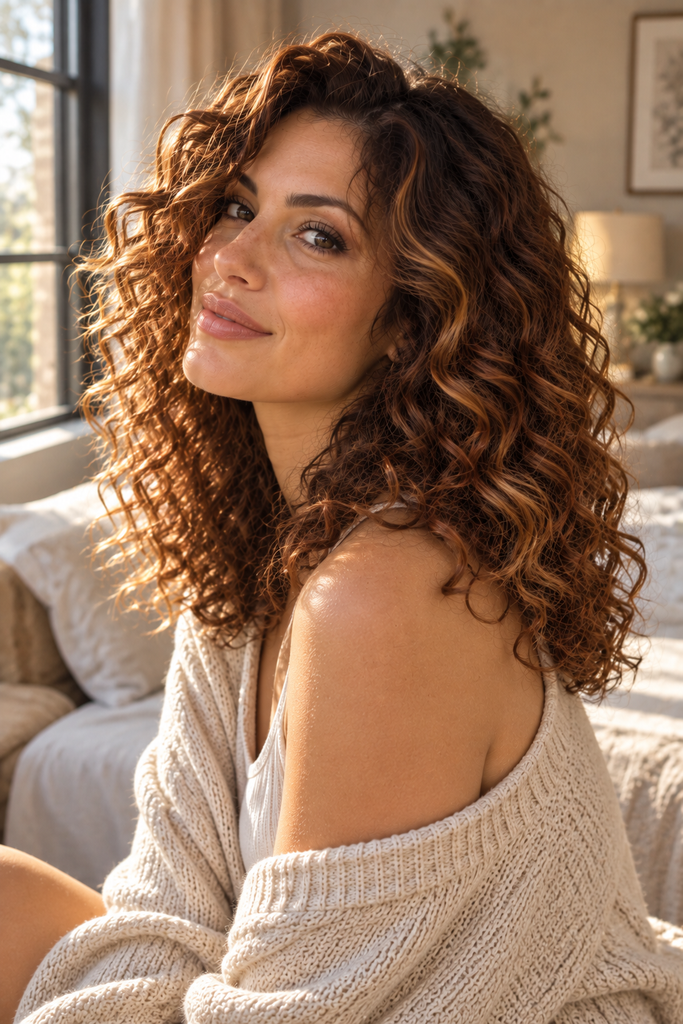
Idea 9. Burnt Sienna Brown Curls
Burnt sienna offers a more muted alternative to vivid copper. Think of a brown foundation warmed with controlled copper and reddish tones rather than a bright orange-red finish. This makes it a strong choice for people who like warm colors but want something grounded. The color can be especially interesting on naturally curly hair because the bends create a mixture of brown shadow and copper reflection. A rooted approach can make the transition less demanding as the hair grows. If you want this shade on very dark hair, discuss whether partial lightening is needed to reveal the intended warmth.
Best For: Brunette curls that need warmth and dimension.
Maintenance: Medium.
Styling/Salon Tip: Describe the target as muted burnt sienna or copper-brown and bring a reference photo.
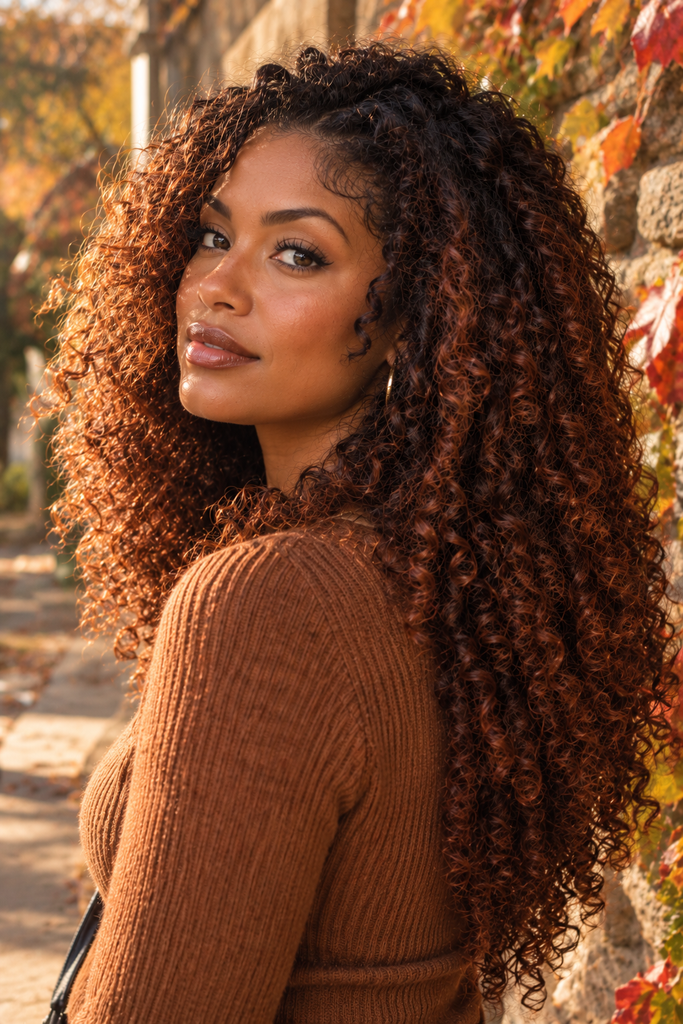
Idea 10. Honey-Brondes for Loose Natural Curls
Honey bronde blends brunette depth with blonde warmth, creating a softer transition than a full blonde transformation. On loose curls, the mixed tones can highlight the natural movement of the hair without making every curl the same color. Keeping a darker root gives the look more depth and can make regrowth less visually obvious. This option works particularly well when the goal is a brighter appearance while still retaining a brunette identity. The exact result depends heavily on your starting color, so darker hair may require lightening before reaching a honey-bronde level.
Best For: Loose 2C–3A curls and medium brunette bases.
Maintenance: Medium to high depending on starting color.
Styling/Salon Tip: Ask for a rooted honey bronde with blended transitions rather than a solid blonde finish.
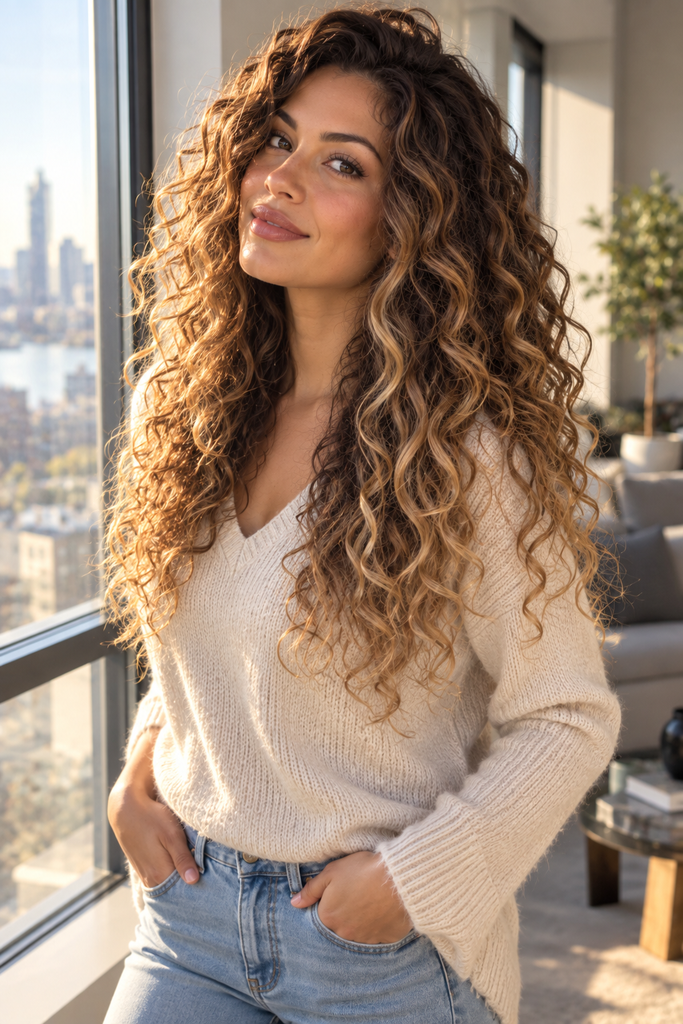
Idea 11. Burgundy Ribbon Highlights
Burgundy ribbons offer a deeper, more dramatic way to experiment with color while keeping much of the natural base intact. Rather than coloring every curl, concentrated burgundy sections can be placed through the underneath layers, sides, or selected outer curls. The effect becomes more visible when the hair moves and can look subtle indoors while appearing richer in brighter light. This approach is particularly interesting for dark brown or black natural curls. If you want a vivid burgundy on very dark hair, ask your stylist about the amount of lightening required and how it may affect the condition of your curls.
Best For: Dark brown and black curls.
Maintenance: Medium to high depending on vibrancy.
Styling/Salon Tip: Ask for strategically placed burgundy ribbons rather than an all-over red if you want contrast with your natural base.
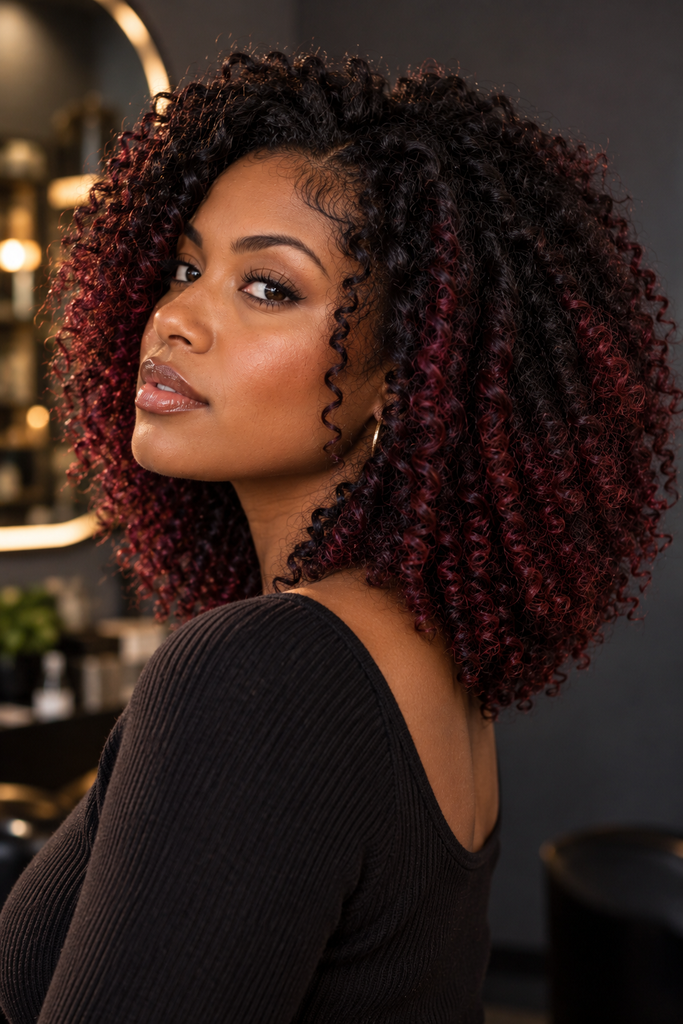
Idea 12. Golden Caramel Ombré Curls
A golden caramel ombré creates a gradual transition from darker roots to warmer, lighter ends. The technique can look especially fluid on curls because the color follows the length and movement of the hair rather than stopping at one harsh line. This is a good option for long curls when you want the ends to become the visual focus. The darker root provides depth, while caramel and golden tones appear progressively brighter toward the bottom. Because the ends receive the most lightening, their existing condition should be assessed before coloring. Maintaining moisture is particularly important for already dry or processed curls.
Best For: Long, thick curls with healthy mids and ends.
Maintenance: Medium to high.
Styling/Salon Tip: Request a soft gradient with no obvious horizontal color line.
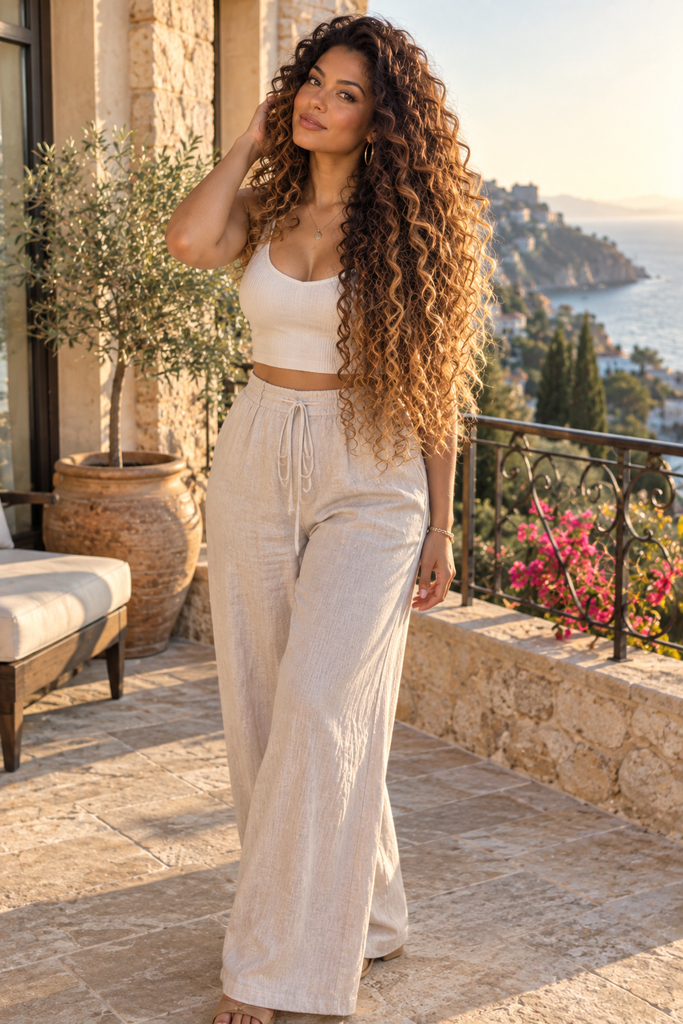
Idea 13. Soft Copper Rose Curls
Copper rose combines warm copper with a restrained rosy tone for a softer interpretation of red. Instead of an intense fashion color, the shade can be customized to look translucent and warm, especially when applied over a lighter base. On curls, the combination creates different reflections depending on the direction of each ringlet. This idea works particularly well for someone who wants a noticeable color change but prefers a softer finish than bright orange copper. If your natural hair is dark, achieving a lighter copper-rose may require pre-lightening, so a professional consultation is worthwhile before choosing the final formula.
Best For: Light brown to blonde curls and previously lightened hair.
Maintenance: Medium to high.
Styling/Salon Tip: Ask for a soft copper-rose rather than an intensely pink-red result if you want a wearable finish.
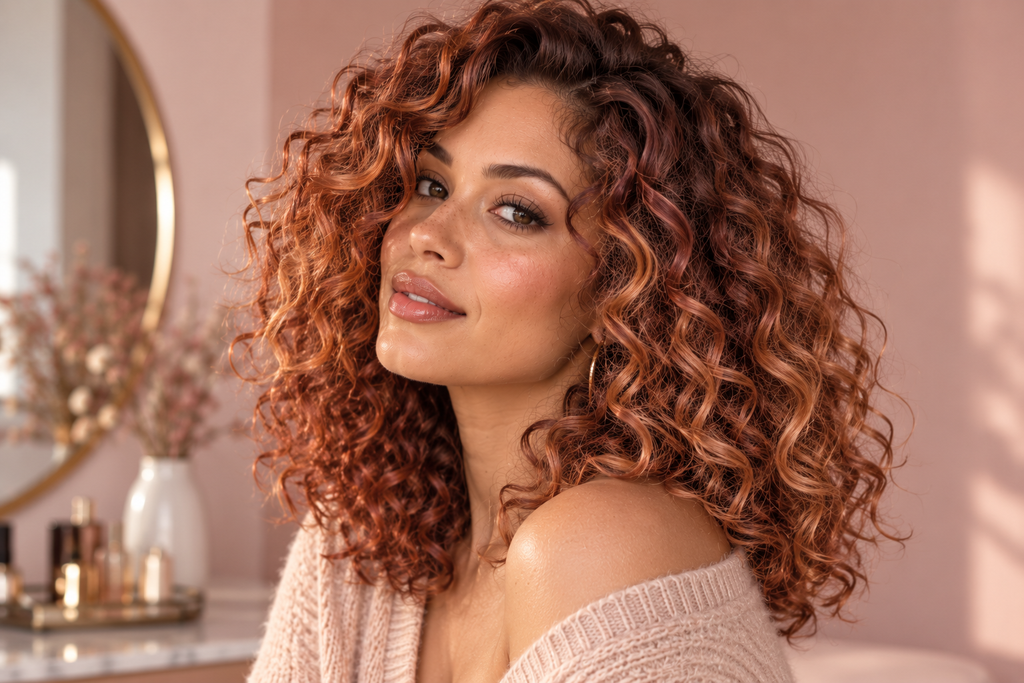
Idea 14. Mocha Brown With Subtle Golden Ribbons
Mocha brown offers a neutral-to-warm brunette direction that can look polished while still retaining natural depth. Adding a few subtle golden ribbons keeps the color from becoming visually flat and gives selected curls more light-catching detail. This works particularly well if you want a change that is noticeable in photographs but still relatively natural in everyday settings. The highlights can be concentrated around the upper layers or scattered through the ends depending on how much contrast you prefer. For naturally dark curls, staying closer to mocha and caramel rather than very pale blonde can reduce the amount of lightening required.
Best For: Dark and medium brunette curls.
Maintenance: Low to medium.
Styling/Salon Tip: Request subtle golden ribbons over a mocha base rather than high-contrast blonde streaks.
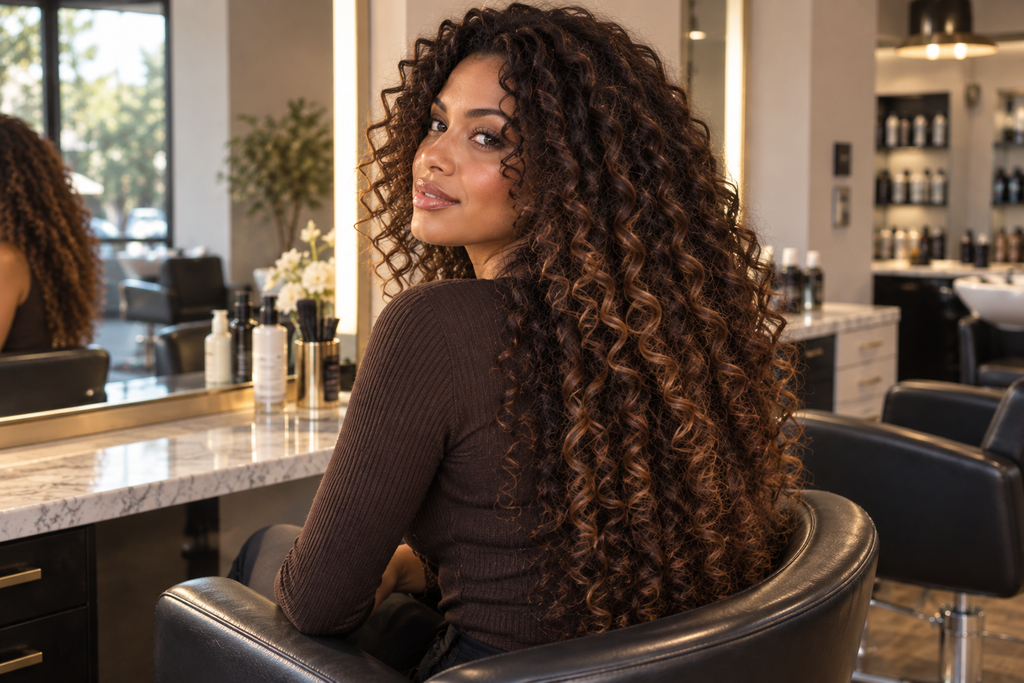
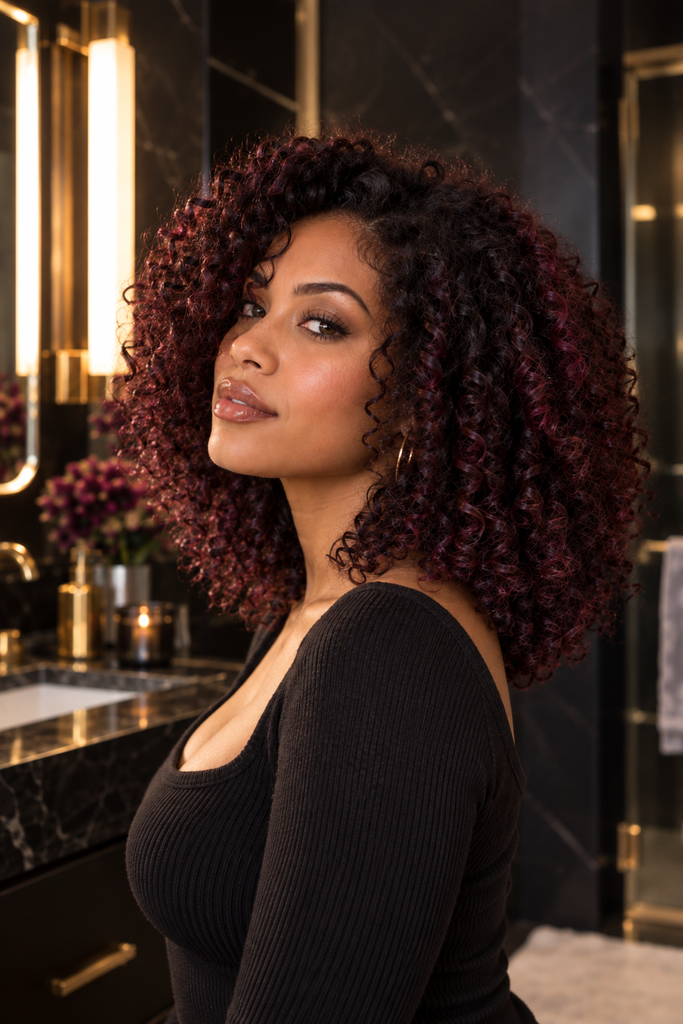
Idea 15. Plum-Tinted Natural Curls
Plum is a bold but deep option that works especially well when you want color without choosing a bright primary shade. A dark plum tint can sit over a brunette foundation, creating purple-red reflections that become more noticeable under direct light. On curls, this effect can look particularly dynamic because each curl reflects the color differently. You can keep the color concentrated on the mids and ends for a softer commitment or use an all-over formula for a stronger transformation. Very dark hair may need some preparation to make a plum tone visible, so ask your stylist what level of brightness is realistic for your base.
Best For: Dark brunette curls and anyone wanting a statement color.
Maintenance: Medium to high.
Styling/Salon Tip: Ask for a deep plum-brown rather than vivid purple if you want the color to remain sophisticated and wearable.
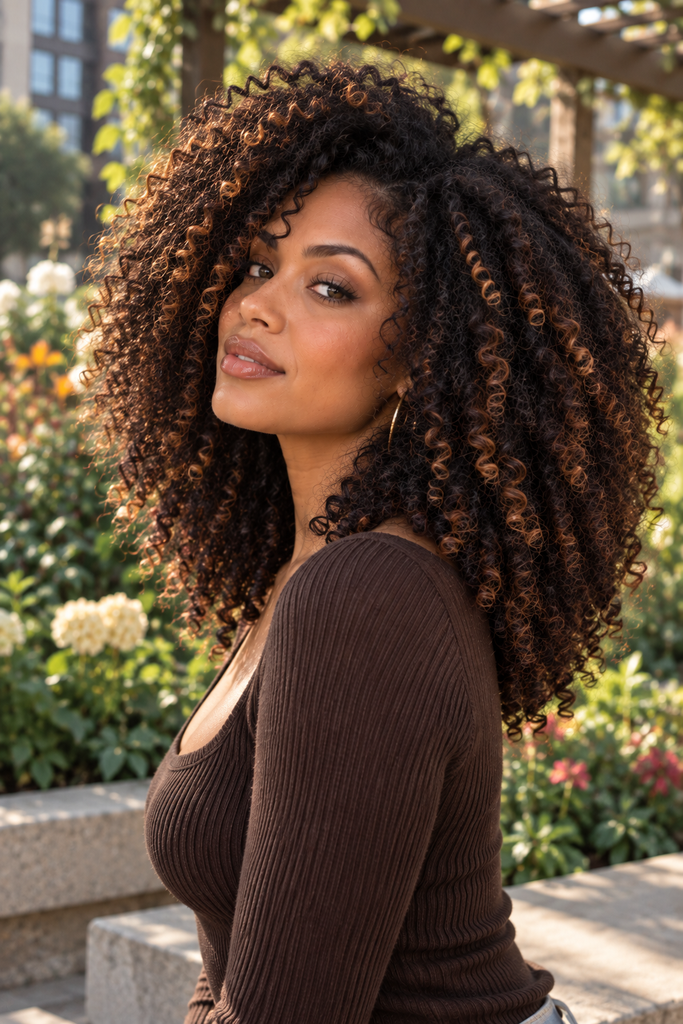
Idea 16. Natural Black With Soft Amber Highlights
If you love a deep natural base but want more movement, soft amber highlights can add warmth without turning the entire hairstyle lighter. The key is restraint: small amber or warm brown sections can be positioned through selected curls, especially around the face and outer layers. Against a very dark base, even modest highlights can create visible dimension. This is a useful direction for people who want their natural-looking curls to remain the dominant feature while adding a little light-catching detail. Because the highlights are selective, the overall result can be easier to maintain than a full-head lightening service.
Best For: Natural black, very dark brown, and tightly curled hair.
Maintenance: Medium.
Styling/Salon Tip: Ask for fine amber ribbons placed selectively through the curls instead of broad blonde sections.
also read-18 Espresso Hair Color Ideas for a Rich, Chic Look
Comparison Table
| Hair Color | Best For | Maintenance | Overall Look |
|---|---|---|---|
| Chocolate Brown | Medium-dark curls | Low-Medium | Rich and natural |
| Caramel Balayage | Brunette curls | Medium | Warm and dimensional |
| Warm Copper | Brown/light bases | Medium-High | Warm and expressive |
| Deep Auburn | Dark brunette curls | Medium | Rich red-brown |
| Honey Blonde Highlights | Brown/dark blonde curls | Medium-High | Bright and warm |
| Espresso Brown | Dark curls | Low-Medium | Deep and polished |
| Chestnut Brown | Medium brown curls | Low-Medium | Warm and balanced |
| Face-Framing Caramel | Medium-long curls | Medium | Bright around the face |
| Burnt Sienna | Brunette curls | Medium | Muted copper-brown |
| Honey Bronde | Loose curls | Medium-High | Soft brown-blonde |
| Burgundy Ribbons | Dark curls | Medium-High | Deep and dramatic |
| Golden Caramel Ombré | Long curls | Medium-High | Gradual warm brightness |
| Copper Rose | Light brown/blonde curls | Medium-High | Soft rosy warmth |
| Mocha + Golden Ribbons | Brunette curls | Low-Medium | Subtle dimension |
| Plum Brown | Dark brunette curls | Medium-High | Deep fashion color |
| Amber Highlights | Black/dark curls | Medium | Understated warmth |
How to Choose the Right Option
For Low Maintenance
Start with colors that stay close to your natural base. Chocolate brown, espresso, chestnut, mocha, and subtle amber highlights generally create less dramatic root contrast than a full-head blonde transformation. Rooted balayage can also make regrowth less visually obvious.
For Natural Curls
Prioritize color placement that follows the actual curl pattern. Instead of asking for a standard straight-hair highlight pattern, show your stylist how your curls naturally fall and ask where lighter pieces will create the most useful dimension.
For Dark Hair
Chocolate brown, espresso, auburn, burnt sienna, burgundy, plum, and amber-brown accents offer several directions. If you want a significantly lighter result, ask about the required lightening process before choosing the final shade.
For Light Hair
Honey blonde, honey bronde, copper rose, soft copper, and warm caramel can create additional depth and warmth. A gloss may sometimes provide a tonal change without requiring the same level of lightening as a major color transformation.
For Short Hair
Face-framing highlights, copper, auburn, chocolate brown, and dimensional espresso work particularly well because shorter curls naturally concentrate attention around the face.
For Long Hair
Long curls give you more room for balayage, ombré, ribbons, layered highlights, and multiple tonal transitions.
For a Bold Change
Consider copper, burgundy, plum, or copper rose. Before choosing a highly vivid shade, discuss maintenance and the condition of your hair with your stylist.
Maintenance Guide
Colored curls need two goals to be balanced: maintaining the color and protecting the natural texture.
Wash thoughtfully
Curly and coily hair can become dry more easily, so avoid washing simply out of habit. Use a cleansing routine appropriate for your scalp and hair type.
Prioritize conditioning
Conditioner and leave-in products can help curly hair remain manageable and reduce the rough feeling that can become more noticeable after coloring.
Protect previously lightened areas
Lightened sections are more vulnerable to dryness and breakage than untouched hair. Avoid unnecessary overlapping of chemical services.
Use heat carefully
Excessive heat can compromise already processed hair. Use appropriate heat protection and avoid repeatedly applying high heat to the same sections.
Protect curls from the sun
Sun exposure can contribute to dryness and color fading. Hats and appropriate leave-in protection can help when spending extended periods outdoors.
Be careful around chlorine
If you swim regularly, rinse your hair after swimming and use a suitable cleansing and conditioning routine.
Don’t ignore the curl pattern
Color should enhance the way your curls naturally move. If the hair becomes overly dry, rough, or difficult to detangle after coloring, discuss the condition of the hair with a professional rather than immediately adding another chemical service.
The American Academy of Dermatology specifically notes that curly/coily hair is more prone to dryness and breakage, and recommends moisturizing care, gentle detangling, and protection from environmental stressors. It also advises caution with major lightening because moving more than a few shades lighter generally requires stronger peroxide and can increase damage.
Frequently Asked Questions
1. What is the best hair color for natural curly hair?
There is no single best shade for every curl pattern. Chocolate brown, caramel, auburn, copper, honey, and dimensional brunette shades are versatile starting points. The best option depends on your natural base, curl condition, desired maintenance, and how dramatic you want the change to be.
2. What is the lowest-maintenance color for curly hair?
A color that stays relatively close to your natural root is usually easier to grow out than a dramatic root-to-tip transformation. Chocolate brown, espresso, chestnut, mocha, and subtle balayage are practical directions for lower-maintenance results.
3. Does coloring curly hair damage natural curls?
Coloring can make hair drier or more fragile, particularly when significant lightening is involved. The risk depends on the starting condition, chemical process, overlap with previous treatments, and aftercare. A professional should assess fragile or previously processed curls before major lightening.
4. Can dark natural curls get caramel or blonde highlights?
Yes, but the amount of lightening required depends on the starting color and the desired brightness. Dark hair generally requires more processing to reach lighter shades. Selective caramel pieces may provide dimension without requiring the entire head to become lighter.
5. Should I show my hairstylist a picture of the color I want?
Yes. Bring several reference images showing the color, placement, root depth, curl pattern, and level of brightness you prefer. Also show your stylist your hair in its natural curl pattern so the color placement can be customized to how your curls actually fall.
Final Verdict
The best hair color for natural curls is not necessarily the lightest, brightest, or most dramatic option. The strongest choice is the one that works with your existing base, curl pattern, hair condition, and willingness to maintain it. Chocolate brown, espresso, chestnut, caramel, and amber highlights offer relatively natural directions, while copper, auburn, burgundy, plum, and copper rose provide more noticeable changes. Balayage, face-framing pieces, and carefully placed ribbons can add dimension without making every strand the same shade. If your curls are already dry or processed, prioritize their condition before pursuing significant lightening. Most importantly, take clear reference photos to your stylist and discuss exactly how the color will be placed through your curls. A customized color plan will usually look more natural than simply copying a shade designed for straight hair.

2 Comments